A Council Father on Vatican II: “It stripped the Mass of all sense of holiness and reverenceâ€
Written by Archbishop Robert J. Dwyer
Editor’s Note: Back in 1971, the Archbishop of Portland, Oregon, commented in his archdiocesan newspaper on what was already happening to the New Mass, even at that early date–something Pope Benedict XVI himself would confirm many years later on February 14, 2013, when he noted in his address to the Roman clergy that the New Mass had been “trivialized” throughout the whole world. We quote the late Archbishop Robert J. Dwyer (who attended every session of Vatican II) with a sense of loss and even longing in our hearts for the days when Catholic bishops were still vigilant defenders of the Catholic Faith. Please, God, send us holy priests and bishops once again. …Michael J. Matt
When whole segments of the contemporary Church are set on a downward course of vulgarization, of anti-intellectualism, of revolt, and rebellion against all standards and authority, it is exceedingly difficult to put a stop to the trend, holding back the enormous weight, and then attempting to turn these segments back the other way, to begin all over again the slow, laborious climb to the high and distant peaks.
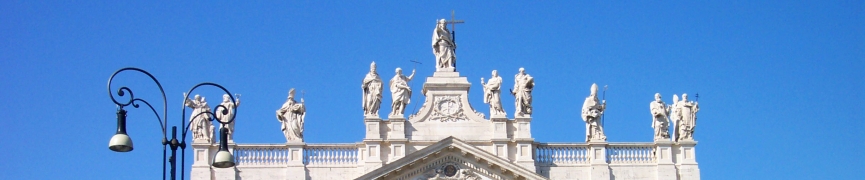
It is just such a catastrophe which overwhelms us today. We recall the dream of St. Francis and Pope Innocent III where the little Poor Man was holding up with his feeble hands the collapsing fabric of the Lateran…
We are in a veritable landslide of vulgarization. What was intended by Vatican Council II as a means of making the liturgy more easily understood by the average Christian, has turned out to be something more like an orgy of stripping it of all sense of holiness and reverence, bringing it down to the level of commonness where the very people for whom the changes were made now only yawn out of sheer boredom with the banality of the result.
What was the great poetic style of the Bible has been transmogrified and cheapened into some of the most graceless, flat, plodding prose ever inflicted upon undeserving dullards. Matters are bad enough now, but wait until the new Order of the Mass is released as compulsory for a revelation of what crimes can be committed by men in committee!
It might have been thought, in the interest of ecumenism, that consideration could have been given to strengthening the old Douai-Challoner text with the great style, the ‘organ roll’ of the King James version. But no! In the minds of those commissioned by hierarchy to do the work, the great object or target, manifestly, was to denude the liturgy of its last claim to literary dignity…
With polite pious acquiescence, the Bishops received the results with no more than an occasional feeble, almost only grunted protest. Thusly, do we lose a priceless cultural inheritance.
Quoted from The Clarion, Parish Bulletin, Glenview, Il, July 26, 1971
March 26, 2014 No Comments
The Coolest Thing at Harvard
Discovering Juventutem in America — in Boston, Miami, DC and Michigan, too!
They are a young organization of young people, growing super-fast. The first American chapter of Juventutem began in Michigan in 2012, and since then ten additional chapters have been formed all over the United States.
A big highlight in their short history so far has been a Solemn High Mass in Boston in the Spring 2013, celebrated by Fr. John Zuhlsdorf. Over 200 people attended this first TLM in decades, illuminated by the artistry of the Choir of St. Paul — boys from the Boston Archdiocesan Choir School — and a professional male schola, who sang beautiful Renaissance polyphony by Victoria and Palestrina.
If Juventutem has their way, such beauty is just the harbinger of things to come. Recently, four members — three Harvard students and one alum — sat down with Regina Magazine to tell us about Juventutem in the United States. Jim Mc Glone is a History major from New Jersey. Evan O’dorney is studying mathematics; he’s originally from the San Francisco Bay area. Eileen Macron is a freshman from Staten Island, New York. Finally, Paul Schultz is a Harvard alum and a lawyer who is the Group Coordinator of the Michigan chapter of Juventutem and the Secretary of the Fœderatio Internationalis Juventutem.
How did you first discover the TLM?
Jim: I had never even heard that the traditional Mass existed before starting college. Two years ago, I attended one for the first time at Boston’s Cathedral of the Holy Cross. I wouldn’t say that I immediately fell in love with the Latin Mass, but I kept coming back and learning more about it. It wasn’t long before I was altar serving and doing whatever I could to promote the Latin Mass among my peers.
Eileen: I attended my first Latin Mass when I was ten years old, because my father preferred this style of the Mass and we found a parish nearby that said the TLM. Although I was resistant at first, I soon grew to love and prefer the Mass.
Continue reading at: http://reginamag.com/coolest-thing-harvard/
March 23, 2014 No Comments
New Archbishop of Liverpool: “How on earth can you say no [to the Traditional Mass]?”
From Rorate Caeli
Liverpool is the largest diocese in the whole island of Great Britain by number of nominal Catholics – at least according to the Annuario Pontificio (source) – so it certainly is a source of great joy that its new archbishop, Abp. Malcolm Patrick McMahon, O.P., appointed today by the Pope, is so open to the Traditional Mass. He is not only the first ordinary who celebrated a pontifical mass openly in England after the advent of the Mass of Paul VI (source), but he is also very open to it in general:
Press Conference, March 21, 2014
I had the pleasure, today, of interviewing His Lordship at the Metropolitan Cathedral of Christ the King, Liverpool. I discussed only the matter of the Extraordinary Form of Mass. I faithfully reproduce here verbatim the Archbishop-elect’s quotes, which are illuminating, although I stress that it was necessary for him to speak while walking and needing to attend to passing and ongoing briefings whilst developing his responses.
Although conscious that, due to circumstances, he couldn’t devote full concentration to the subject, the Archbishop-elect said he was nonetheless happy for me to convey his thoughts publicly. Please, therefore, feel completely free to disseminate these quotes with confidence.
+Malcolm on whether those attached to the Extraordinary Form of Mass in the Archdiocese of Liverpool need have any concerns:
“There is no need [for anyone] to feel nervous.â€
+Malcolm on how much he foresees that the Extraordinary Form may in time become a general and unremarkable part of the liturgical life of the archdiocese
“I think it’s hard to predict. I will certainly be open to any requests that come my way. I’ve always listened to what people have wanted, and tried to do my utmost to satisfy their needs – and that applies to liturgy, forms of liturgy, as well as other aspects of my ministry.â€
+Malcolm on whether he foresees himself personally celebrating the Extraordinary Form:
“It depends how it is used. I mean, I’ve celebrated Mass in the Extraordinary Form when required and when I’ve been asked to. But the Mass always has to be a source of unity in the Church, and I certainly wouldn’t want to be used, and the Extraordinary Form to be used, to divide the Church. That would be my [only] concern. But there are plenty of pictures of me on the Internet [celebrating the Extraordinary Form] with [laughing] mitres that don’t fit me and all that!
“But yes, of course I would be agreeable. How can you not be when the Mass has been such a … well some like to call it the ‘Traditional Rite’ … but (when) the Extraordinary Form has been a source of holiness to people for hundreds of years. So how on earth can you say no?†[Source: Telegraph Blogs]
March 21, 2014 No Comments
Original Vatican II Schemas
From Unam Sanctam Catholicam
In the years leading up to the Second Vatican Council, Pope John XXIII entrusted the preparation of the documents that would be discussed by the Council to a Preparatory Commission, headed by the venerable Cardinal Alfredo Ottaviani. The Preparatory Commission ended up drafting a total of nine schemas on a variety of topics. It was these schemas that would be rejected by the Council Fathers are excessively rigid, condemnatory in tone, and too “Scholastic” in their style. The majority of the documents were rejected in favor of what have gone on to become the sixteen documents of Vatican II. Until recently, we in the English speaking world had no way to assess the alleged inferiority of Ottaviani’s original schemas; we had to simply take the word of the Council Fathers and periti. Thankfully, however, in 2012 a priest of Marquette University, Fr. Joseph A. Komonchak, laboriously translated five of the nine schemas into English. We are happy to link Fr. Komonchak’s excellent translations below.
Five of the nine schemas are available, with expansive footnotes and helpful commentary by Fr. Komonochak. The original Vatican II schemas available in English are as follows. (Since you cannot click on them here, we suggest you go to the Unam Scanctam Catholicam Site: http://unamsanctamcatholicam.com/history/historia-ecclesiae/79-history/421-original-vatican-ii-schemas.html).
On the Sources of Revelation (De fontibus revelationis)
Defending Intact the Deposit of Faith
On the Christian Moral Order
On Chastity, Marriage, the Family and Virginity
Dogmatic Constitution on the Church
In reading these original schemas, one is struck by their clarity, their directness, and relative to the subsequent conciliar documents, their brevity. It is also interesting to see in what ways the content of these documents are notably different from the documents that were eventually promulgated. For example, “On the Sources of Revelation” states very plainly that there are two sources of revelation which constitute a single deposit of faith; Dei Verbum, on the other, is emphatic that there is but one source of revelation which is passed on in two modes of transmission.
The source material is interesting as well. An examination of the footnotes of the discarded schemas reveals an abundant number of citations from Pascendi, Mortalium Animos, the Syllabus and even the anti-Modernist oath, none of which are cited in the 1992 Catechism of the Catholic Church, for example.
The tone is markedly different; instead of the humble “searching for truth” [1] that we note in the conciliar documents, the original schemas lucidly and authoritatively proclaim the truth, as well as about the errors which pervert it. De fontibus revelationis, subject to so much scorn by the Council Fathers, issues several formal condemnations. In order to see the difference in tone between the two sets of documents, consider the first as passage from the schema “On the Christian Moral Order”, paragraph 6:
“[The Church] grieves, however, that many people are transgressing the divine law, more from weakness than from wickedness, though rarely without grave guilt. It notes with great horror that errors are being spread everywhere, errors that open the way to perdition and close the gate of salvation. There are those who deny a personal God and so deprive the natural law of its foundation; there are those who, repudiating the mission of Christ, reject the law of the Gospel; there are those who rely only on human principles in explaining the moral order and therefore rob it of its genuine and ultimate obligation and sanction…Their impiety and impudence reach such a point that they attempt to assault heaven and to remove God himself from the midst. With notorious wickedness and equal foolishness they are not afraid to state that there is no supreme, most wise and most provident God distinct from the universe; there are those who maintain that the moral law is subject to changes and to evolution even in fundamental matters…”
Now compare this with a parallel passage from Gaudium et Spes chapter 21, also dealing with atheism:
“The Church calls for the active liberty of believers to build up in this world God’s temple too. She courteously invites atheists to examine the Gospel of Christ with an open mind.”
When the Council got underway, the progressive Council Fathers saw the schemas of Ottaviani as an obstacle to their program of reform. Cardinal Bea, one of the more influential Cardinals and a favorite of Pope John XXIII, explained to his progressive colleagues:
“We must help the Holy Father achieve his goals for the Council, the ones he expresses in his radio messages and in his exhortations. These are not the same as those of the schemas, either because the Theological Commission, which directs them, is closed to the world and to ideas of peace, justice, and unity, or because of the division of the work and a lack of co-ordination. They’ve made room for everything except the Holy Spirit.” [2]
Thus, these schemas, which were ‘closed to the world’, were replaced with what we currently have, and the defects of which we are all well aware. As they were never adopted, these schemas have no authority; but in reading them, one cannot help but contemplating the council that might have been.
We do not know when and if the other four schemas will be translated by Fr. Komonochak, but we will post them here if they become available.
NOTES
[1] This phrase comes from Amerio, Romano (1996). Iota Unum: A Study of Changes in the Catholic Church in the XXth Century.
[2] Fouilloux, Vatican II commence (Catholic Univ. of Louvain, 1993), pg. 72, note 56
March 19, 2014 No Comments
SOLEMN HIGH MASS FOR FEAST OF ST. JOSEPH, MARCH 19TH AT OUR LADY OF THE ASSUMPTION PARISH IN STRAFFORD, PA
From Father Carbonaro

A Solemn High Mass in the Extraordinary Form will be celebrated for the Solemnity of Saint Joseph, Wednesday March 19, 2014, at Our Lady of the Assumption Parish, Strafford, Pa. Rosary will be prayed beginning at 6:40 p.m., with Mass to follow at 7:00 p.m. Celebrant will be Father Dennis J. Carbonaro, Pastor of Our Lady of the Assumption, and Homilist will be Msgr. Charles L. Sangermano, Pastor, Holy Saviour, Norristown. Following Mass a reception will be held in the Parish Hall. A collection will be taken up to help defray some of the expenses incurred for this celebration.
P.S. Let’s all show our support and appreciation of Fr. Carbonaro. We all remember him as a regular celebratant of the Missa Cantata at St. Paul’s.
March 18, 2014 2 Comments
Archd. Philadelphia : the spread of Flash “Mass Mobs†to help dying parishes
From Fr. Z’s Site
In many cities there are beautiful but languishing parish churches. Some people are stirring things up to help put them back on the map, inject some life into them.
“Flash Mobs†attend a Mass at one of this tired churches to bring attention to them.
I like the idea.
Now I read that it has spread to Philadelphia.
From CNA:
Philly Catholics join ‘Mass Mob’ trend to support churches
Philadelphia, Pa., Mar 16, 2014 / 06:02 am (CNA/EWTN News).- Catholics in the Archdiocese of Philadelphia have planned their first “Mass Mob†in the north of the city, seeking to rally scores of people to a beautiful but sparsely attended church.
“It’s an opportunity for people from all over the archdiocese to come together as a community,†Mass Mob Philly organizer Ben DiFrancesco, a 28-year-old software engineer, told CNA March 14.
“It’s an opportunity for people to enjoy these big, beautiful, old church buildings that they maybe normally don’t get to see at their regular parish.â€
DiFrancesco is one of the organizers who are using social media to encourage as many people as possible to attend Mass at St. Francis Xavier, The Oratory, in Philadelphia’s Fairmount neighborhood on the morning of March 23. They are asking attendees to arrive at 11:15 a.m., 15 minutes before the Sunday Mass begins.
[…]
Read the rest there.
I send out Fr. Z Kudos to them.
However, I recommend another step.
Want to save these churches?
Implement Summorum Pontificum. Bring back to them the older, traditional form of our rites and sacraments. Bring solid, no-nonsense, hard identity preaching. Foster true sacred music. At the same time, reach out within a traditional presentation of the faith, to Spanish speakers, even if the parish has already a strong ethnic identity.
March 16, 2014 No Comments
We Never Cease To Be Confounded
From Rorate Caeli
Unbelievable – dying Mario Palmaro’s
only way to arrange Traditional Funeral Mass:
ask for city permit and shame pastor into “allowing” it.
The other-than-human hatred for the Traditional Mass continues even after death – in January, our contributor Joseph Shaw presented the Latin Mass Society’s guide on a way of ensuring your own Funeral Rites are conducted according to the Traditional Roman Rite (at least in some jurisdictions, see here: A Practical guide to having a Traditional Funeral Mass).
Now, used as he was to the diabolical hatred for the Latin Mass, the late Mario Palmaro (requiescat in pace) devised, during the several months of excruciating suffering and pain caused by the disease that led to his death, another way to ensure the pastor of the cathedral of his city, Monza, to “allow” his funeral Mass to be performed in the Traditional Roman Rite in the Monza Cathedral:
“Mario Palmaro leaves a wife and four young children, yet in order to have a Catholic funeral he had to resort to a sort of ploy: while still alive he asked the pastor (Archpriest) of [the Cathedral of] Monza, to have the Holy Catholic Mass (V.O.) celebrated at his death; the priest answered – ‘no way.’ But Mario had already written to the Mayor [for a permit] if the funeral were to be refused in the Church that it be done by a Catholic priest (faithful to the Vetus Ordo) in the square [outside the cathedral]. And the Mayor gave his consent. So, faced with something that could have become a shameful scandal, the pastor had the Mass of All Ages celebrated inside the Cathedral in the presence of a deeply-moved crowd.” [Riscossa Cristiana, in Italian]
A great friend of Rorate was present in the Duomo, and he tells us well over one thousand faithful attended the Funeral Mass. Palmaro acted based on experience: one of the first articles we published in translation here by Mario Palmaro and Alessandro Gnocchi was on the denial of the Traditional Funeral Mass for Alessandro Gnocchi’s own father (Another traditional funeral Mass denied by a diocese, Nov. 11, 2011).
A subitanea et improvisa morte, libera nos, Domine.
March 16, 2014 No Comments
Archbishop Sample’s encouragement for the celebration of the usus antiquior

On Quinquagesima Sunday, Archbishop Alexander Sample of Portland, Oregon celebrated a Pontifical Mass at the Throne in the Extraordinary Form during a Gregorian Chant Conference at the Brigittine Monastery of Our Lady of Consolation in Amity, Oregon. The deacon was Fr John Boyle, director of the tribunal. Fr Charles Vreeland, FSSP was the Assistant Priest. Several priests and deacons of the Archdiocese assisted in other liturgical roles and in choir. Our thanks to Mr. Marc Salvatore, the official photographer for the event, who has offered us his photos of the Mass and video to post. And likewise, our thanks to Archbishop Sample for his graceful words of encouragement for the celebration of the usus antiquior.
Watch Archbishop Alexander Sample’s sermon on the Tridentine Mass:
Archbishop Sample: Pontifical Mass Homily
March 14, 2014 No Comments
The Francis Effect: A Gathering Storm
From the Remnant by Christopher Ferrara
DISCLAIMER: This and all articles posted on the LLA Site do not necessarily reflect the view of the LLA or any of its members. Articles are posted for informational purposes only.
The work of the devil will infiltrate even into the Church in such a way that one will see cardinals opposing cardinals, bishops against bishops. The priests who venerate me will be scorned and opposed by their confreres… churches and altars sacked; the Church will be full of those who accept compromises and the demon will press many priests and consecrated souls to leave the service of the Lord.
Our Lady of Akita, October 13, 1973
Introduction
On March 9, Cardinal Timothy Dolan, America’s foremost Catholic prelate, appeared on NBC’s “Meet the Press†and commented as follows on the “coming out†of a “gay†college football star:
Good for him… I would have no sense of judgment on him…. God bless ya. I don’t think, look, the same Bible that tells us, that teaches us well about the virtues of chastity and the virtue of fidelity and marriage also tells us not to judge people. So I would say, “Bravo.â€
“No sense of judgment…. Bravo.†That is how a Prince of Church in the Year of Our Lord 2014 reacts to a celebrity’s announcement that he engages in unspeakable acts—“men with men, working that which is filthy (Romans 1:26)â€â€”acts that cry out to heaven for vengeance, as Churchmen used to teach before the “opening to the world†at Vatican II. Here we see the vast ripple effect of the “who am I to judge?†mantra that Pope Francis launched into the collective consciousness of humanity by going out of his way to speak to reporters about homosexuals in the hierarchy at “a surprise news conference†they had not even requested. The “Francis effect†is disarming prelates and priests alike. It threatens to disarm us as well, unless we take a stand against what is happening.
As Pope Leo XIII, citing his predecessor Felix III, teaches: “An error which is not resisted is approved; a truth which is not defended is suppressed.†(Inimica Vis [1892]). That is why this article has been written. For the bad news concerning this pontificate shows no signs of abating. On the contrary, it seems to worsen by the day. This lengthy piece will consider troubling developments that occurred in rapid succession during a span of less than three weeks: from February 14 to March 5. I felt compelled in conscience to write it because I must agree with what the prominent moral theologian German Grisez wrote about this pontificate: “Pope Francis has failed to consider carefully enough the likely consequences of letting loose with his thoughts in a world that will applaud being provided with such help in subverting the truth it is his job to guard as inviolable and proclaim with fidelity.â€
My purpose is two-fold: First, to attempt to give an overview of how serious our situation has become. Second, to clarify what is at stake for the Church in the controversies now swirling about Francis, lest the true teaching of the Magisterium be lost in all the confusion. The controversies to be discussed here—all erupting during the three-week period in view—include:
– Francis’s apparent endorsement of the neo-Modernist drive to admit divorced and remarried Catholics to Holy Communion via “pastoral solution;â€
– His intimations of a “pastoral†relaxation of the teaching of Humane Vitae;
– His apparent opening to “gay marriage†in the form of “civil unions;â€
– His personal endorsement of the multi-denominational, doctrinally indifferent Protestant “Pentecostal†movement, which Francis gave in a video created for the benefit of a breakaway Anglican “bishop†in that movement;
– His continuing disparagement of the traditional liturgy and the growing numbers of the faithful devoted to it, including young people.
I hope in this way to render a service to the readers of this newspaper. Before I present the details, however, I will address a threshold question: Does a Catholic even have a right to publish an article of this sort?
On Public Criticism of Popes
Some Catholics hold that we must never engage in public criticism of the Pope—no matter what he says, no matter what he does. “We must not incite indignation concerning the Holy Father†say these people, even as they themselves—quite rightly—call for indignation concerning wayward prelates such as Cardinal Dolan, publicly criticizing them without reserve for doing nothing other than what the Pope has done, authorized, encouraged or tolerated himself.
But “incitement†is not my intention here. I write because the Pope’s own words and deeds have already aroused indignation among the faithful. Indignation is not a sin when it is warranted. On the contrary, it is a Catholic’s natural reaction to conduct that threatens the good of the Church and the welfare of souls. The Bishop of Rome is no more exempt than any other member of the hierarchy from the indignation of his subjects when he wounds them or the Church of which he is head. Indignation over a prelate’s behavior—even if that prelate were a Pope—is not to be confused with hatred or rancor toward the one who holds the office; it is, rather, an appropriate reaction to a wrong and a natural impetus for seeking its redress. Nor is seeking redress to be confused with a lack of “charity,†as it so often is in this age of emotivism. One is of course obliged in charity to forgive a wrong, but there is nonetheless a duty to repair it, especially when it harms the common good of the Church.
The origin of the pious prescription “no public criticism of the Pope†is mysterious, as it is certainly not to be found in the official teaching of the Church or the common opinion of theologians. Nor is there any sign of a theology of abject silence in the face of papal wrongs throughout the long history of public opposition—often fierce—to wayward Popes, beginning with Paul’s public rebuke of Peter for his scandalous refusal to eat with Gentiles: “But when Cephas was come to Antioch, I withstood him to the face, because he was to be blamed (Gal. 2:11).†To the facile objection that saints may criticize erring Popes, one might offer the facile reply that we ought to imitate the example of the saints. Nowhere, however, does the Church impose any “saints only†limitation on objecting publicly to what a Pope has said or done in public.
There were no known saints involved, for example, in the public opposition to John XXII (r. 1316-1334) when he insisted in a series of Sunday sermons that the blessed departed do not see God until after the General Judgment—thus, among other dire consequences, nullifying the traditional teaching on the efficacy of prayers for the souls in Purgatory. Theologians at the University Paris concurred that, while the matter had never been defined as dogma, the Pope was in error, and they petitioned him to recant his opinion. The Pope ultimately did so, noting that he had never imposed his view upon the Church and that everyone had been free to disagree with him. John XXII’s more energetic opponents, including Cardinal Orsini and King Louis of Bavaria, called upon the cardinals to convoke a council to condemn him as a heretic. None of the papal critics in this affair stands condemned by the judgment of the Church.
To address another facile objection, some Catholics maintain that even if it may be permissible to express criticism of a Pope in given circumstances, one must never do so on the Internet or in the press. But it is precisely on the Internet and in the press that Pope Francis has insisted on making his opinions and gestures known to all of humanity. The Pope has the whole planet buzzing about the latest thing he has said or done—all of it broadcast worldwide nearly every day with the assistance of a public relations team headed by PR “wizard†Greg Burke, a former Fox News and Time magazine correspondent and a member of Opus Dei.
One must dismiss as simply ludicrous the idea that in an age of mass communications the only Catholic way to express an objection to what a Pope has deliberately broadcast to the world is some sort of private entreaty. Reflecting the reality of modern social communications, the 1983 Code of Canon Law provides that the faithful, “according to the knowledge, competence, and prestige which they possess… have the right and even at times the duty to manifest to the sacred pastors their opinion on matters which pertain to the good of the Church and to make their opinion known to the rest of the Christian faithful…†(CCC § 212(3)). The canon does not provide “except when it comes to the Pope.â€
Recognizing the right and duty of the faithful in this regard, Pope Francis personally telephoned the late traditionalist writer Mario Palmaro after he and his co-author had published a newspaper article leveling a scathing assessment of the publicity-seeking aspect of this pontificate under the bold title “We Do Not Like This Pope.†During the conversation, after expressing concern for Dr. Palmaro’s health (he would soon succumb to liver cancer at the age of 45), the Pope thanked him for his criticisms, assuring him that he “understood that those criticisms had been made with love, and how important it had been for him to receive them.†Further exercising his right and duty, Palmaro later told the press “he cannot ‘state objectively that Pope Francis met our criticisms.’†Palmaro added the caveat that must guide any Catholic who raises a public objection to a Pope’s actions: “we did not want to judge the Pope as a human person. We distinguish the action from the person.â€
How odd it is that neo-Catholic proponents of the opinion that the Pope may never be criticized in public, who generally tend to be au courant with “the modern world,†blithely ignore the modern reality of instantaneous worldwide communications, exploited by the Pope himself, and insist upon a way of proceeding that was not even morally obligatory in the days of quill pens, parchment paper, and letters delivered by horseback and ship. With all the world agog at Pope Francis, and with damage to the Church’s image mounting in proportion to the praise he garners from her worst enemies, the proponents of this novel ban on public criticism of Popes now find themselves constrained to remain silent about matters uppermost in the public consciousness of virtually the entire human race! Their pious notion, utterly without foundation in Church teaching, confines them—and them alone—to a kind of deep sea diving bell, submerged beneath tempestuous waters, wherein the storms whipped up by Francis cannot reach them, while every other happening in the Church is received loud and clear and is fair game for comment and the harshest of criticism from inside the diving bell, especially the doings of those dastardly bishops, who are to blame for everything. This is the absurdity they imagine is enjoined upon the faithful by a duty that turns out to be nothing more than their view of how things should be.
Paradoxically enough, this notion of papal immunity from public criticism has arisen precisely during an unparalleled epoch—our own—in which a series of Popes has said or done things that have caused public scandal. The idea, I suppose, is that objecting to these scandals publicly might threaten the faith of Catholics who are not equipped to handle such commentary, so that the better approach is to say nothing at all. On the contrary, the better approach is not to ignore papal scandals but to educate Catholics to the historical reality that the history of the papacy is riddled with the scandalous acts and omissions of errant Popes and that this reality does not undermine, but rather demonstrates, the indefectibility of the Church, for not even the worst of Popes has been able to destroy her or to negate any part of the deposit of the Faith. Those who take upon themselves the task of commenting on Church affairs do not serve the Church by hiding historical reality from the faithful, who will learn of the current scandals anyway from the mass media and may suffer a loss of faith precisely because they do not understand that Popes can and do err in matters not within the limited scope of papal infallibility.
Indeed, the work of the Holy Ghost can be seen in the First Vatican Council’s narrow dogmatic definition of the Pope’s infallible teaching authority. The Pope is infallible only when he: “speaks EX CATHEDRA, that is, when, in the exercise of his office as shepherd and teacher of all Christians, in virtue of his supreme apostolic authority, he defines a doctrine concerning faith or morals to be held by the whole Church…†(First Vatican Ecumenical Council, Sess. 3, cap. 4). Of course, the Pope has no power to define doctrines as he pleases, for as Vatican I also teaches: “the Holy Spirit was promised to the successors of Peter not so that they might, by his revelation, make known some new doctrine, but that, by his assistance, they might religiously guard and faithfully expound the revelation or deposit of faith transmitted by the apostles.†A Pope, or a Council approved by a Pope, can define as dogma only what the Church has always believed as doctrine, albeit without a formal definition. Accordingly, even in defining the dogma of papal infallibility itself the Fathers of Vatican I were at pains to demonstrate that they were “faithfully adhering to the tradition received from the beginning of the Christian faith…â€
Therefore, when a Pope is not defining dogma or simply repeating doctrine the Church has always taught, he is susceptible to errors of judgment, false opinions, and prudential blunders, as the long history of the papacy demonstrates. (Cfr. Dr. John Rao’s definitive historical study Black Legends and the Light of the World). Which brings me to the merits of this discussion.
To Be Continued Tomorrow Morning and Every Day This Week
Tomorrow:A Warning Come True (Props to Rorate Caeli) & the Alarming Adulation by a Hostile World
March 11, 2014 No Comments
Father Brian Harrison on Kasper’s Assault on Marriage: “Satan shaking the Church”
Dear Dr. Moynihan,
In your latest Letter from Rome, commenting on the new appointments to the College of Cardinals, you report rather nonchalantly that “[Archbishop Gerhard Ludwig] Müller is also known for having said that the Church’s position on admitting to divorced and remarried Catholics to the sacrament of Communion is not something that can or will be changed. But other German Church leaders, including Cardinal Walter Kasper, have recently gone on record saying the teaching may and will be changed.”
Your brief, matter-of-fact report on this controversy reminds me of the tip of an iceberg. It alludes to, but does not reveal the immensity of, a massive, looming threat that bids fair to pierce, penetrate and rend in twain Peter’s barque – already tossing perilously amid stormy and icy seas. The shocking magnitude of the doctrinal and pastoral crisis lurking beneath this politely-worded dispute between scholarly German prelates can scarcely be overstated. For what is at stake here is fidelity to a teaching of Jesus Christ that directly and profoundly affects the lives of hundreds of millions of Catholics: the indissolubility of marriage.
The German bishops have devised a pastoral plan to admit divorced and remarried Catholics to Communion, whether or not a Church tribunal has granted a decree of nullity of their first marriage. Cardinal-elect Müller, as Prefect of the Congregation for the Doctrine of the Faith, has not only published a strong article in L’Osservatore Romano reaffirming the perennial Catholic doctrine confirmed by John Paul II in Familiaris Consortio; he has also written officially to the German Bishops’ Conference telling them to rectify their heterodox pastoral plan. But the bishops, led by their conference president and by Cardinal Kasper, are openly defying the head of the CDF, and predicting that the existing doctrine and discipline will soon be changed!
Think of the appalling ramifications of this. If German Catholics don’t need decrees of nullity, neither will any Catholics anywhere. Won’t the world’s Catholic marriage tribunals then become basically irrelevant? (Will they eventually just close down?) And won’t this reversal of bimillennial Catholic doctrine mean that the Protestants and Orthodox, who have allowed divorce and remarriage for century after century, have been more docile to the Holy Spirit on this issue than the true Church of Christ? Indeed, how credible, now, will be her claim to be the true Church? On what other controverted issues, perhaps, has the Catholic Church been wrong, and the separated brethren right?
And what of Jesus’ teaching that those who remarry after divorce commit adultery? Admitting them to Communion without a commitment to continence will lead logically to one of three faith-breaking conclusions: (a) our Lord was mistaken in calling this relationship adulterous – in which case he can scarcely have been the Son of God; (b) adultery is not intrinsically and gravely sinful – in which case the Church’s universal and ordinary magisterium has always been wrong; or (c) Communion can be given to some who are living in objectively grave sin – in which case not only has the magisterium also erred monumentally by always teaching the opposite, but the way will also be opened to Communion for fornicators, practicing homosexuals, pederasts, and who knows who else? (And, please, spare us the sophistry that Jesus’ teaching was correct “in his own historical and cultural context”, but that since about Martin Luther’s time that has all changed.)
Let us make no mistake: Satan is right now shaking the Church to her very foundations over this divorce issue. If anything, the confusion is becoming even graver than that over contraception between 1965 and 1968, when Paul VI’s seeming vacillation allowed Catholics round the world to anticipate a reversal of perennial Church teaching. If the present Successor of Peter now keeps silent about divorce and remarriage, thereby tacitly telling the Church and the world that the teaching of Jesus Christ will be up for open debate at a forthcoming Synod of Bishops, one fears a terrible price will soon have to be paid.
Fr. Brian W. Harrison, O.S.
St. Louis, Missouri
Catholic Family News will report more on this scandalous development in the future. We have already alluded to Pope Francis following the radical Cardinal Martini on the point of allowing the Eucharist to the divorced and remarried in The Martini Pope.
Subscribe to Catholic Family News
a traditional Catholic monthly faithful to what the Church has taught
“in the same meaning and in the same explanation” for 2000 years.
SUBSCRIBE TO
CATHOLIC FAMILY NEWS
Traditional Catholic Monthly
Please place me on list
for regular updates: click here
2014 CFN Daily Blog – started as a Concalve/Papal Blog, it is now a blog on traditional Catholic topics – Updated Daily – Bookmark and Check Every Day
2013
March 11, 2014 No Comments