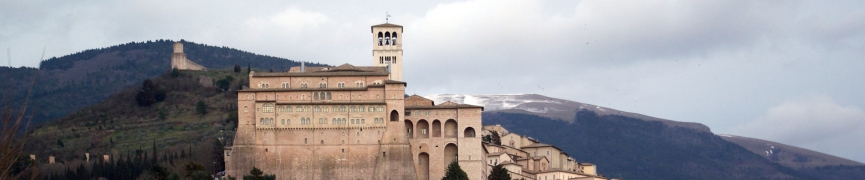
Ordination of six new priests by Archbishop Chaput
The Philadelphia Chapter of the Latin Liturgy Association extends their warmest wishes to the newest priests of the Archdiocese, ordained by Archbishop Charles Chaput on Saturday May 17, 2014 at the Cathedral of Saints Peter and Paul. While their assignments are pending, please keep these young men in your prayers. We hope to see some of these new priests at any of the Traditional Latin Mass sites within the Archdiocese in the future.
Deo Gratias!

May 18, 2014 No Comments
Solemn High Mass at Sts. Peter & Paul Cathedral Basilica
On June 15th, 2014, Trinity Sunday, Rev. Fr. Joseph Heffernan, FSSP, will celebrate a Solemn Mass at the Cathedral Basilica of Sts. Peter & Paul, at 18th and the Ben Franklin Parkway. The Mass will begin at 2:00 PM. Father Heffernan is from Philadelphia and was a parishioner at Mater Ecclesiae, of Berlin, NJ.

Also, Trinity Sunday is the feast of Holy Trinity Church, and so the usual 12 Noon High Mass will be rescheduled to another time so as to accommodate Mass at the Basilica. All Holy Trinity parishoners are invited and encouraged to attend.
May 18, 2014 4 Comments
Feast of St. Robert Bellarmine at Nativity BVM, Port Richmond
A Low Mass for the feast of St. Robert Bellarmine will be offered at Nativity BVM Parish in the Port Richmond section of Philadelphia on Tuesday May 13 at 7:00 PM.

Main Sanctuary of Nativity BVM Catholic Church in Port Richmond, Philadelphia
May 12, 2014 No Comments
Confirmation in the Traditional Rite
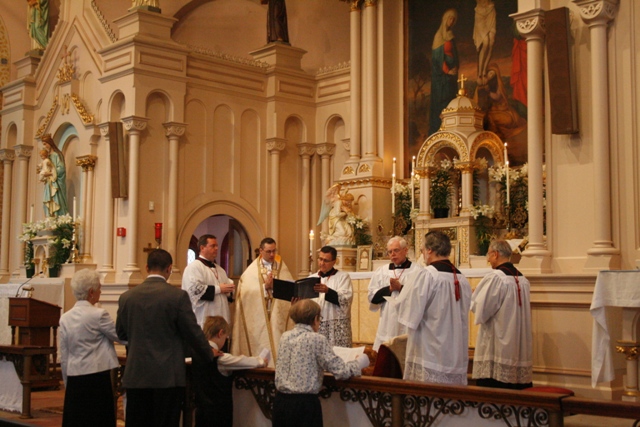
On Sunday May 4, the Sacrament of Confirmation in the Traditional Rite was administered to three Candidates at Holy Trinity Church.
In the absence of a Bishop, who is the Ordinary Minister of this Sacrament in the Latin Rite, a priest may be granted the faculty to confirm. Father Ronald Check was granted this faculty by virtue of an indult to be exercised during the Easter Season on those faithful entrusted to his care. It was conferred by the imposition of hands, anointing the brow with Chrism, and saying the words prescribed in the Pontifical approved by the Church. The connection with the Archbishop is maintained, as the Chrism has been blessed by him. This sacrament imprints a character, and for this reason cannot be received more than once. But in the case where reasonable doubt exists as to whether it has been given validly or at all, it should be conferred conditionally.
May 5, 2014 No Comments
Dom Mark Kirby on John XXIII on the Traditional Divine Office
by Peter Kwasniewski
In company, no doubt, with many NLM readers, I often find very deep spiritual and intellectual nourishment in reading the Vultus Christi blog, maintained by the Prior of Silverstream, Dom Mark Kirby, OSB. Just a few days ago, Fr. Kirby posted a splendid article entitled “Saint John XXIII: The Divine Office & the Council,” which, in addition to the author’s insights, offers us the full text of Pope John’s Apostolic Exhortation Sacrae Laudis of 1962. To read this is quite simply to see, in its full starkness, how bitterly Pope John has been betrayed, how ruthlessly his own piety and doctrine were trampled under foot, and how much rebuilding falls to us if we wish to reconnect with the living stream of worship that comes to us from our forefathers.
Here, then, are some of Fr. Kirby’s reflections.
The Apostolic Exhortation Sacrae Laudis (6 January 1962) is, to my mind, wonderfully revealing of the piety of “Good Pope Johnâ€. There were and there are many, both in the Church and in the secular media, who would have us believe that Papa Roncalli was a revolutionary, a modernist, an iconoclast. Nothing could be further from the truth. How exactly did this misrepresentation of Pope John XXIII become so prevalent? It was, it seems to me, a question both of image and of personal style. Pope John XXIII differed in a number of very obvious ways from his predecessor, the Venerable Pope Pius XII. Whereas Pius XII was thin and hieratic–looking, John XXIII was rotund and grandfatherly — not only Papa, but also Nonno. Although both Popes were seasoned diplomats, Pacelli’s diplomacy was aristocratic in style; Roncalli’s diplomacy had the shrewdness of the Bergamasque peasant. Pacelli was convincing; Roncalli was winning.
The piety of Pope John XXIII was liturgical, priestly, and devotional. (Do not miss Pope John’s lovely proposal that priests pray the Divine Office together with their Guardian Angels!) It was, at once, lofty and childlike. Sacrae Laudis reveals his profound understanding of the sacred liturgy in the life of the Church and, in particular, of the uniquely exalted quality of the Divine Office, the Church’s daily sacrifice of praise. In reading the holy Pope’s Apostolic Exhortation on the Divine Office for the Council, it becomes clear that he had no intention of overturning the liturgical practice of the Roman Church as it had developed organically, over the centuries, under the gentle guidance of the Holy Ghost. Thus does he write:
“The Breviary is in very truth a perennial and inexhaustible fount of supernatural light and grace. Small wonder, then, that the Breviary serves this Second Vatican Council as a source-book, as is evidenced in the reports of the careful, unremitting work of the various preparatory Commissions. It is a mine of purest doctrine and wisest counsels of ecclesiastical discipline, admirably adapted to present needs. We are therefore justified in Our assertion that in entering upon a new era we have preserved our ancient heritage intact. It is an era which seems to hold the promise of a great spiritual advance.”
I, for one, am gripped by a certain irony in reading these words. A mere ten years after his splendid Apostolic Exhortation, the very Divine Office that Pope John XXIII extolled in glowing terms had been hacked apart and, out of its dismembered parts, reassembled into something entirely different. Without any respect for the law of organic continuity that had — until the dodgy iconoclastic operations of certain liturgical experts in high places in the 1960s — wisely restrained even the most questionable earlier liturgical reforms, the creation of the reformed Liturgia Horarum, instead of fostering the ongoing renewal of liturgical piety, announced its demise. One of the most bitter fruits of the post–Conciliar liturgical reform (never intended by Pope John XXIII) was the widespread abandonment of the breviary by diocesan clergy, the virtual silencing of countless choirs in the mendicant Orders, and among the monastic Orders, the degeneration of choral prayer into a chaotic diversity of forms that, in no way, reflect the letter or the spirit of Saint Benedict’s liturgical legislation. [ . . . ]
The aim of the Council was, wrote Saint John XXIII, “to seek to recapture some of that ardor displayed by the Church in her youth, and thus to restore to her the full splendour of her countenanceâ€. We can certainly pray, even now, through the intercession of “Good Pope John,†that this aim of the Council will, by the grace of the Holy Ghost, be realised even at this late hour in spite of the accumulated contradictions, disappointments, and failures of the past fifty years. The full splendour of the countenance of the Church will not be restored until the prayer of the Church is restored to its rightful place and until her bare ruined choirs, warmed and illumined by the flames of a living liturgical piety, begin to resound again with the sound of many voices.
Amen to that!
Fr. Kirby’s post then gives the text of Pope John XXIII’s Apostolic Exhortation Sacrae Laudis.
May 2, 2014 No Comments
John XXIII in His Own Words (4): The Defense of Catholic Truth
by Peter Kwasniewski
John XXIII’s eight encyclicals are relatively little known and studied today, with the possible exception of Mater et Magistra and Pacem in Terris. As an avid reader of papal encyclicals issued over the past 250 years, I can definitely recommend John XXIII’s for the contemporary Catholic. They deserve to be dusted off and reconsidered, not least because they show a Pope who is conscientiously and continually linking his teaching with that of his predecessors, especially Leo XIII and Pius XII.
Here, I will quote some splendid passages from John XXIII’s inaugural encyclical Ad Petri Cathedram and some from Mater et Magistra that show the clarity and vigor of his defense of Catholic truth. He is so opposed to relativism, indifferentism, laxism, or muddled thinking that he would probably have caused heart failure in a gathering of ecclesiastics today. His language reminds me a great deal of Pope Benedict’s “dictatorship of relativism†theme.
So, the next time someone praises John XXIII for “opening up the Church†or “moving her into the modern world†or “introducing a new spirit†or some such slogan, you might counter with a depiction of the saint’s intransigent defense of Catholic truth, his insistence on the unity and unicity of the Catholic Church, his urgent invitations to Protestants to let go of their errors and return to their common Mother, his skirmishes against the emerging cult of hedonism, the idolatry of technics, and the dictatorship of relativism—in short, all of the ways in which he prepared for the Paul VI of Humanae Vitae, the John Paul II of Veritatis Splendor, and the Benedict XVI of Deus Caritas Est.
Ad Petri Cathedram (June 29, 1959)
All the evils which poison men and nations and trouble so many hearts have a single cause and a single source: ignorance of the truth—and at times even more than ignorance, a contempt for truth and a reckless rejection of it. Thus arise all manner of errors, which enter the recesses of men’s hearts and the bloodstream of human society as would a plague. These errors turn everything upside down: they menace individuals and society itself.
Some men, indeed do not attack the truth wilfully, but work in heedless disregard of it. They act as though God had given us intellects for some purpose other than the pursuit and attainment of truth. This mistaken sort of action leads directly to that absurd proposition: one religion is just as good as another, for there is no distinction here between truth and falsehood. “This attitude,†to quote Pope Leo [XIII] again, “is directed to the destruction of all religions, but particularly the Catholic faith, which cannot be placed on a level with other religions without serious injustice, since it alone is true.†Moreover, to contend that there is nothing to choose between contradictories and among contraries can lead only to this fatal conclusion: a reluctance to accept any religion either in theory or in practice.
The peace, then, which we must seek, which we must strive to achieve with all the means at our disposal, must—as We have said—make no concessions to error, must compromise in no way with proponents of falsehood; it must make no concessions to vice; it must discourage all discord. Those who adhere to this peace must be ready to renounce their own interests and advantages for the sake of truth and justice, according to the words: “Seek first the kingdom of God and his justice.†(§95)
There is one truth especially which We think is self-evident: when the sacred rights of God and religion are ignored or infringed upon, the foundations of human society will sooner or later crumble and give way. (nn. 6, 17, 95, 140)
Mater et Magistra (May 15, 1961)
There are some indeed who go so far as to deny the existence of a moral order which is transcendent, absolute, universal and equally binding upon all. . . .
But the moral order has no existence except in God; cut off from God it must necessarily disintegrate. Moreover, man is not just a material organism. He consists also of spirit; he is endowed with reason and freedom. He demands, therefore, a moral and religious order; and it is this order—and not considerations of a purely extraneous material order—which has the greatest validity in the solution of problems relating to his life as an individual and as a member of society, and problems concerning individual States and their inter-relations. . . .
Let men make all the technical and economic progress they can, there will be no peace nor justice in the world until they return to a sense of their dignity as creatures and sons of God, who is the first and final cause of all created being. Separated from God, a man is but a monster, in himself and toward others; for the right ordering of human society presupposes the right ordering of man’s conscience with God who is Himself the source of all justice, truth, and love….
The most perniciously typical aspect of the modern era consists in the absurd attempt to reconstruct a solid and fruitful temporal order divorced from God, who is, in fact, the only foundation on which it can endure. In seeking to enhance man’s greatness, men fondly imagine that they can do so by drying up the source from which that greatness springs and from which it is nourished. They want, that is, to restrain and, if possible, to eliminate the soul’s upward surge toward God. But today’s experience of so much disillusionment and bloodshed only goes to confirm those words of Scripture: “Unless the Lord build the house, they labor in vain that build it. 
Similarly, Our Predecessor, Pius XII, rightly asserted that our age is marked by a clear contrast between the immense scientific and technical progress and the fearful human decline shown by “its monstrous masterpiece. . .transforming man into a giant of the physical world at the expense of his spirit, which is reduced to that of a pygmy in the supernatural and eternal world.â€
And so the words of the Psalmist about the worshipers of false gods are strikingly verified today. Men are losing their own identity in their works, which they admire to the point of idolatry: “The idols of the Gentiles are silver and gold, the works of the hands of men.†(nn. 205, 208, 215, 217, 243-244)
Is this a clear, forceful proclamation of the truth, in season and out of season? You bet. Is this an example of old-fashioned papal triumphalism? No question; it looks and sounds like the best and noblest of our Catholic Tradition. May the Church of today and her leaders recover this truly humble certainty of proclaiming the truth that saves mankind from his unenlightened arrogance.
Saint John XXIII, pray for us.
May 2, 2014 No Comments
First Friday and First Saturday TLM’s for May
First Friday, May 2, A.D. 2014, Traditional Latin Mass (TLM) will be offered by Fr. Harold B. Mc Kale, Parochial Vicar of Nativity of the Blessed Virgin Mary Roman Catholic Church, at the Rectory Chapel of St. Albert The Great Parish, 212 Welsh Road, Huntingdon Valley, PA 19006, (T) 215-947-3500, at 7 p.m. preceded by Confessions at 6:30 p.m.
This TLM will be offered in Reparation to The Sacred Heart of Jesus and will be the Mass of St. Athanasius, Bishop, Confessor, Doctor of the Church.
First Saturday, May 3, A.D. 2014 TLM will also be offered by Fr. Harold B. Mc Kale, at the Rectory Chapel of St. Albert The Great Parish, at 9 a.m., preceded by Confessions at 8:30 a.m. This TLM will be offered in Reparation to The Immaculate Heart of Mary and will be a Votive Mass (IV) of the Blessed Virgin Mary in Eastertide.
The St. Albert The Great Rectory, also known as the Parish Center, is behind the Church, which fronts on Welsh Road.
Thank you for publicizing these Traditional Latin Masses.
Mark Matthews
May 1, 2014 No Comments
Spring Schedule of TLMs at Nativity BVM, Port Richmond

Fr. Harold McKale will continue to offer the Traditional Latin Mass at Nativity BVM Parish in the Port Richmond section of Philadelphia on select feast days through July 2014. Please refer to the schedule below for the dates and times of Holy Mass.
A sung High Mass will also be offered at St. Adalbert’s Church (1 block east of Nativity BVM) through permission granted by Fr. Jan Palkowski, pastor of St. Adalbert’s.
Anyone interested in serving as an acolyte for these Masses are encouraged to contact Fr. McKale at 215-739-2735 or by email at frmckalenativitybvm@gmail.com.
Thurs May 1 – 7PM – St. Joseph the Worker – L
(with hymns from choir of Our Lady of Port Richmond Regional Catholic School)
Tues May 13 – 7PM – St. Robert Bellarmine – L
Thurs June 5 – 7PM – St. Boniface – L (with hymns)
Fri June 27 – 7PM – Feast of the Sacred Heart of Jesus – H
+++at St. Adalbert’s Church+++ 2645 E Allegheny Ave
Tues July 1 – 7PM – Feast of the Most Precious Blood – L
L – Low Mass H – High Mass
April 29, 2014 No Comments
Easter Sunday at Holy Trinity Church
Easter Sunday concluded the celebration of the Sacred Triduum at Holy Trinity Church in Center City Philadelphia. This year, the Archdiocese of Philadelphia granted permission to the Apostolate at Holy Trinity to celebrate all of the liturgical rites from Holy Thursday to Easter Sunday in the Extraordinary Form. Holy Trinity Church is also the only church in Philadelphia dedicated exclusively to the celebration of Mass and Sacraments in the Exraordinary Form.


The Philadelphia Chapter Latin Liturgy Association extends its thanks to Archbishop Chaput, the Auxiliary Bishops, Clergy and laity who have made this apostolate possible.
April 21, 2014 No Comments
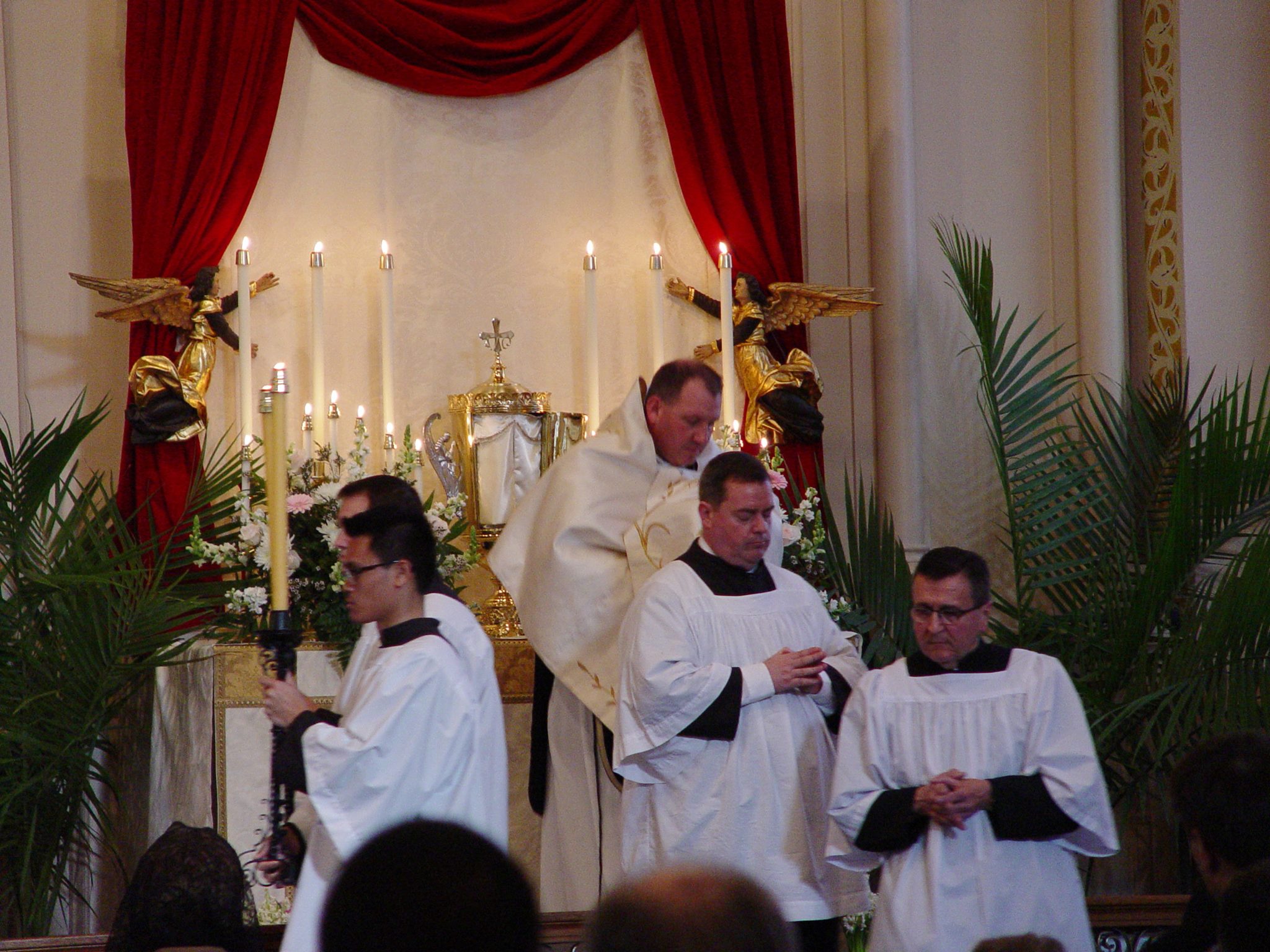
Holy Week at Holy Trinity Church
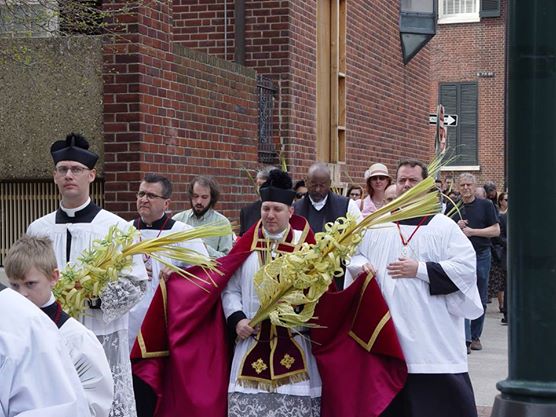
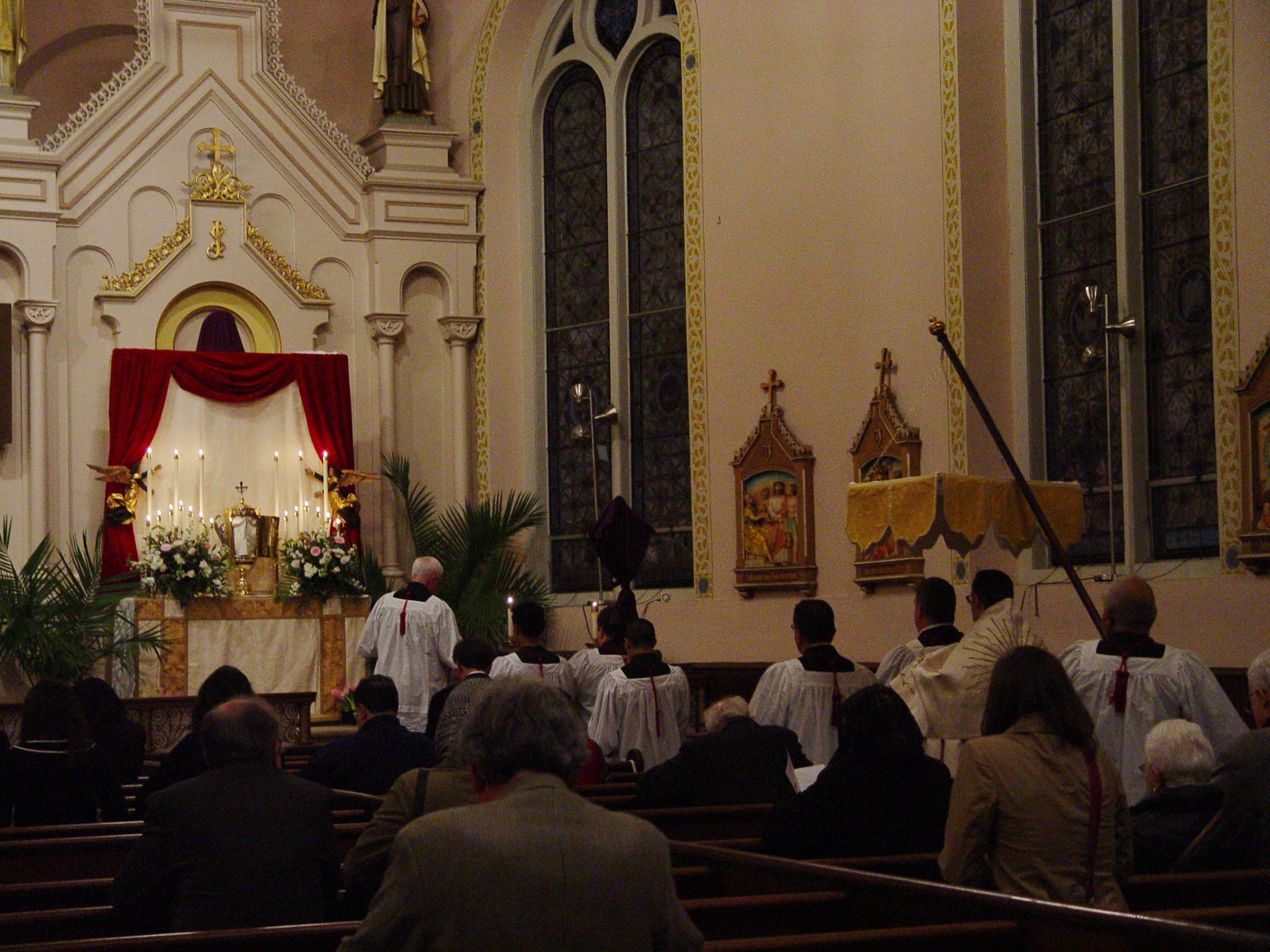
This week the liturgies of Holy Week in the Extraordinary Form are being celebrated at Holy Trinity Church and continue through Easter Sunday.
In the Archdiocese of Philadelphia, this marks the first time since the Second Vatican Council that the Rites of the 1962 Liturgy of Holy Week have been celebrated, through permission granted by His Eminence Archbishop Chaput. This permission has only been extended to Holy Trinity Church in Center City Philadelphia.
April 19, 2014 2 Comments