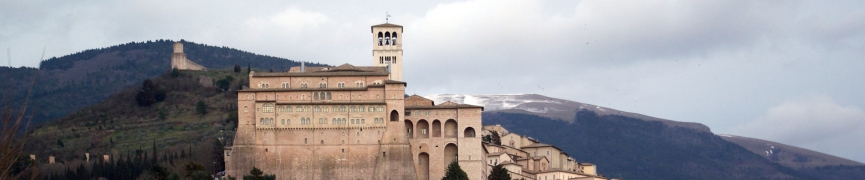
The Saints of the Ambrosian Canon (Part I)
The Saints of the Ambrosian Canon (I)
by Gregory DiPippo
As a follow-up to Shawn’s recent and not-so-recent posts on the Saints of the Roman Canon, I will here offer some considerations of the Saints named in the Canon of the Ambrosian Rite, starting with those in the Communicantes. A second post will enumerate those in the Nobis quoque, and a third will discuss some of the other differences between the Roman and Milanese versions of the Canon.
The traditional Ambrosian liturgy is of course very different from the Roman, but also shares with it a large number of texts and rites. Foremost among them is the Canon of the Mass itself, which is mostly the same as the Roman Canon; this fact mislead the liturgical scholars of earlier periods to think that the Ambrosian Rite was simply an archaic version of the Roman, a theory now happily abandoned. There are several minor differences in wording (e.g. “ante conspectum tremendae majestatis tuae†in the Supplices), and a few noteworthy interpolations, but the place where the Canon varies most extensively is in the two lists of Saints. We may also note in passing that Milan was not the only place where these lists differ from the very ancient Roman tradition; in France, for example, many places added the names of Ss. Martin of Tour and Hilary of Poitier to the Communicantes. However, variants of this sort among the uses of the Roman Rite are very rare, and had almost completely disappeared at the time of the Tridentine reform.
The Ambrosian Communicantes begins as the Roman does, with the Virgin Mary and the twelve Apostles, in the same order as in the Roman Canon and Litany of the Saints. After the Apostles, however, the Ambrosian Rite does not observe the strictly hierarchical (and mostly chronological) order of the Roman Rite. Ss. Linus and Cletus are omitted, and St. Clement is moved; the Apostles are followed directly by Pope Sixtus II, who was martyred in the persecution of Valerian in 257, and was in antiquity the most venerated of the martyred Popes after St. Peter himself. Right after him are named two saints with whom he is associated, his deacon, the martyr St. Lawrence, and St. Hippolytus, a soldier who was killed after burying the body of Lawrence.
The name of St. Vincent of Saragossa, a martyr of the persecution of Diocletian, greatly venerated already in the fourth century, comes next. He was a deacon who courageously suffered a horrific martyrdom, like Ss. Stephen and Lawrence, with whom he was often associated in art and liturgy. Pope St. Cornelius and St. Cyprian of Carthage are then named together as in the Roman Canon; they were martyred on the same day, September 14th, but in different years, Cornelius in 253, Cyprian five years later. They are celebrated together in the liturgy, not only because they died on the same day, but also because they collaborated in resisting the rigorist schism of Novatian. The church of Milan has traditionally devoted their Roman feast day, September 16th, to St. Euphemia of Chalcedon, who is named in the Ambrosian Nobis quoque; the two martyred bishops, therefore, have been kept at Milan in different periods on the 12th or 19th, or as a commemoration on the Exaltation of the Cross. (pictured right: St. Vincent, attributed to Nuño Gonçalves, 1460-70)
Pope St. Clement I, the third successor of St. Peter, is placed after Cyprian, followed by five other martyrs, in the same order as in the Roman Canon: Chrysogonus, John and Paul, Cosmas and Damian. All six are honored at Rome by prominent churches; the basilica of Ss. Cosmas and Damian was built in 527, but the churches of the other four date back to the fourth century, and would have been known to St. Ambrose.
Although the names and order of the Saints thus far are not identical, both versions of the Canon share one important characteristic; the twelve Apostles are followed by twelve especially famous martyrs, a total of twenty-four, representing the twenty-four elders seen by St. John before the throne of God in the fourth chapter of the Apocalypse. At this point, the Ambrosian Rite adds the names of ten other martyrs, nine of whom are particularly associated with Milan. The first, however, St. Apollinaris, was the founder of the church of Ravenna, which succeeded Milan as the capital of the Roman Empire in 402, five years after St. Ambrose’s death. He is included among the local martyrs most probably because Ravenna, like all of northern Italy, was part of the ecclesiastical province of Milan in late antiquity, and placed first as the earliest, and the only cleric among them. Apollinaris was traditionally said to have been a disciple of St. Peter, and to have preached throughout the north of Italy before his martyrdom at Ravenna in the later part of the first century.
He is followed by St. Vitalis, the father of two other martyrs named shortly thereafter, Ss. Protasius and Gervasius. His feast is kept on April 28th in both rites, but Milan adds his wife St. Valeria to his Mass and Office. The account of their martyrdom is considered unreliable by modern scholars, as is that of their sons; according to the story, Vitalis was a soldier from Milan, who was identified as a Christian when he encouraged the martyr Ursicinus as the latter was being tortured. After burying Ursicinus, he was condemned, thrown into a pit, and overwhelmed with stones and earth. This took place at Ravenna, where the famous basilica named for him stands on the putative site of his martyrdom; this connection with Ravenna may have also brought devotion to St. Apollinaris to Milan. Valeria returned to Milan, where she was beaten by pagans after refusing to sacrifice to the idols, and died shortly thereafter of her wounds.
Ss. Nazarius and Celsus, the next in the list, are kept in both rites on July 28th, but the Roman Rite adds two Popes to their feast, Ss. Victor I and Innocent I. Their unreliable passion states that Nazarius was an itinerant preacher in the first century, who journeyed through various parts of northern Italy and Gaul, and to whom Celsus’ mother entrusted her son to be baptized and raised as a Christian; thereafter, he shared Nazarius’ travels and missionary activities, as well as his martyrdom at Milan. Their bodies were discovered by St. Ambrose in 395 A.D. in a garden outside the city walls, the blood of St. Nazarius being still fresh and red; the relics were then translated to the Basilica of the Twelve Apostles. The feast of this translation is kept in the traditional Ambrosian Rite on May 10th.
Nine years earlier, St. Ambrose had uncovered the relics of another pair of Milanese martyrs, Ss. Protasius and Gervasius, having been shown the place of their long-forgotten burial in a dream. Nothing is known for certain of these saints, not even the era of their martyrdom, but devotion to them was once very widespread; they are even named in the Roman version of the Litany of the Saints, last among the company of the martyrs. Their relics were taken to a newly built basilica, then called simply “the Basilica of the Martyrsâ€, and laid in a place Ambrose had originally intended for his own burial; the translation and the miraculous healings which accompanied it are recorded by Ambrose, by his secretary, Paulinus, who would later write his Life, and by St. Augustine. The great bishop and doctor himself was laid to rest next to them when he died in 397, and the basilica is now officially named after him. In the mid-ninth century, the abbot of the attached monastery placed the relics of all three saints in a large porphyry sarcophagus, which was later sunk into the floor and covered over; it was rediscovered in 1864 during a major restoration project, and the three bodies are now seen in the Confession of the church under the altar. The feast day of the two martyrs is on June 19th, and the traditional Ambrosian Calendar also has the feast of the “Raising up of the Bodies of Ss. Ambrose, Protasius and Gervasius†on May 14th.
The next three martyrs, Ss. Victor, Nabor and Felix, were Christian soldiers from the Roman province of Africa, who were killed in the first year of the persecution of Diocletian, 303 A.D., while serving at Milan under the emperor Maximian. Nabor and Felix were beheaded in the nearby city of Laus Pompeia, (now called Lodi Vecchio,) and their feast is on July 12th; St. Victor, who was much older than the other two, was martyred later, at Milan itself, and his feast is kept on May 8th in the Ambrosian Calendar. The two feasts share a beautiful hymn, in which Milan expresses its pride in these “guests upon this soil, of the Moorish nation, strangers in our lands, … (whom she) stole from the camps of the wicked and consecrated to Christ.â€
The last of the martyrs is an early bishop of Milan, St. Calimerius. The chronology of the bishops of Milan before the Constantinian peace is quite uncertain, and the episcopacy of Calimerius, traditionally said to run from 138 to 192 A.D., may in fact have been in the later part of the following century. The Ambrosian Breviary tells the story that on the death of his predecessor, St. Castrician, he strenuously resisted acceptance of the episcopal office, and had to be dragged in chains to his consecration. A basilica in Milan is named for him, and his feast day is kept on July 31st.
Prior to the reform of the Ambrosian liturgy under St. Charles Borromeo, ten sainted Confessors were also named in the Canon of Mass. The first five were bishops of Milan: Ss. Maternus, (316-328), Eustorgius I, (344-350), Dionysius, (350-355), Ambrose (374-397) and Simplician (397-401). There then followed Ss. Martin of Tour, Eusebius of Vercelli, Hilary of Poitier, Pope Julius I and Benedict, bishop of Milan from 681-725. These names were removed from the Canon by St. Charles, who decreed, apparently on the analogy of the Roman Canon, that the Saints named therein should all be martyrs.
Finally, we may note that the list of Saints in both the Communicates and the Nobis quoque is printed in two parallel columns, rather than in a continuous line like the rest of the text: this custom is a remembrance of the ancient custom of reading the names from hinged plaques called diptychs.
Posted Wednesday, August 31, 2011
September 5, 2011 No Comments
Corrigendum regarding the future Missa Cantata at Our Lady of Lourdes
The 10:00 a.m. Missa Cantata beginning October 2nd, will not be a Solemn High Missa Cantata, but a Missa Cantata.
August 29, 2011 No Comments
First Friday & Saturday TLM’s at St. Albert the Great
From: Mark Matthews, Esquire
Re: First Friday, Sept. 2nd, and First Saturday. Sept. 3rd, Traditional Latin Masses (TLM’s) at St. Albert the Great Church, 212 Welsh Rd., Huntingdon Valley, 19006 PA. (Montgomery County).
Need Directions? Try www.mapquest.com or your favorite routing website.
Dear Friends and Benefactors:
First Friday TLM at the Rectory Chapel of St. Albert The Great Parish, Huntingdon Valley, PA will be offered by Fr. Richard McFadden of St. Charles Borromeo Parish in Bensalem.
As usual, confessions will be heard at 6:30 p.m. followed by the TLM at 7 p.m.
First Saturday TLM at the Rectory Chapel of St. Albert The Great will be offered by Fr. Dominick Finn, O.S.F.S.
Similarly, confessions will be heard at 8:30 a.m. followed by the TLM at 9 a.m.
Your help in publicizing these TLM’s would be highly appreciated.
Hope to see you there.
August 28, 2011 No Comments
WEEKLY MISSA CANTATA TO START.
The 7:30 a.m. Low Mass on Sundays at Our Lady of Lourdes Church, 63rd Street & Lancaster Ave., Philadelphia (Overbrook), PA 19151, will be replaced starting on October 2, 2011, with a Solemn High Missa Cantata at 10:00 a.m. every Sunday. The pastor, Fr. James Mayer, O. de M., requests additional altar servers and singers to help with this weekly sung Mass. Interested volunteers should call the parish office at 215-473-1669.
August 26, 2011 No Comments
Michael Voris: Being Catholic is about salvation, not accommodation.
Francis Phillips relates Michael Voris’s take no prisoners approach to faith.
By Francis Phillips on Thursday, 25 August 2011
I was at Regent Hall, Oxford Street last night to hear Michael Voris speak about what it means to be Catholic. For those who did not see my last blog post about him, Michael founded St Michael’s Media, a Catholic TV station, in 2006 and RealCatholicTV.com, an on-line Catholic TV station, in 2008. All credit to Paul Smeaton, son of John Smeaton and a recent graduate, for arranging this talk.
It was very well attended; the “stalls†were packed, if not the “galleryâ€. But this was no theatrical event. It was a dedicated Catholic addressing his fellow believers and it was electrifying. Voris is no slouch when it comes to straight talking. He has been criticised for this in the past, for speaking as if he “has authorityâ€. After all, he is only a layman, sounding off as if he were a bishop.
This is precisely Voris’ point: as a confirmed Catholic and “soldier of Christ†(remember that quaint phrase?) he sees it as his duty – and ours – to be an evangelist for the Faith. It is our responsibility and not to be sloughed off on the hierarchy – who may or may not be fulfilling their responsibilities. He told us in no uncertain terms, “You have a vital role to play: to work out your own salvation and to do everything possible for the salvation of others.â€
He has no truck with the description “I am a Catholicâ€, said in the same way as one might say “I am an Irishman.†To be Catholic is who we are; the correct description should be “I am Catholic†and chuck away the indefinite article. This was heady stuff and several times he got loud applause. Voris is sometimes accused of being too full of himself – but I don’t think he cared a toss about the clapping. He was too on fire with his message; it is very simple: to be Catholic means to pay any price in order to love Christ with every fibre of one’s being and “to look at the world as a theatre of redemption.â€
As if we didn’t hear it all around us, he reminded us that the words “accommodationâ€, “tolerance†and being “non-judgmental†are simply not stances that a Catholic can take. “The Faith is about salvation, not accommodationâ€, he reminded us. It’s not enough to have a private devotional life and leave the world to go hang; quoting the late great American Jesuit, Fr John Hardon, Voris told us, “If we are not about saving the world, then why are we Catholic?â€
In one memorable anecdote, he related that, aged 14, he had served at a Mass in San Francisco celebrated by the late Archbishop Fulton Sheen. In the sacristy afterwards a young man had come up to him, telling him that he had written a book synthesising Eastern mysticism with the Western Church. “Get out!†roared the Archbishop. “The Catholic Faith is a gift from Almighty God and I will not have you polluting it! Get out!â€
As I said, it was heady stuff. I left with the words “When you hear the truth you must either reject it or change your life†ringing in my ears. Why not check out Voris’ website?
August 25, 2011 No Comments
No more altar girls at Phoenix Cathedral.
By Joyce Coronel | Aug. 23, 2011 | The Catholic Sun
When the news broke that Fr. John Lankeit, rector of Ss. Simon and Jude Cathedral, was changing policy on altar servers, secular media outlets were quick to offer their take on the development.
From now on at the Phoenix Diocese’s cathedral, only boys will be altar servers. Girls who are currently serving in that capacity will have the opportunity to train as sacristans.
“There were about five or six girls who were still serving and I called their parents to explain there would be a transition,” Fr. Lankeit said. “I invited them, told them they are welcome right away to begin training as sacristans.”
The news may have come as a bit of a shock to some local Catholics, but Fr. Lankeit attributes that to those who are, unknowingly perhaps, more influenced by society rather than by Church teaching.
The decision, he said, is a way to honor the God-given dignity of both men and women. It’s also one way to encourage more vocations to the priesthood and religious life.
“If you look around the Church — and I’m talking about the overall Church — if you look at dioceses, if you look at religious orders and you look at parishes where they have the clear honoring of the distinction and the complementarity of men and women, you see both vocations flourish,” Fr. Lankeit said. “And when I say both vocations, I mean to the priesthood as well as vocations to the consecrated religious life.”
Backgrounder: Altar Serving at the Cathedral
He pointed to a parish in Ann Arbor, Mich., as one such example. In 2008, the parish had 22 seminarians, Fr. Lankeit said. He also mentioned the Diocese of Lincoln, Neb., which similarly reserves altar service to boys and has seen strong growth in vocations to the priesthood.
Fr. Lankeit understands his decision regarding altar servers may be upsetting to some.
“If the question is approached just from an emotional standpoint, I can understand why people would be upset because they’re looking at it terms of a question of rights — and they’re interpreting it in such a way that somebody’s rights are being denied,” he said.
The fact is, Fr. Lakeit said, becoming an altar server is not at all about rights. The same goes, he said, for the priesthood.
“Prior to my ordination, as a single, Catholic man, I had no right whatsoever to the priesthood. And so when I went into the seminary, I was determining whether or not Jesus Christ was calling me to be a priest, but the Church was likewise discerning me and the ultimate decision was the Church’s,” Fr. Lankeit said. “Even if I felt very, very strongly at the bottom of my heart that I was called to be a priest and the Church didn’t recognize that, I had to accept that.”
Unfortunately, when the secular world steps in to comment on whether or not altar servers should only be male, the issue is examined from an emotional point of view, rather than considered in light of the reasons behind the decision, he said.
Fr. Lankeit pointed to paragraph 47 of the Instruction Redemptionis Sacramentum, promulgated by the Vatican’s Congregation for Divine Worship and Discipline of the Sacrament. The text, he said, confirms something he already knew: the vast majority of men who are priests were once altar servers.
“It is altogether laudable to maintain the noble custom by which boys or youths, customarily termed servers, provide service of the altar after the manner of acolytes, and receive catechesis regarding their function in accordance with their power of comprehension,” the instruction reads in part. “Nor should it be forgotten that a great number of sacred ministers over the course of the centuries have come from among boys such as these.”
While the Redemptionis Sacramentum says girls or women may be admitted as altar servers, it leaves the decision to the discretion of the local ordinary.
Fr. Paul Sullivan, director of vocations for the Phoenix Diocese, said that pastors, such as Fr. Lankeit, must decide what is best for their parish.
“The pastor has to decide on his end how to form young women and young men,” Fr. Sullivan said, “and certainly an area where we need formation is among young men.”
Where there is strong formation of young men, Fr. Sullivan said, there are more vocations to the priesthood. He said that kind of formation stresses service and avoids a false egalitarianism and false clericalism.
In other words, he said, it’s not about power or competition between the sexes — it’s about serving God and forming young people in the faith.
Do young girls who serve at the altar become nuns?
“I haven’t seen that evidence,” Fr. Sullivan said. “The parish I know that has the most female vocations has no altar girls… I’ve never met a young girl who has said, ‘I found my vocation altar serving.’ Maybe it’s happened.”
Fr. Lankeit addressed the issue of women’s vocations to religious life and praised the Dominican Sisters of Mary, Mother of the Eucharist and the Poor Clares of Perpetual Adoration. Both communities have sisters in the Diocese of Phoenix.
“When women are faithful to the Church, when they live in conformity to the Church and they have a spirit of obedience just as a priest is called to, they have the tremendous admiration and respect of priests,” Fr. Lankeit said. “I often turn to those same women, even though I’m able to offer the holy sacrifice of the Mass, when I need prayers. Their way of life and the faithfulness with which they live challenges me to pursue holiness even more vigorously.”
Fr. Lankeit said that the decision regarding altar servers at the cathedral is only one of many factors in encouraging vocations.
“Don’t get me wrong — this alone will not be the be-all and end-all of increasing vocations,” Fr. Lankeit said. He’d also like to establish perpetual adoration at the cathedral.
“It’s a high priority for me and I’m trying to discern how to make that happen here,” he said.
Sarah Dieckman, a parishioner at Ss. Simon and Jude, said her 11-year-old son Jack loves being an altar server. She also has a daughter in fourth grade who was looking forward to becoming an altar server next year.
Dieckman did not offer an opinion either way on the policy change at the cathedral, saying she wanted to find out the reasons behind the decision.
“It’s a big change and I want to understand where it’s coming from,” Dieckman said. “I would want to know more about the reasons for the change before having an opinion about it.”
August 25, 2011 No Comments
The Roman Rite is a Sung Mass
Posted by Jeffrey A. Tucker
I enjoyed this column enormously, so it is reprinted here courtesy of The Wanderer
From the mail, from The Wanderer
An estimated two million Catholics from around the world descended on Madrid for World Youth Day 2011, providing some “good news†for a weary world that seems to be spiraling into total chaos, with wars and plagues and famines proliferating. What a beautiful sight it was to behold!
For FROM THE MAIL, what set this World Youth Day apart from its predecessors was the showcasing of so much high quality Catholic music, an incredible demonstration that, finally, Catholics are learning how to sing.
In 1990, Thomas Day, chairman of the music department at Salve Regina University in Newport, R.I. published Why Catholics Can’t Sing: The Culture of Catholicism and the Triumph of Bad Taste, a book that won praise from every quarter, from the Jesuits’ America magazine to Sacred Music, then under the direction of the late Monsignor Richard Schuler.
More than twenty years later, the state of liturgical music in Catholic parishes is still dismal, for the most part, though progress is continually made, as Wanderer columnist Jeffrey Tucker reminds readers every week.
This progress is significant, especially because – even before the introduction of Pope Paul VI’s Novus Ordo, even before Vatican II – the state of liturgical music in the United States “is a sad one,†as Thomas Day pointed out in an article in Triumph magazine, January 1968.
* * *
While going through FTM’s collection of Triumph a few weeks ago to find articles written by the late Dr. Warren Carrol, FTM came upon Day’s article, “Must Church Music Be Bad Music?†and some of the observations he made then are as timely as ever, and questions he asked then should be answered by a new generation of priests and bishops now that the liturgical revolution is over and the time for clean-up has begun.
“The story of liturgical music in this country,†Day began, “is a sad one; in fact it has been and still remains something of a scandal. Today, while great urban centers like New York, Boston, Philadelphia and Los Angeles have a few passable choirs, the music in most parishes is deplorable. Almost everywhere , Gregorian chant and polyphony are completely unknown. To the average Catholic, Gregorian chant means singing in a monotone, and practically no one has heard Renaissance polyphony sung in his parish, though this music received the high praise of Benedict XIV, Pius X and Pius XII. Our popular tradition of hymnody and Church music is one of Victorian sogginess, and whenever I want to treat myself to some of the Catholic Church’s best music, I have to visit a remote monastery or a High Episcopal church.
“It is hard to explain why a Church that has placed so much stress on the beauty of worship tolerates such bad music in the parish. Some may have thought of music as a danger to devotion: Catholic dictionaries printed in this country usually claim that Canon Law somewhere prohibits the use of ‘distracting’ music, whatever that may be. Church music has too often been treated as a nuisance and a necessary evil; at best it has seldom been taken seriously, so that church organists are not uncommonly recruited from the ranks of eighth-grade girls who are just capable of playing a few chords on the piano.
“In the United States we therefore possess no background, no solid establishment, no proud tradition of Church music. The Vatican Council’s Constitution on the Sacred Liturgy presupposed a healthier situation; as things were, in unleashed among us any number of misconceptions, distortions and consequent resentments about the terrible music now permitted in our churches. If we are distressed by the recent lunacy in Church music, we must put the blame on our own scandalous neglect of it in the past….â€
Day was prescient in predicting that “musical illiterates†with a “shocking disregard for quality†were coming to the fore and would dominate the arena of liturgical music, and he reminded Triumph readers then what most Catholics still do not know now, no matter how often Jeffrey Tucker reminds us: the Roman Rite of the Mass is to be a sung Mass.
“Consequently,†Day continued, “the Gloria and the Sanctus fall flat when dryly recited – they were meant to be sung. Nothing sounds quite so absurd as the dehydrated recitation of the Dies Irae in a funeral Mass: it can only make sense when sung. And how silly and short some of the Communion verses sound when they are recited; their meaning is enhanced by singing.
“Nobody would think of opening a baseball game with a recitation of the National Anthem: Protestant congregations would never tolerate the idea of reciting the hymns for a service. But today, those key items of the Mass which were intended to be sung are flatly spoken instead. What was meant to be a burst of song is now a perfunctory recitation. This isn’t what the Church requires.
“A recent Vatican decree on the Eucharistic devotions and a directive issued by the Sacred Congregation of Rites on Church Music both emphasize that the Mass should be sung whenever this is practical, even if this means having more than one High Mass on Sunday. It shows a curious response to this principle, however, when four revival hymns are sung at Mass, while the two great hymns actually in the text (the Gloria and the Sanctus) are given quick recitations….â€
Day then turned his attention to the “musical freaks†– the “People’s Masses†pushed by liturgical publishers and diocesan liturgical commissions, and the ongoing “liquidation†of quality choirs with a tradition of singing Catholic music, and offered this reminder, as relevant now as it was in 1968.
“H.L. Mencken, of delightful memory, expressed in his essay Holy Writ, a sincere admiration for the Catholic Church ‘despite its frequent astounding imbecilities,’ because it had always kept clearly before it the fact that religion is not a syllogism but a poem.’ Mencken went on to say that ‘a solemn High Mass must be a thousand times as impressive, to a man with any genuine religious sense in him, as the most powerful sermon ever roared under the big top….In the face of overwhelming beauty it is not necessary to belabor the faithful with logic; they are better convinced by letting them alone.’
“From those Catholics who eat aggiornamento for breakfast, Mencken’s words will provoke a gasp of horror. But the truth in this sensitive observation is worthy of note, and we rightly surround even the simplest Mass with the ‘poetry’ of elaborate vestments, elevated language, candles, gestures and so forth. When it comes to music, however, anything will do – provided that it is not ‘distracting,’ in Latin, old, or sung by a choir….â€
After a brief summary of the history of Church music and congregational singing, Day concluded with praise for Gregorian chant and an exhortation that it be given pride of place in parish worship:
“….Everyone from a Bavarian farmer to a Chicago school teacher – non-Catholic as well as Catholic –is bound to understand, and even to identify with, the deep religious expression of this music. Folk music appeals to few, and modern, avante-garde Church music appeals to even fewer; but somehow Gregorian chant is almost impossible to dislike after one has heard it well performed. A further reason, and by no means the last, for the place of honor given to chant, is its timeless quality. Although most of this music was written in the Middle Ages, it has a freshness and a beauty that men immediately understand in every century and in every generation. All of the folk music that is in such vogue today will be considered an embarrassing joke, something affected and dated, in twenty years. The sane thing has happened to those weeping hymns that were written in the last century. One generation sweeps aside the contributions of the previous one. But Gregorian chant has shown a remarkable ability to survive the centuries. If it were to be legislated out of existence or retired to the library shelves, the result would be the one of one of the riches musical languages we possess for expression our religious thoughts.
“Now: Among the best settings of the Ordinary of the Mass for congregational use are those which are based on the simpler chant melodies or the chant-like idiom. The vocal range is small, there are not difficult skips to sing, and organ is not always necessary, and the rhythm flows naturally from the words themselves. The simple chant idiom is suitable for large and small congregations. If music based on chant has so many advantages, who needs a People’s Mass for mighty organ, bellowing chorus, and virtuoso congregation? We can do without the excessive breast-beating at the Kyrie and the crashing finale to the Gloria….
“In short, there are a number of plausible escapes from the aesthetic desert into which contemporary liturgists have led the Catholic Church. But if they are not taken, what can future musicologists be expected to conclude about this era of Church music, except that it was a time of senseless barbarism, destruction and impoverishment.â€
Yes, indeed, the past 43 years have been a time of senseless barbarism, destruction and impoverishment, and one wonders how many parishes will continue to indulge in such habits when it is clear today – as it was not then, accept to a few such as Day – that the Roman Rite of the Mass is to be sung – chanted, by priest and people at their designated times.
* * *
Recalling Mencken.
Prompted by Day, FTM searched for, and found, Mencken’s little essay Holy Writ, and the Sage of Baltimore packed a lot of wisdom that bears repeating today, especially to those who believe that what our Catholic people need today is better preaching by priests on Sunday morning.
What priests need to understand, wrote Mencken, is that the liturgy needs to speak for itself.
Here is the little essay, written in October 1923:
“Whoever it was translated the Bible into excellent French prose is chiefly responsible for the collapse of Christianity in France. Contrariwise, the men who put the Bible into archaic, sonorous and often unintelligible English gave Christianity a new lease on life wherever English is spoken. They did their work at a time of great theological blather and turmoil, when men of all sorts, even the least intelligent, were beginning to take a vast and unhealthy interest in exegetics and apologetics. They were far too shrewd to feed this disconcerting thirst for ideas with a Bible in plain English; the language they used was deliberately artificial even when it was new. They thus dispersed the mob by appealing to its emotions, as a mother quiets a baby by crooning to it.
“The Bible that they produced was so beautiful that the great majority of men, in the face of it, could not fix their minds on the ideas in it. To this day it has enchanted the English-speaking peoples so effectively that, in the main, they remain Christians, at least sentimentally. Paine has assaulted them, Darwin and Huxley have assaulted them, and a multitude of other merchants of facts have assaulted them, but they still remember the twenty-third Psalm when the doctor begins to shake his head, they are still moved beyond compare (though not, alas, to acts!) by the Sermon on the Mount, and they still turn once a year from their sordid and degrading labors to immerse themselves unabashed in the story of the manger. It is not much, but it is something. I do not admire the general run of American Bible-searchers — Methodists, United Brethren, Baptists and such vermin. But try to imagine what the average low-browed Methodist would be if he were not a Methodist but an atheist!
“The Latin Church, which I constantly find myself admiring, despite its frequent astounding imbecilities, has always kept clearly before it the fact that religion is not a syllogism, but a poem. It is accused by Protestant dervishes of withholding the Bible from the people. To some extent this is true; to the same extent the Church is wise; again to the same extent it is prosperous. Its toying with ideas, in the main, has been confined to its clergy, and they have commonly reduced the business to a harmless play of technicalities — the awful concepts of Heaven and Hell brought down to the level of a dispute of doctors in long gowns, eager only to dazzle other doctors. Its greatest theologians remain unknown to 99% of its adherents. Rome, indeed, has not only preserved the original poetry in Christianity; it has also made capital additions to that poetry — for example, the poetry of the saints, of Mary, of the liturgy itself.
“A solemn High Mass must be a thousand times as impressive, to a man with any genuine religious sense in him, as the most powerful sermon ever roared under the big-top by a Presbyterian auctioneer of God. In the face of such overwhelming beauty it is not necessary to belabor the faithful with logic; they are better convinced by letting them alone.
“Preaching is not an essential part of the Latin ceremonial. It was little employed in the early Church, and I am convinced that good effects would flow from abandoning it today, or, at all events, reducing it to a few sentences, more or less formal. In the United States the Latin brethren have been seduced by the example of the Protestants, who commonly transform an act of worship into a puerile intellectual exercise; instead of approaching God in fear and wonder these Protestants settle back in their pews, cross their legs, and listen to an ignoramus try to prove that he is a better theologian than the Pope.
“This folly the Romans now slide into. Their clergy begin to grow argumentative, doctrinaire, ridiculous. It is a pity. A bishop in his robes, playing his part in the solemn ceremonial of the Mass, is a dignified spectacle, even though he may sweat freely; the same bishop, bawling against Darwin half an hour later, is seen to be simply an elderly Irishman with a bald head, the son of a respectable saloon-keeper in South Bend, Indiana. Let the reverend fathers go back to Bach.
“If they keep on spoiling poetry and spouting ideas, the day will come when some extra-bombastic deacon will astound humanity and insult God by proposing to translate the liturgy into American, that all the faithful may be convinced by it.â€
What would Mencken, who died in 1956, have thought of the botch made of the English translation of the Mass foisted upon the English-speaking people of the world 40 years ago?
Likely he would have gone apoplectic with rage.
On the other hand, he likely would salute the new translation coming this Advent, even though he probably would prefer the Extraordinary Form of the Mass.
August 24, 2011 No Comments
Saints of the Roman Canon – Part 2: The Nobis Quoque by Shawn Tribe
We now turn to the second great invocation which follows in the Nobis Quoque. However, before we do that, some mention surely must be made of the Supra Quae since our concern is also more generally with the various figures mentioned within the Canon:
“Deign to look with propitious and serene countenance on them, and to accept them, as you deigned to consider acceptable the gifts of your just servant Abel, and the sacrifice of our Patriarch Abraham, and what your high priest Melchizedek offered you, a holy sacrifice, a spotless victim.
Here we see three figures of the Old Testament mentioned: Abel, Abraham and Melchizedek. Each of these offered to God sacrifices which were pleasing to Him (Abel: Genesis 4:4, Melchizedek, Genesis 14:18-20, Abraham: Genesis 22), and the same is asked of the sacrifice made present within the Mass.
That briefly noted, let us turn our attention back to our main point of focus, the Nobis Quoque.
To us sinners, also, your servants, who hope in your many mercies, deign to grant some share and fellowship with your holy Apostles and Martyrs: John, Stephen, Matthias, Barnabas, Ignatius, Alexander, Marcellinus, Peter, Felicity, Perpetua, Agatha, Lucy, Agnes, Cecilia, Anastasia, and all your Saints.
John here comes in reference to St. John the Baptist (though as Archdale King notes, while that “seems certain” there is some vagueness about this point):
It seems certain that the reference is to the Baptist rather than to the Evangelist, and a decree of the Congregation of Rites to that effect was issued in 1824. This was rescinded, for some unknown reason, in 1898, so that we are permitted to take our choice as to which John is commemorated, although it would seem unlikely that a name would be duplicated in the lists of the canon.
— Liturgy of the Roman Church, p. 338
However, V.L. Kennedy in The Saints of the Canon of the Mass (Pontificio Istituto di Archeologia Cristiana, Roma: 1963) rather plainly attributes the reference as being to St. John the Baptist:
The practice of commemorating St. John the Baptist and St. Stephen, the first martyr, in the prayer for the dead was very common in the East. [NLM: note that the saints commemorated in the nobis quoque immediately follow the memento of the dead] The fact that we find this practice, and along with it the phrase… which is the equivalent of the Latin, partem aliquam et societatem donare digneris cum tuis sanctis, in use in the church of Alexandria and in the rites that have their origin at that city, leads one to suspect that the composer of the Nobis quoque borrowed directly from Alexandria. (p. 152)
Kennedy further comments that “The remembrance of the dead is accompanied by a mention of the Blessed Virgin, St. John the Baptist and St. Stephen in the following Eastern liturgies: Coptic Jacobite, Abyssinian Jacobite…” (p. 45)
Next we have mention of St. Stephen, deacon and protomartyr, whose martyrdom we read of in the book of Acts, chapters 6 and 7. This is followed by St. Matthias, the apostle who replaced Judas Iscariot (Acts 1:15-26) and St. Barnabas, the companion of St. Paul, who is often thought of as a kind of apostle — or as the Catholic Encyclopedia notes it, “styled an Apostle… and, like St. Paul, ranked by the Church with the Twelve, though not one of them.” As Kennedy himself suggests, the inclusion of Matthias and Barnabas then would seem to be a completion of the list of the apostles found in the Communicantes.
The next four saints we shall look at only briefly. Ignatius comes in reference to St. Ignatius of Antioch, a bishop who was martyred in the reign of Trajan (ca. A.D. 98-117). With regard to the mention of Alexander, Kennedy notes the difficulty in ascertaining which St. Alexander this might have come in reference to, though he seems to leans toward “St. Alexander martyr, buried in the Cemetery of the Jordani… one of the group of seven whose names are found on July 10th in the Depositio Martyrum of 354 in the Hieronymian Martyrology and Leonine Sacramentary.” This is followed next by mention of Ss. Marcellinus and Peter, two martyrs, attributed by some ancient sources as a priest and exorcist respectively.
We finally conclude the saints mentioned in the Roman Canon with seven female saints: “Felicity, Perpetua, Agatha, Lucy, Agnes, Cecilia, Anastasia.” These women saints are all rather well and popularly known, so suffice it to simply point out the following, which is of some interest:
+ Ss. Felicity and Perpetua were martyrs from Africa (though Kennedy wishes to make a case that the Felicity here mentioned might instead be St. Felicity of Rome);
+ Ss. Agatha and Lucy were both martyred in Sicily;
+ Ss. Agnes and Cecilia, martyrs in Rome;
+ St. Anastasia, also a martyr in what is today Croatia.
* * *
At this point it strikes me that having gone through the list of these saints in these two parts — with the quite simple purpose of bringing them to greater attention, and in some instances, heightening our awareness of who they are — there might yet be some further interest in going a bit deeper into some of the patterns which might be discovered. This might be accomplished simply by a more lengthy quotation from Kennedy, but I shall save that for a third part.
August 23, 2011 No Comments
Growing number of Catholics push for return to Latin Mass.
This article first appeared in the Sunday Wisconsin State Journal.
Ellie Arkin doesn’t speak Latin, so upon entering Holy Redeemer Catholic Church in Madison on a recent Sunday, the 21-year-old UW-Madison student opened a Latin-to-English translation book provided by the church.
For the next hour, she and many of the other parishioners followed along in the book as the Mass unfolded mostly in Latin.
For centuries, this was the only way Catholics around the world experienced Mass. Reforms ushered in by Vatican II in the 1960s largely eliminated Latin Mass, but now, across the country and in the Madison Catholic Diocese, traditionalists are seeking its comeback.
Supporters say it offers a reverence and gravity lacking in today’s more casual worship approach.
“There’s this incredible sacredness you can feel and taste and see — it is not just a social gathering,” said Jacek Cianciara, 67, of Madison, one of the parishioners helping to bring back Latin Mass locally.
Other Catholics find the older style needlessly difficult to follow and too passive.
“When it’s in Latin, it’s just rote — you’re not reading the words for the real meaning,” said Alice Jenson, 66, of Fitchburg. “I’m opposed to having this artificial barrier being put up.”
Catholics now can attend a Mass in Latin somewhere in the 11-county diocese every day, although the vast majority of worship services remain in English. About 200 Catholics consistently attend a Latin Mass at least weekly, with others dropping in periodically, the diocese estimates.
That’s a tiny slice of total church attendance — about 57,000 people attend Mass in the diocese each week — but it’s a vocal and growing slice.
More than language
Latin Mass, also known as the Tridentine Mass, is distinguished by more than language. The priest faces the altar, which traditionally faced East, the direction from which Catholics believe Christ will return.
This means the priest has his back to the people, which traditionalists view as appropriate, like a general leading his troops.
The priest speaks in a low, quiet voice, rendering the Latin largely and intentionally inaudible to parishioners. That’s because the priest should be praying to the Lord in their name, not proclaiming something to the people, said Monsignor Delbert Schmelzer, 81, one of the diocesan priests who leads Latin Masses.
“That emphasis is a world of difference,” he said.
Gregorian chant is the required music, sometimes accompanied by an organ or singing. Female altar servers are not used because traditionalists believe the role should be reserved for boys, the only ones who can become priests.
Only the priest reads the Scriptures or distributes Communion.
August 23, 2011 No Comments
Philadelphia Catholic Archdiocese prepares for return of suspended priests .
Found in the Kansas City Star:
By JOHN P. MARTIN
The Philadelphia Inquirer
The Archdiocese of Philadelphia on Thursday described its contact with 26 clerics suspended over past allegations of child sex abuse or misconduct and said it hoped to resolve their cases “over the next several months.”
In a memo sent to more than 500 priests in the region, two ranking church administrators also announced plans to prepare for the return or departure of the suspended priests.
“The plan is being developed to ensure the best possible pastoral care for those parish communities directly affected by the administrative leave of a priest, regardless of the eventual determination of each unique case,” said the letter from Auxiliary Bishop Daniel Thomas and Mgsr. Daniel Sullivan, the archdiocesan vicar for clergy.
The letter was the archdiocese’s first substantive update in months on the suspended priests, many of whom had years of service as pastors or lived in rectories around the region.
The men were removed after the arrests in February of four other current and former priests on sex-abuse and child-endangerment ,charges and a grand jury report that said church leaders ignored “credible” evidence that some of the 26 had previously sexually abused children or acted inappropriately around minors.
Local priests – stung by the report and their leaders’ response to it – have taken an unusual step to gain a stronger voice in church matters.
Last month, scores of Philadelphia priests agreed to form an independent organization. The Philadelphia Priests Association hopes to provide a new voice for area clergy and to advocate archdiocesan policies “that respect the canonical, civil, and human rights of a priest,” according to its proposed bylaws.
Priests in other dioceses, including Pittsburgh and Chicago, have for decades maintained independent associations. The Philadelphia Archdiocese has a priests’ advisory council, but it has been led over the last 30 years by three influential cardinals.
At the group’s last meeting, the Rev. John McNamee, a retired Philadelphia priest, publicly chided his brethren this year for “fearful, mute submissiveness” that he thought was an obstacle to change.
McNamee said the association’s leaders were struggling to define their goals without alienating church leaders. He said he told them, “There’s no way this isn’t going to be perceived as adversarial.”
The Rev. Christopher Walsh, pastor of St. Raymond of Penafort in Philadelphia and one of the organizers, declined to discuss the group.
A spokeswoman for the archdiocese said Thursday that church leaders neither supported nor opposed the organization and that the update to priests was not sent in response to the new group’s formation.
“We recognize that there’s a hunger for information,” said spokeswoman Donna Farrell. “This is part of the continuing effort to communicate with the priests.”
After the grand jury report in February, Cardinal Justin Rigali initially disputed that any active priests had admitted or proven allegations against them. But within weeks, he placed the 26 men on leave and hired a former sex-crimes prosecutor, Gina Maisto Smith, to reexamine past allegations against them.
The memo issued Thursday said that all of her investigations were continuing and that each priest would get an opportunity to review the accusations and submit a written statement.
The inquiry is likely to end “over the next several months,” the letter said, with the outcomes announced in batches of three to five at a time.
The suspended priests can wear their clerical collars, but are barred from celebrating Mass, administering sacraments, or returning to their parishes. Each was also required to vacate his home.
The suspended clerics are collecting their salaries and benefits. The archdiocese is also providing housing, a canon lawyer, and counseling if they want or need it.
According to the letter, fellow priests have been reaching out “to offer fraternal care, a listening ear, and to check on their general welfare.”
Last month, archdiocesan officials met with priests in the four suburban counties and Philadelphia. After those meetings, officials agreed to convene “focus groups” of priests to help shape and implement what they call Parish Restoration Plans for each of the churches affected by the suspensions. The meetings included talks on the process that could be required to reinstate suspended priests to their posts, but that didn’t mean any or all would return.
“We need to plan for all eventualities,” Farrell said. “We don’t know what the final determinations will be.”
Asked how the arrival of Rigali’s successor, Archbishop Charles Chaput, could affect the timetable, Farrell said: “The archdiocese is committed to the process, as is the archbishop.”
August 21, 2011 No Comments