
PALM SUNDAY – DOMINICA in PALMIS
Rev. Fr. Leonard Goffine’s
The Church’s Year (available from Angelus Press)
Why is this day called Palm Sunday?
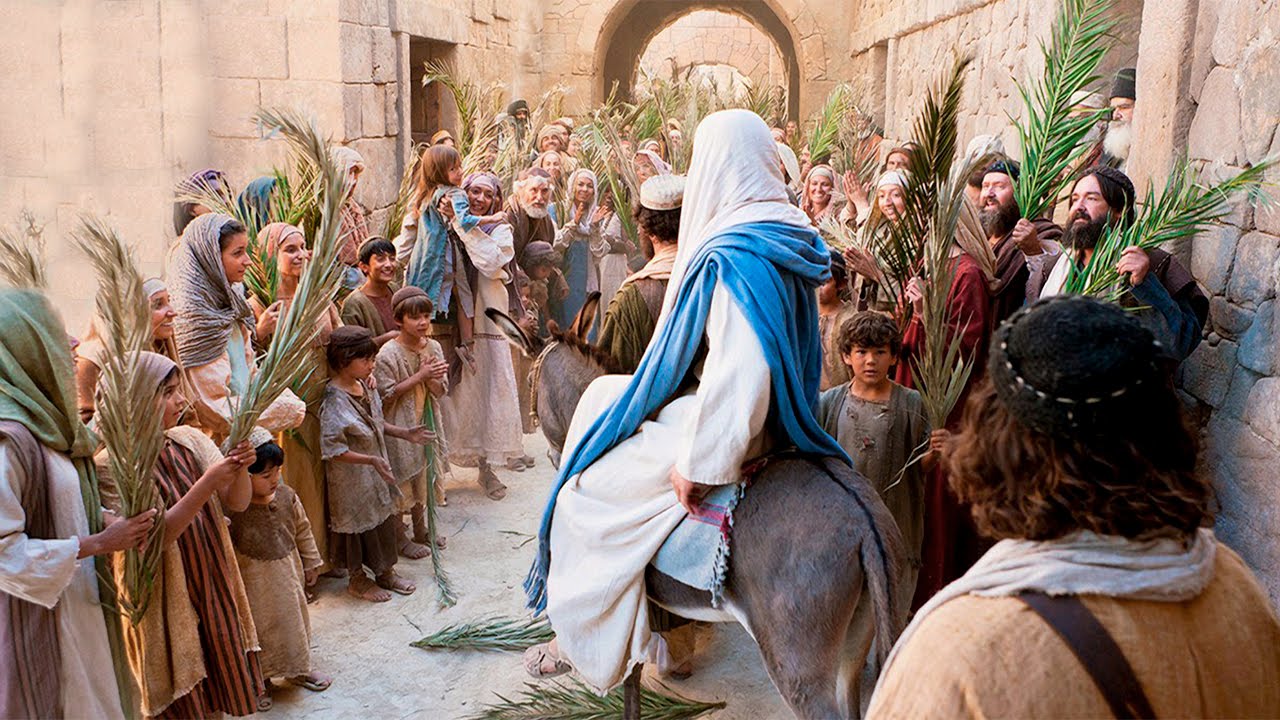
In memory of our Saviour’s triumphant entry into Jerusalem, when the multitude strewed palm branches before Him, for which reason the Church, on this day, blesses palms, and carries them in procession.
Why are palms blessed?
That those who carry them with devotion, or keep them in their houses, may receive protection of soul and body, as prayed for in the blessing; that those who carry the palms may, by means of the prayers of the Church, adorn their souls with good works and thus, in spirit, meet the Saviour; that, through Christ whose members we are, we may conquer the kingdom of death and darkness, and be made worthy to share in His glorious resurrection and triumphant entrance into heaven. St. Augustine writes of the palms: “They are the emblem of praise, and sign of victory, because the Lord by death conquered death, and with the sign of victory, the cross, overcame the devil, the prince of death.” Therefore, preceded by the cross, we go in procession around the church singing hymns of praise; when we come to the church door, we find it locked; the priest knocks at it with the cross. Heaven was closed to us by the sin of Adam, and it is opened to us by reconciliation through Jesus on the cross.
To move us to compassion for the suffering Redeemer, the Church, in the person of Christ, cries in lamenting tones at the Introit:
INTROIT O Lord, remove not Thy help to a distance from me, look towards my defence: save me from the lion’s mouth, and my lowness from the horns of the unicorns. O God, my God! look on me, why hast Thou forsaken me? Far from my salvation are the words of my sins. O Lord! Remove not, &c. (Ps. XXI.)
COLLECT Almighty and everlasting God! who didst vouchsafe to send Thy Son, our Saviour, to take upon Him our flesh, and to suffer death upon the cross, to give mankind an example of humility; mercifully grant, that we may both follow the example of His patience, and be made partakers of His Resurrection. Through the same &c.
EPISTLE (Philip. II. 5-11.) Brethren, let this mind be in you, which was also in Christ Jesus: who being in the form of God, thought it not robbery himself to be equal to God; but debased himself, taking the form of a servant, being made to the likeness of men, and in shape found as a man. He humbled himself, becoming obedient unto death, even the death of the cross. Wherefore, God also hath exalted him, and hath given him a name, which is above every name: that in the name of Jesus every knee should bow, of those that are in heaven, on earth, and under the earth; and that every tongue should confess, that the Lord, Jesus Christ, is in the glory of God, the Father.
INSTRUCTION In this epistle, the apostle urges us in a special manner to humility by which we are made like to Christ, our Lord, who putting off the majesty of His divinity, became man, and humbled Himself in obedience to the ignominious death of the cross. “Would that all might hear,” exclaims St. Gregory, “that God resists the proud, and gives His grace to the humble! Would that all might hear: Thou dust and ashes, why dost thou exalt thyself? Would that all might hear the words of the Lord: Learn of me, because I am humble of heart. The only-begotten Son of God assumed the form of our weakness, suffered mockery, insult and torments for the purpose that the humble God might teach man not to be proud.”
ASPIRATION Ah, that my sentiments were as Throe, O my Lord, Jesus! who so humbled Thyself and writ obedient to the most ignominious death of the cross. Grant me, I beseech Thee, O my Redeemer, the grace. diligently to follow Thee in humility.
Instead of the gospel of the Passion, that is, the history of the sufferings of our Lord according to St. Matthew, (Chaps. XXVI. XXVII.) is read in this day’s Mass, and neither incense, nor lights are used, nor is the Dominus vobiscum said, thus signifying that Jesus, the Light of the world, was taken away by death, and that the faith and devotion of the apostles was shaken, and became almost extinct. When reading the History of the Passion at the words: and bowing his head, he gave up the ghost, the priest with all the congregation kneel and meditate for a short time on the great mystery of the death of Jesus, by which our redemption was effected.
THE PASSION OF OUR LORD JESUS CHRIST
ACCORDING TO ST. MATTHEW, CHAP. XXVI., XXVII: I-XVI
At that time, Jesus said to his disciples: You know that after two days shall be the Pasch, and the Son of Man shall be delivered up to be crucified. Then were gathered together the chief priests and the ancients of the people into the palace of the high-priest, who was called Caiphas. And they consulted together, that, by subtilty, they might apprehend Jesus and put him to death. But they said: Not on the festival day, lest there should be a tumult among the people. And when Jesus was in Bethania, in the house of Simon the leper, there came to him a woman having an alabaster-box of precious ointment, and poured it on his head, as he was at table. And the disciples seeing it, had indignation, saying: To what purpose is this waste? For this might have been sold for much, and given to the poor. And Jesus knowing it, said to them: Why do you trouble this woman? for she hath wrought a good work upon me. For the poor you have always with you: but me you have not always. For she, in pouring this ointment upon my body, hath done it for my burial. Amen, I say to you, wheresoever this gospel shall be preached in the whole world, that also which she bath done, shall be told for a memory of her.
Then went one of the twelve, who was called Judas Iscariot, to the chief priests, and said to them: What will you give me, and I will deliver him unto you? But they appointed for him thirty pieces of silver. And from thenceforth he sought opportunity to betray him.
And on the first day of the Azymes, the disciples came to Jesus, saying: Where wilt thou that we prepare for thee to eat the Pasch? But Jesus said: Go ye into the city to a certain man, and say to him: The master saith: my time is near at hand, I will keep the Pasch at thy house with my disciples. And the disciples did as Jesus had appointed them, and they prepared the Pasch. Now when it was evening, he sat down with his twelve disciples. And whilst they were eating, he said: Amen, I say to you, that one of you is about to betray me. And they being very much troubled, began everyone to say: Is it I, Lord? But he answering, said: He that dippeth his hand with me in the dish, the same shall betray me. The Son of Man indeed froeth as it is written of him; but woe to that man, by whom the Son of Man shall be betrayed: it were better for that man, if he had not been born. And Judas that betrayed him, answering, said: Is it I, Rabbi? He said to him: Thou hast said it. And whilst they were at supper, Jesus took bread, and blessed and broke, and gave to his disciples, and said: Take ye and eat: This is my body. And taking the chalice he gave thanks: and gave to them, saying: Drink ye all of this. For this is my blood of the new testament, which shall be shed for many for the remission of sins. And I say to you, I will not drink from henceforth of the fruit of the vine, until that day, when I shall drink it new with you in the kingdom of my Father. And when they had sung a hymn, they went out to Mount Olivet.
Then Jesus saith to them: All you shall be scandalized in me this night. For it is written: I will strike the shepherd, and the sheep of the flock shall be dispersed. But after I shall be risen again, I will go before you into Galilee. And Peter answering, said to him: Though all shall be scandalized in thee, I will never be scandalized. Jesus said to him: Amen, I say to thee, that in this night, before the cock crow, thou wilt deny me thrice. Peter saith to him: Though I should die with thee, I will not deny thee. And in like manner said all the disciples. Then Jesus came with them to a country place which is called Gethsemani, and he said to his disciples: Sit you here, till I go yonder, and pray. And taking with him Peter and the two sons of Zebedee, he began to grow sorrowful and to be sad.
Then he saith to them: My soul is sorrowful even unto death; stay you here, and watch with me. And going a little further he fell upon his face, praying, and saying: O my Father! if it is possible, let this chalice pass from me. Nevertheless not as I will, but as thou wilt. And he cometh to his disciples, and findeth them asleep; and he saith to Peter: What! could you not watch one hour with me? Watch ye, and pray that ye enter not into temptation. The spirit indeed is willing, but the flesh is weak. Again he went the second time, and prayed, saying: O my Father! if this chalice cannot pass away except I drink it, thy will be done. And he cometh again, and findeth them asleep; for their eyes were heavy. And leaving them, he went away again, and he prayed the third time, saying the same words. Then he cometh to his disciples, and with to them: Sleep on now, and take your rest: behold the hour is at hand, and the Son of Man shall be betrayed into the hands of sinners. Rise, let us go; behold, he is at hand that will betray me.
As he yet spoke, behold, Judas, one of the twelve, came, and with him a great multitude with swords and clubs, sent from the chief priests and the ancients of the people. And he that betrayed him, gave them a sign, saying: Whomsoever I shall kiss, that is he: hold him fast. And forthwith coming to Jesus, he said: Hail, rabbi! And he kissed him. And Jesus said to him: Friend! whereto art thou come? Then they came up and laid hands on Jesus, and held him. And behold one of them that were with Jesus, stretching forth his hand, drew out his sword; and striking the servant of the high-priest, cut off his ear. Then Jesus saith to him: Put up again thy sword into its place for all that take the sword shall perish by the sword. Thinkest thou that I cannot ask my Father, and he will give me presently more than twelve legions of Angels? How then shall the scriptures be fulfilled, that so it must be done? In that same hour Jesus said to the multitude: You are come out as against a robber, with swords and clubs to apprehend me. I sat daily with you teaching in the temple, and you laid not hands on me. Now all this was done, that the scriptures of the prophets might be fulfilled. Then the disciples all leaving him, fled away.
But they holding Jesus, led him to Caiphas, the high-priest, where the scribes and the ancients were assembled. But Peter followed him afar off to the high-priest’s palace. And going in, he sat with the servants, to see the end. Now the chief priests and whole council sought false witness against Jesus, that they might put him to death: and they found not, though many false witnesses had come in. And last of all, there came two false witnesses. And they said: This man said: I am able to destroy the temple of God, and in three days to rebuild it. And the high-priest rising up, said to him: Answerest thou nothing to the things which these witness against thee? But Jesus held his peace. And the high-priest said to him: I adjure thee by the living God, that thou tell us if thou be the Christ, the Son of God. Jesus saith to him: Thou hast said it. Nevertheless I say to you, hereafter you shall see the Son of Man, sitting on the right hand of the power of God, and coming in the clouds of heaven. Then the high-priest rent his garments, saying: He hath blasphemed, what further need have we of witnesses? Behold, now you have heard the blasphemy. What think you? But they answering, said: He is guilty of death.
Then they spit in his face, and buffetted him, and others struck his face with the palms of their hands, saying: Prophesy unto us, O Christ! who is he that struck thee? But Peter sat without in the palace, and there came to him a servant maid, saying: Thou also wast with Jesus the Galilean. But he denied before them all, saying: I know not what thou sayest. And as he went out of the gate, another maid saw him, and she saith to them that were there: This man also was with Jesus of Nazareth. And again he denied with an oath: I do not know the man. And after a little while, they that stood by came and said to Peter: Surely thou also art one of them: for even thy speech doth discover thee. Then he began to curse and to swear that he knew not the man.
And immediately the cock crew. And Peter remembered the word of Jesus which he had said: Before the cock crow, thou wilt deny me thrice. And going forth, he wept bitterly.
And when the morning was come, all the chief priests and ancients of the people held a council against Jesus, to put him to death. And they brought him bound, and delivered him to Pontius Pilate, the governor.
Then Judas, who betrayed him, seeing that he was condemned, repenting himself, brought back the thirty pieces of silver to the chief priests and the ancients, saying: I have sinned, in betraying innocent blood. But they said: What is that to us? look thou to it.
And casting down the pieces of silver in the temple, he departed: and went and hanged himself with a halter. But the chief priests having taken the pieces of silver, said: It is not lawful to put them into the corbona, because it is the price of blood. And having consulted together, they bought with them the potter’s field, to be a burying-place for strangers. Wherefore that field was called Haceldama, that is the field of blood, even to this day.
Then was fulfilled that which was spoken by Jeremias the prophet, saying: And they took the thirty pieces of silver, the price of him that was valued, whom they prized of the children of Israel. And they gave them unto the potter’s field, as the Lord appointed to me.
And Jesus stood before the governor, and the governor asked him, saying: Art thou the king of the Jews? Jesus saith to him: Thou sayest it. And when he was accused by the chief priests and ancients, he answered nothing. Then Pilate saith to him: Dost thou not hear how great testimonies they allege against thee?
And he answered him not to any word: so that the governor wondered exceedingly.
Now upon the solemn day the governor was accustomed to release to the people one prisoner, whom they would. And he had then a notorious prisoner, that was called Barabbas. They, therefore, being gathered together, Pilate said: Whom will you that I release to you, Barabbas, or Jesus, who is called Christ? For he knew that through envy they had delivered him up. And as he was sitting on the judgment-seat, his wife sent to him, saying. Have thou nothing to do with that just man. For I have suffered many things this day in a dream on account of him. But the chief priests and ancients persuaded the people, that they should ask Barabbas, and make Jesus away. And the governor answering, said to them: Which will you have of the two to be released unto you? But they said: Barabbas. Pilate saith to them: What shall I do then with Jesus that is called Christ? They all say: Let him be crucified. The governor said to them: Why, what evil hath he done? But they cried out the more, saying: Let him be crucified. And Pilate seeing that he prevailed nothing, but that rather a tumult was made; having taken water, washed his hands before the people, saying: I am innocent of the blood of this just man: look you to it. And all the people answering, said: His blood be upon us, and upon our children. Then he released to them Barabbas, and having scourged Jesus, delivered him to them to be crucified.
Then the soldiers of the governor, taking Jesus into the hall, gathered together unto him the whole band. And stripping him, they put a scarlet cloak about him. And platting a crown of thorns, they put it upon his head, and a reed in his right hand. And bowing the knee before him, they mocked him, saying: Hail, king of the Jews!
And spitting upon him, they took the reed, and struck his head. And after they had mocked him, they took off the cloak from him, and put on him his own garments, and led him away to crucify him.
And going out, they found a man of Cyrene, named Simon; him they forced to take up his cross. And they came to the place that is called Golgotha, which is, the place of Calvary. And they gave him wine to drink mingled with gall. And when he had tasted, he would not drink. And after they had crucified him, they parted his garments, casting lots; that the word might be fulfilled which was spoken by the prophet, saying: They divided my garments among them; and upon my vesture they cast lots. And they sat down, and watched him. And they put over his head his cause written: This is Jesus, the King of the Jews. Then were there crucified with him two. thieves; the one on the right hand, and the other on the left. And they that passed by blasphemed him, wagging their heads, and saying: Vah, thou who destroyest the temple of God, and in three days buildest it up again, save thy own self: if thou be the Son of God, come down from the cross. In like manner also, the chief priests with the scribes and ancients, mocking, said: He saved others; himself he cannot save: if he be the king of Israel, let him now come down from the cross, and we will believe him. He trusted in God, let him deliver him now if he will save him: for he said: I am the Son of God.
And the self-same thing the thieves also, that were crucified with him, reproached him with. Now from the sixth hour there was darkness over all the earth, until the ninth hour. And about the ninth hour, Jesus cried with a loud voice, saying: Eli, Eli, lamma sabacthani? that is: My God! my God! why hast thou forsaken me? And some of them that stood there and heard, said: This man calleth for Elias. And immediately one of them, running; took a sponge, and filled it with vinegar; and put it on a reed and gave him to drink. And the others said: Stay, let us see whether Elias will come to deliver him. And Jesus again crying with a loud voice, yielded up the ghost.
And behold the veil of the temple was rent in two, from the top even to the bottom, and the earth quaked, and the rocks were rent; and the graves were opened: and many bodies of the saints that had slept arose: and coming out of the tombs after his resurrection, came into the holy city, and appeared to many. Now the centurion, and they that were with him, watching Jesus, having seen the earthquake and the things that were done, were greatly afraid, saying: Indeed this was the Son of God. And there were there many women afar off, who had followed Jesus from Galilee, ministering unto him; among whom was Mary Magdalen, and Mary, the mother of James and Joseph, and the mother of the sons of Zebedee. And when it was evening, there came a certain rich man of Arimathea, named Joseph, who also himself was a disciple of Jesus. He went to Pilate and begged the body of Jesus. Then Pilate commanded that the body should be delivered. And Joseph taking the body, wrapped it up in a clean linen cloth. And laid it in his own new monument, which he had hewed out in a rock; and he rolled a great stone to the door of the monument, and went his way. And there was Mary Magdalen, and the other Mary sitting over against the sepulchre.
And the next day, which followed the day of the preparation, the chief priests and the Pharisees came together to Pilate, saying: Sir, we have remembered that seducer said, while-he was yet alive: After three days I will rise again. “Command, therefore, the sepulchre to be guarded until the third day; lest his disciples come and steal him away, and say to the people: He is risen from the dead. So the last error shall be worse than the first. Pilate said to them: You have a guard, go guard it as you know. And they departing, made the sepulchre sure, with guards, sealing the stone.
INSTRUCTION ON UPCOMING HOLY WEEK
Why is this week called Holy Week?
This week is called Holy Week because during it we celebrate the most holy mysteries of our religion, and in all her offices and ceremonies the Church refers in quiet mournfulness to the passion and death of our Redeemer.
What remarkable things did Christ do during the first four days of this week?
After He had entered the temple at Jerusalem on Palm Sunday amidst the greatest rejoicings of the people, and was saluted by the children with that cry of joy: “Hosanna to the Son of David,” He drove the buyers and sellers out of the temple, and when He had spent the entire day in preaching and healing the sick, He went in the evening to Bethania, where He remained over night in Lazarus’ house, because in Jerusalem no one wished to receive Him for fear of His enemies. The three following days He spent in Jerusalem, teaching in the temple, and passing the night in prayer on Mount Olivet. In His sermons during these days He strove especially to convince the Jewish priests, the Doctors of the Law and the Pharisees, that He was really the Messiah, and that they would commit a terrible sin by putting Him to death; that they would bring themselves and the whole Jewish nation to destruction. This ruin of the people He illustrated most plainly causing the fig-tree to wither under His curse, and by foretelling the destruction of the city and the temple of Jerusalem. He disputed with them, and confounded them, and brought them publicly to shame by parables, so that out of anger and hatred they with one mind determined to kill Him. The impious Judas aided the most in the execution of their design; through avarice he sold Him for thirty pieces of silver (about eighteen dollars in our money) to the chief priests, and the next day, Thursday, became His betrayer and delivered Him over into their hands.
April 8, 2025 No Comments
Passion Sunday (Judica Sunday)
Rev. Fr. Leonard Goffine’s
The Church’s Year, (available from Angelus Press)
This Sunday, called Judica from the first word of the Introit, is also called Passion Sunday, because from this day the Church occupies herself exclusively with the contemplation of the passion and death of Christ. The pictures of Christ crucified are covered today in memory of his having hidden Himself from the Jews until His entrance into Jerusalem, no longer showing Himself in public. (John XI. 54.) In the Mass the Glory be to the Father, etc. is omitted, because in the person of Christ the Holy Trinity was dishonored. The psalm Judica is not said today, because on this day the high priests held council about our Lord, for which reason the Church in the name of the suffering Saviour uses these words at the Introit:
INTROIT Judge me, O God, and distinguish my cause from the nation that is not holy: deliver me from the unjust and deceitful man, for Thou art my God and my strength. Send forth thy light and thy truth: they have conducted me, and brought me unto thy holy hill, and into thy tabernacles. (Ps. XLII. 1. 3.)
COLLECT We beseech Thee, Almighty God, graciously to look upon Thy family; that by Thy bounty it may be governed in body, and by Thy protection be guarded in mind. Through, &c.
EPISTLE (Heb. IX. 11-15.) Brethren, Christ being come, a high-priest of the good things to come, by a greater and more perfect tabernacle, not made with hands, that is, not of this creation, neither by the blood of goats or of calves, but by his own blood, entered once into the Holies, having obtained eternal redemption. For if the blood of goats and of oxen, and the ashes of an heifer being sprinkled, sanctify such as are defiled, to the cleansing of the flesh, how much more shall the blood of Christ, who, by the Holy Ghost, offered himself without spot to God, cleanse our conscience from dead works, to serve the living God? And therefore he is the Mediator of the new testament; that by means of his death, for the redemption of those trangressions which were under the former testament; they that are called may receive the promise of eternal inheritance.
EXPLANATION St. Paul here teaches, that Christ as the true high-priest of the New Testament, through His precious blood on the altar of the cross, has indeed rendered perfect satisfaction for sins, but that the sinner must also do his own part, by cooperating with Christ to make himself less unworthy of participating in His passion and merits, and to appropriate to himself its fruits. This is done when he diligently and devoutly assists at the unbloody Sacrifice of the Mass, by which the fruits of the death on the cross are attributed to us; when, according to the will of the Church, he purifies his conscience by true contrition and confession; and when he seeks by trust in Christ’s merits to render some satisfaction for his sins through voluntary penance and faithful following of Christ.
ASPIRATION Grant us, O meek Jesus, Thy grace, that through perfect sorrow for our sins and the exercise of good works we may become participators in the merits of Thy bitter passion.
GOSPEL (John VIII. 46-59.) At that time, Jesus said to the multitudes of the Jews: Which of you shall convince me of sin? If I say the truth to you, why do you not believe me? He that is of God, heareth the words of God. Therefore you hear them not, because you are not of God. The Jews therefore answered, and said to him: Do not we say well, that thou art a Samaritan, and hast a devil? Jesus answered: I have not a devil; but I honor my Father, and you have dishonored me. But I seek not my own glory; there is one that seeketh and judgeth. Amen, amen, I say to you, if any-man keep my word, he shall not see death for ever. The Jews therefore said: Now we know that thou hast a devil. Abraham is dead, and the prophets; and thou sayest: If any man keep my word, he shall not taste death for ever. Art thou greater than our Father Abraham, who is dead? and the prophets are dead. Whom dost thou make thyself? Jesus answered: If I glorify myself, my glory is nothing. It is my Father that glorifieth me, of whom you say that he is your God. And you have not known him; but I know him. And if I shall say that I know him not, I shall be like to you, a liar. But I do know him, and do keep his word. Abraham your father rejoiced that he might see my day: he saw it, and was glad. The Jews therefore said to him: Thou art not yet fifty years old, and hast thou seen Abraham? Jesus said to them: Amen, amen, I say to you, before Abraham was made, I am. They took up stones therefore to cast at him: but Jesus hid himself, and went out of the temple.
Why did Christ ask the Jews, which of them should convince Him of sin?
To show us that he who would teach and punish others, should strive to be irreproachable himself; and to prove that He, being free from sin, was more than mere man, and therefore, the Messiah, the Son of God, as He repeatedly told the Jews, especially in this day’s gospel, and substantiated by His great and numerous miracles.
Why did He say: He that is of God, heareth the words of God?
To prove that the Jews on account of their stubbornness and unbelief were not the children of God, but of the devil. “Therefore,” St. Gregory says, “let every one when he hears the word of God, ask himself, of whom he is. Eternal truth demands that we be desirous of the heavenly fatherland, that we tame the desires of the flesh, be indifferent to the praises of the world, covet not our neighbor’s goods, and give alms according to our means. Therefore examine yourself, and if you find in your heart this voice of God, then you will know that you are of God.”
CONSOLATION UNDER CALUMNY
When Christ told the Jews the truth, He received insults and calumny; they called Him a Samaritan, that is, an unbeliever, a heretic, one possessed of a devil. This was a terrible slander, and it must have pained Him exceedingly, but at the same time it is a great consolation to those who are innocently calumniated, when they consider that Christ Himself received nothing better. St. Augustine consoles such by saying: “O friend, what is there that can happen to you that your Saviour did not suffer before you? Is it slander? He heard it, when He was called a glutton, a drunkard, a heretic, and a rebel, a companion of sinners, one possessed of a devil; He even heard, when casting out devils, that He did so by Beelzebub, prince of devils.” (Matt. IX. 34.) He therefore comforts His apostles, saying, If they have called the good man of the house Beelzebub, how much more them of his household? (Matt, X. 25.) Are the pains bitter? There is no pain so bitter that He has not endured it; for what is. more painful, and at the same time more ignominious, than the death of the cross? For think, says St. Paul, diligently upon him who endured such opposition from sinners against himself: that you be not wearied (by all contempt and calumny), fainting in your minds. (Heb. XII. 3.)
How and why did Christ defend Himself against those who slandered Hate?
Only by denying with the greatest modesty the things with which they reproached Him, saying that He had not a devil, that He was not a Samaritan, because He honored His Father not in their manner, but in His own. In repelling this calumny while He left the rest unanswered, Christ removed all doubt in regard to His divine mission, thus vindicating the honor of God, and securing the salvation of man. Christ thus teaches us by His own conduct to defend ourselves only against those detractions and insults which endanger the honor of God and the salvation of man, and then to defend ourselves with all modesty; by no means however to do it, if they injure only our own good name, for we should leave the restoration of that to God, as exemplified by Christ, who knows better than we how to preserve and restore it.
[Use the search engine at the top to See the Instruction on the Epistle of the Third Sunday After Epiphany. Type in Third Sunday After Epiphany.]
How had Abraham seen Christ’s day?
In spirit, that is, by. divine revelation he foresaw the coming of Christ and rejoiced; also, he heard, by revelation from God, with the other just in Limbo, that Christ’s coming had taken place, and derived the greatest comfort from it.
Why did Christ conceal Himself from the Jews, instead of taking vengeance?
Because the time of His death had not come; because He would show His meekness and patience and teach us that we should avoid our enemies rather than resist them or take vengeance on them; Christ wished to instruct us to avoid passionate and quarrelsome people, for it is an honor for a man, to separate from quarrels: but all fools are meddling with reproaches. (Prov. XX. 3.)
PETITION When Thine enemies calumniated Thee, most meek Jesus, Thou didst answer them with tender words, and when they were about to stone Thee, Thou didst depart from them, whilst we can scarcely bear a hard word, and far from yielding to our neighbor, defend and avenge ourselves most passionately. Ah! pardon us our impatience, and grant us the grace to bear patiently the wrongs done us, and when necessary, answer with gentleness for Thy glory and the salvation of our neighbor.
April 3, 2025 No Comments
FOURTH SUNDAY IN LENT (LAETARE SUNDAY)
Rev. Fr. Leonard Goffine’s
The Church’s Year (available from Angelus Press)
The Introit of this day’s Mass, which begins with the word Laetare, is as follows:
INTROIT Rejoice, O Jerusalem, and come together all you that love her; rejoice with joy you that have been in sorrow: that you may exult, and be filled from the breasts of your consolation. (Isai: LXVI. 10. 11.) I rejoiced at the things that were said to me: We shall go into the house of the Lord. (Ps. CXXI. 1.) Glory be to the Father, etc.
COLLECT Grant, we beseech Thee, almighty God, that we who justly suffer for our deeds may be relieved by the conso lation of Thy grace. Through etc.
EPISTLE (Gat. IV. 22-31.) Brethren, it is written that Abraham had two sons; the one by a bond-woman and the other by a free-woman. But he who was of the bond-woman was born according to the flesh; but he of the free-woman was by promise: which things are said by an allegory. For these are the two testaments. The one from Mount Sina, engendering unto bondage, which is Agar: for Sina is a mountain in Arabia, which hath affinity to that Jerusalem which now is, and is in bondage with her children. But that Jerusalem which is above is free, which is our mother. For it is written: Rejoice, thou barren that bearest not: break forth and cry, thou that travailest not; for many are the children of the desolate, more than of her that hath a husband. Now we, brethren, as Isaac was, are the children of promise. But as then he that was born according to the flesh persecuted him that was after the spirit, so also it is now. But what saith the scripture? Cast out the bond-woman and her son: for the son of the bond-woman shall not be heir with the son of the free-woman. So, then, brethren, we are not the children of the bond-woman, but of the free: by the freedom wherewith Christ hath made us free.
EXPLANATION It was the common custom, in the days of the patriarchs, for a man to have more than one wife. This was permitted by God, partly because they and their descendants would hardly have been satisfied with one marriage, (Matt. XIX. 8.) partly because bigamy was a means of promoting the increase of the people of Israel, typical of the future increase of the children of God. Thus Abraham had two wives, who had each a son; of these Ismael was born to Abraham from his bond-woman Agar, in the natural way; the other, Isaac, the son of the free wife Sara, was born in a supernatural manner according to the promise, (Gen. XVIII. 11. 14. ) that she by the grace of God, although aged, would give birth to a son. These two women with their sons were types, as St. Paul says, of the two Testaments: Agar the bond-woman typified the Old, Sara, the free-woman, the New Testament; the son of Agar, the Jews, the son of Sara, the Christians; for the Jews, like Ismael, are descendants of Abraham by natural descent, but the Christians, like Isaac, by grace. The Old Testament gave birth only to servants; for the Jews obeyed the commandments of God through fear of punishment, and in hope of temporal reward; the New Testament, the Jerusalem from above. that is, the Christian Church, gives birth to children who willingly and through love obey the commandments of God. Although the Christian Church, the New Jerusalem, chosen from heathenism, was in the beginning barren, as was Sara, she gives birth, by the grace of God and through His apostles, to more children than the Jewish Church, which was so long the Church of God, that is, more were converted to Christianity from the Gentiles than from the Jews. The latter even hated and persecuted the Christians, as did Ismael his brother Isaac. For their hardness of heart they were cast out by God, like Agar and her son; that is, after the destruction of Jerusalem the Jews were dispersed to all parts of the world. Let us, therefore, give thanks to God, that through Jesus we have become the free children of our heavenly Father, who through love fulfil His holy will by which we shall be saved.
ASPIRATION Give me the grace, O Jesus, that by prayer and fasting, and patience in all adversities and persecutions, I may be made less unworthy of Thy passion; that I may not, one day, be cast out by Thee, but become worthy of Thy divine promise and Thy eternal consolation in the heavenly Jerusalem.
GOSPEL (John VI. 1-15.) At that time, Jesus went over the sea of Galilee, which is that of Tiberias; and a great multitude followed him, because they saw the miracles which he did on them that were diseased. Jesus therefore went up into a mountain, and there he sat with his disciples. Now the pasch, the festival day of the Jews, was near at hand. When Jesus therefore had lifted up his eyes, and seen that a very great multitude cometh to him, he said to Philip: Whence shall we buy bread that these may eat? And this he said to try him; for he himself knew what he would do. Philip answered: Two hundred pennyworth of bread is not sufficient for them, that every one may take a little. One of his disciples, Andrew, the brother of Simon Peter, saith to him: There is a boy here that hath five barley loaves and two fishes: but what are these among so many? Then Jesus said: Make the men sit down. Now there was much grass in the place. The men therefore sat down, in number about five thousand. And Jesus took the loaves; and when he had given thanks, he distributed to them that were set down: in like manner also of the fishes, as much as they would. And when they were filled, he said to his disciples: Gather up the fragments that remain, lest they be lost. They gathered up, therefore, and filled twelve baskets with the fragments of the five barley loaves, which remained over and above to them that had eaten. Now those men, when they had seen what a miracle Jesus had done, said: This is of a truth the prophet that is to come into the world. Jesus therefore when he knew that they would come to take him by force, and make him king, fled again into the mountain himself alone.
Why did Christ try St. Philip?
To test his faith and confidence; to instruct us that before seeking supernatural means, we should first look for natural ways of providing; that the miracle of the multiplying of the loaves should be more marvellous to the people from having seen there was no provision; and that we may learn to trust in God, who is a helper in due time in tribulation. (Ps. IX. 10.)
What signs did Christ make use of in this miracle, and why?
According to St. Matthew (XIV. 19.) He lifted up His eyes to heaven, by which He showed that all good gifts come from above; He gave thanks, thus teaching us to give thanks to God for all His blessings. “The table,” says St. Chrysostom, “that is approached and is left with prayer will never know want, but the more richly yield its gifts.” He blessed the bread showing us that the divine blessing increases all things.
Why did Christ require them to gather up the fragments that were left?
That they should not be wasted or destroyed; that the greatness of the miracle should be made evident by the quantity of the fragments; and that we might learn to honor the gifts of God, even the most insignificant, and if we do not ourselves need them, give them to the poor.
Why did Christ, after this miracle, flee from the people?
Because after this miracle the people recognized in him the Messiah, and would have made Him king. He wished to teach us to flee from praise and honor, and in all our actions seek not our own, but God’s glory.
CONSOLATION IN POVERTY
This gospel gives the account of Christ providing for those who followed and listened to Him, which is indeed consoling for the poor. God from the beginning of the world has always cared for His own. For the aid and comfort of His chosen people in time of famine God sent Joseph, the son of the Patriarch Jacob, in advance into Egypt: (Gen. XLV. 5.) for forty years He fed the children of Israel in the desert with bread from heaven; (Deut. VIII. 2. 3.) He fed the Prophet Elias by a raven; (III Kings VII. 6.) and thought of Daniel in the lions’ den. (Dan. XIV. 37.) In the New Testament God shows His merciful care for His own, because in great need He fed them marvelously through angels, men, and even animals, as we frequently see in the lives of the saints. Truly has David said: God forsakes not the just, I have been young, and am now old: and I have not seen the just forsaken, nor his seed seeking bread, (PS. XXXVI. 25.) that is, one who sincerely serves Him, and seeks before all the kingdom o f God a n d His justice, as Christ commands. (Luke XII. 31.) Strive to be a faithful child, and you will have God for your father, and with King David you can cast your care upon the Lord, and He will sustain you. You must not think it is enough to pray and trust in God, He demands that you should use your strength to receive help, for if any man will not work, neither let him eat. (II Thess. III. 10.)
ASPIRATION In Thy omnipotence and goodness, O my God, I put my trust, firmly believing that if I fear Thee, serve Thee faithfully, and avoid evil, I shall not be abandoned in poverty, but receive many good things. Amen.
INSTRUCTION ON PREPARATION FOR EASTER
Now the Pasch the festival day of the Jews, was near at hand. (John VI. 4.)
If we would sing a joyful Alleluia with the Church on the festival of Easter, we must fulfill her desire, and prepare ourselves to celebrate it worthily. Therefore, we should shun improper, clamorous meetings, and retire often to pray in solitude, especially to meditate on the bitter sufferings of our Saviour, for when man is alone, God speaks to his heart. (Osee. II. 14.) We should carefully examine our conscience, and consider how we stand before God, for upon this day shall be the expiation for you, and the cleansing from all your sins: you shall be cleansed before the Lord; for it is a Sabbath of rest, and you shall afflict your souls, that is, by fasting, watching, and praying. (Lev. XVI. 30-31.) From this Sunday until Easter we should fast more strictly, give more alms to the poor if we are able, or if poor ourselves, bear our poverty more patiently, offering it to Christ in union with His poverty, His hunger, thirst, &c. ; we should make a sincere and contrite confession, and purify our heart from the old leaven of iniquity, that we may keep the Easter meal with Christ in the unleavened bread of purity and truth. (I Cor. V. 7. 8.) For this end we should incite ourselves to holy desires, rise from sin, which is the death of the soul
March 26, 2025 No Comments
THIRD SUNDAY IN LENT (OCULI)
Rev. Fr. Leonard Goffine’s
The Church’s Year, available from Angelus Press.
The Introit of this day’s Mass, which begins with the word Oculi, is the prayer of a soul imploring deliverance from the snares of the devil:
INTROIT My eyes are ever towards the Lord: for he shall pluck my feet out of the snare: look thou upon me, and have mercy on me, for I am alone and poor. To thee, O Lord, have I lifted up my soul: in thee, O my God, I put my trust: let me not be ashamed. (Fs. XXIV.) Glory be to the Father, etc.
COLLECT We beseech Thee, Almighty God, regard the desires of the humble, and stretch forth the right hand of Thy majesty to be our defence. Through Jesus Christ, our Lord, etc.
EPISTLE (Ephes. V. 1-9.) Brethren, be ye followers of God, as most dear children; and walk in love, as Christ also hath loved us, and hath delivered himself for us, an oblation and a sacrifice to God, for an odor of sweetness. But fornication, and all uncleanness, or covetousness, let it not so much as be named among you, as becometh saints; nor obscenity, nor foolish talking, nor scurrility, which is to no purpose; but rather giving of thanks: for know ye this, and understand, that no fornicator, nor unclean, nor covetous person, which is a serving of idols, hath any inheritance in the kingdom of Christ and of God. Let no man deceive you with vain words; for because of these things cometh the anger of God upon the children of unbelief. Be ye not therefore partakers with them. For you were heretofore darkness; but now light in the Lord. Walk, then, as children of the light: for the fruit of the light is in all goodness, and justice, and truth.
EXPLANATION The apostle requires us to imitate God, as good children imitate their father in well-doing and in well-wishing; besides he declares that all covetousness, fornication, all disgraceful talk and equivocal jokes should be banished from Christian meetings, even that such things should not be so much as mentioned among us; because these vices unfailingly deprive us of heaven. He admonishes us not to let ourselves be deceived by the seducing words of those who seek to make these vices appear small, nothing more than pardonable human weaknesses; those who speak thus are the children of darkness and of the devil, they bring down the wrath of God upon themselves, and all who assent to their words. A Christian, a child of light, that is, of faith, should regard as a sin that which faith and conscience tell him is such, and must live according to their precepts and not by false judgment of the wicked. Should any one seek to lead you away, ask yourself, my Christian soul, whether you would dare appear with such a deed before the judgment-seat of God. Listen to the voice of your conscience, and let it decide, whether that which you are expected to do is good or bad, lawful or unlawful.
ASPIRATION Place Thy fear, O God, before my mouth, that I may utter no vain, careless, much less improper and scandalous words, which may be the occasion of sin to my neighbor. Strengthen me, that I may not be deceived by flattering words, and become faithless to Thee.
GOSPEL (Luke XI. 14.-28.) At that time, Jesus was casting out a devil, and the same was dumb. And when he had cast out the devil, the dumb spoke, and the multitudes were in admiration at it. But some of them said: He casteth out devils by Beelzebub the prince of devils. And others tempting, asked of him a sign from heaven. But he seeing their thoughts, said to them: Every kingdom divided against itself shall be brought to desolation, and house upon house shall fall. And if Satan also be divided against himself, how shall his kingdom stand? because you say, that through Beelzebub I cast out devils. Now if I cast out devils by Beelzebub, by whom do your children cast them out? Therefore they shall be your judges. But if I by the finger of God cast out devils, doubtless the kingdom of God is come upon you. When a strong man armed keepeth his court, those things which he possesseth are in peace; but if a stronger than he come upon him, and overcome him, he will take away all his armor wherein he trusted, and will distribute his spoils. He that is not with me, is against me; and he that gathereth not with me, scattereth. When the unclean spirit is gone out of a man, he walketh through places without water, seeking rest; and not finding, he saith, I will return into my house whence I came out: and when he is come, he findeth it swept and garnished. Then he goeth, and taketh with him seven other spirits more wicked than himself, and entering in they dwell there. And the last state of that man becomes worse than the first. And it came to pass, as he spoke these things, a certain woman from the crowd, lifting up her voice, said to him: Blessed is the womb that bore thee, and the paps that gave thee suck. But he said: Yea rather blessed are they who hear the word of God, and keep it.
Can a man be really possessed of a devil?
It is the doctrine of the Catholic Church that the evil spirit most perniciously influences man in a twofold manner: by enticing his soul to sin, and then influencing his body which he often entirely or partially possesses, manifesting himself by madness, convulsions, insanity, etc. Many texts of Scripture, and the writings of the Fathers speak of this possession. St. Cyprian writes: “We can expel the swarms of impure spirits, who for the ruin of the soul, enter into the bodies of men, and we can compel them to acknowledge their presence, by the force of powerful words.” Possession takes place by the permission of God either for trial or as a punishment for sin committed, (I. Cor. V. 5.) and the Church from her Head, Jesus, who expelled so many devils, has received the power of casting them out as He did. (Mark XVI. 17.; Acts V. 16., VIII. 6. 7., XVI. 18. &c.) She however warns her ministers, the priests, who by their ordination have received the power to expel the evil spirits, to distinguish carefully between possession and natural sickness, that they may not be deceived, (Rit. ROM. §. 3. §. 5-10.) and the faithful should guard against looking upon every unusual, unhealthy appearance as an influence of Satan, and should give no ear to impostors, but in order not to be deceived, should turn to an experienced physician or to their pastor.
What is understood by a dumb devil?
The literal meaning of this is the evil enemy, who some times so torments those whom he possesses that they lose the power of speech; in a spiritual sense, we may understand it to mean the shame which the devil takes away from the sinner, when he commits the sin, but gives back again, as false shame, before confession, so that the sinner conceals the sin, and thereby falls deeper.
How does Christ still cast out dumb devils?
By His grace with which He inwardly enlightens the sinner, so that he becomes keenly aware that the sins which he has concealed in confession, will one day be known to the whole world, and thus encourages him to overcome his false shame. – “Be not ashamed to confess to one man,” says St. Augustine, “that which you were not ashamed to do with one, perhaps, with many.” Consider these words of the same saint: “Sincere confession subdues vice, conquers the evil one, shuts the door of hell, and opens the gates of paradise.”
How did Christ prove, that He did not cast out devils by Beelzebub?
By showing that the kingdom of Satan could not stand, if one evil spirit were cast out by another; that they thus reproached their own sons who also cast out devils, and had not been accused of doing so by power from Beelzebub; by His own life and works which were in direct opposition to the devil, and by which the devil’s works were destroyed. – There is no better defence against calumny than an innocent life, and those who are slandered, find no better consolation than the thought of Christ who, notwithstanding His sanctity and His miracles, was not secure against calumniation.
What is meant by the finger of God?
The power of God, by which Christ expelled the evil spirits, proved himself God, and the promised Redeemer.
Who is the strong man armed?
The evil one is so called, because he still retains the power and intellect of the angels, and, practiced by long experience, seeks in different ways to injure man if God permits.
How is the devil armed?
With the evil desires of men, with the perishable riches, honors, and pleasures of this world, with which he entices us to evil, deceives us, and casts us into eternal fire.
Who is the stronger one who took away the devil’s armor?
Christ the Lord who came into this world that He might destroy the works and the kingdom of the devil, to expel the prince of darkness, (John XII. 31.) and to redeem us. from his power. “The devil,” says St. Anthony, “is like a dragon caught by the Lord with the fishing-hook of the cross, tied with a halter like a beast of burden, chained like a fugitive slave, and his lips pierced through with a ring, so that he may not devour any of the faithful. Now he sighs, like a miserable sparrow, caught by Christ and turned to derision, and thrown under the feet of the Christians. He who flattered himself that he would possess the whole orbit of the earth, behold, he has to yield!”
Why does Christ say: He who is not with me, is against me?
These words were intended in the first place for the Pharisees who did not acknowledge Christ as the Messiah, would not fight with Him against Satan’s power, but rather held the people back from reaching unity of faith and love of Christ. Like the Pharisees, all heretical teachers who, by their false doctrines, draw the faithful from communion with Christ and His Church, are similar to the devil, the father of heresy and lies. May all those, therefore, who think they can serve Christ and the world at the same time, consider that between truth and falsehood, between Christ and the world, there is no middle path; that Christ requires decision, either with Him, or against Him , either eternal happiness with Him, or without Him, everlasting misery.
Who are understood by the dry places through which the evil spirit wanders and finds no rest?
“The dry places without water,” says St. Gregory, “are the hearts of the just, who by the force of penance have drained the dampness of carnal desires.” In such places the evil -one indeed finds no rest, because there his malice finds no sympathy, and his wicked will no satisfaction.
Why does the evil spirit say: I will return into my house?
Because he is only contented there where he is welcomed and received: those who have purified their heart by confession, and driven Satan from it, but labor not to amend, again lose the grace of the Sacraments by sin, and thus void of virtue and grace, offer a beautiful and pleasant dwelling to the devil.
Why is it said: The last state becomes worse than the first?
Because a relapse generally draws more sins with it, and so it is said: the devil will return with seven other spirits more wicked than himself, by which may be understood the seven deadly sins, because after a relapse into sin conversion to God becomes more difficult, as a repeated return of the same sickness makes it harder to regain health; because by repetition sin easily becomes a habit and renders conversion almost impossible; because repeated relapses are followed by blindness of intellect, hardness of heart, and in the end eternal damnation.
Why did the woman lift up her voice?
This was by the inspiration of the Holy Ghost to shame the Pharisees who, blinded by pride, neither professed nor acknowledged the divinity of Christ, whilst this humble woman not only confessed Jesus as God, but praised her who carried Him, whom heaven and earth cannot contain. Consider the great dignity of the Blessed Virgin, Mother of the Son of God, and hear her praises from the holy Fathers. St. Cyril thus salutes her: “Praise to thee, Blessed Mother of God: for thou art virginity itself, the sceptre of the true faith!” and St. Chrysostom: “Hail, O Mother, the throne, the glory, the heaven of the Church!” St. Ephrem: “Hail, only hope of the Fathers, herald of the apostles, glory of the martyrs, joy of the saints, and crown of the virgins, because of thy vast glory, and inaccessible light!”
Why did Christ call those happy who hear the word of God and keep it?
Because, as has been already said, it is not enough for salvation to hear the word of God, but it must also be practiced. Because Mary, the tender Mother of Jesus, did this most perfectly, Christ terms her more happy in it, than in having conceived, borne, and nursed Him.
SUPPLICATION O Lord Jesus! true Light of the world, enlighten the eyes of my soul, that I may never be induced by the evil one to conceal a sin, through false shame, in the confessional, that on the day of general judgment my sibs may not be published to the whole world. Strengthen me, O Jesus, that I may resist the arms of the devil by a penitent life, and especially by scorning the fear of man and worldly considerations, and guard against lapsing into sin, that I may not be lost, but through Thy merits maybe delivered from, all dangers and obtain heaven.
March 17, 2025 No Comments
First Sunday in Lent: Daily Meditations
TREASURE SEEKERS
Seek first the kingdom of God. Words of wisdom, indeed, from the lips of the Gentle Master, yet how few of earth’s eager treasure seekers heed them! The Kingdom of God, my eternal destiny, the term of the journey upon which God set me forth when He gave me being; the goal whose reaching means success, indescribably glorious, whose missing is failure disastrous beyond all words to tell.
The Kingdom of God, whose attaining is the only thing that really matters in all of life’s endeavors, and yet the last thought in the mind of the masses! How diligently men strive and toil that they may gain a petty pittance of earth’s toys and trinkets, and yet how utterly indifferent in their attitude toward the treasures of the Kingdom that shall know no ending! Strange, foolish world, is it not?
And what of myself in the matter? In theory, no doubt, I strongly defend the wisdom of the Master’s teaching. But in practice? If really keenly interested in God’s kingdom, then how explain the sluggishness too often manifested in my use of the necessary means to make secure its ultimate possession?
Oh, no, indeed, if my interest in God’s kingdom were of the healthy, hearty kind the Gentle Master would have it be, there would be more of the saint about me and less of the worldling. There would be more of prayer in my life, there would be a greater love of solitude and less of vain indulgence in earth’s silly amusements that dull all taste for godly things and wed man’s heart to dangerous earthly vanities.
Yes, if I were truly seeking first the kingdom of God, my life would be far more pleasing to God and far more worthwhile to myself.
Jesus, Gentle Master, have mercy on us.
TODAY’S EPISTLE AND GOSPEL: Taken from the Angelus Press 1962 Roman Catholic Daily Missal
EPISTLE: II Cor. 6:1-10
Lent, with its fastdays and prayers, is the acceptable time, the time of salvation. St. Paul exhorts us that we receive not the grace of God in vain.
Brethren: We exhort you that you receive not the grace of God in vain. For He saith: In an accepted time have I heard thee, and in the day of salvation have I helped thee. Behold, now is the acceptable time, behold now is the day of salvation.
Giving no offense to any man, that our ministry be not blamed: but in all things let us exhibit ourselves as the ministers of God, in much patience, in tribulation, in necessities, in distresses, in stripes, in prisons, in seditions, in labors, in watchings, in fastings, in chastity, in knowledge, in long suffering, in sweetness, in the Holy Ghost, in charity unfeigned, in the word of truth, in the power of God: by the armor of justice on the right hand and on the left: by honor and dishonor, by evil report and good report: as deceivers and yet true, as unknown and yet known: as dying, and behold we live: as chastised and not killed: as sorrowful, yet always rejoicing: as needy, yet enriching many: as having nothing and possessing all things.
GOSPEL: Mt. 4:1-11
|
March 4, 2025 No Comments
Ash Wednesday – Emendemus in Melius
Sung at the imposition of ashes on Ash Wednesday.
R. Emendemus in melius, quae ignoranter peccavimus: ne subito praeoccupati die mortis, quaeramus spatium poenitentiae, et invenire non possimus: Attende, Domine, et miserere, quia peccavimus tibi. V. Adjuva nos, Deus salutaris noster, et propter honorem nominis tui, Domine, libera nos. Attende, Domine. Gloria Patri. Attende, Domine.
The responsory in the polyphonic setting of William Byrd.
March 3, 2025 No Comments
Fifth Sunday After Epiphany
Rev. Fr. Leonard Goffine’s
The Church’s Year
[For the Introit of this day see the Introit in the Mass of the third Sunday after Epiphany]
On this Sunday mention is made of the practice of Christian virtues, and of God’s sufferance of the wicked upon earth, that by them the just may be exercised in patience.
COLLECT Keep, we beseech Thee, O Lord, Thy household by Thy continual mercy; that as it leans only upon the hope of Thy heavenly grace, so it may ever be defended by Thy protection. Through our Lord Jesus Christ, etc.
EPISTLE (Col. III. 12-17.) Brethren, put ye on, as the elect of God, holy and beloved, the bowels of mercy, benignity, humility, modesty, patience; bearing with one another, and forgiving one another, if any have a complaint against another; even as the Lord hath forgiven you, so you also. But above all these things, have charity, which is the bond of perfection: and let the peace of Christ rejoice in your hearts, wherein also you are called in one body; and be ye thankful. Let the word of Christ dwell in you abundantly, in all wisdom; teaching and admonishing one another, in psalms, hymns, and spiritual canticles, singing in grace in your hearts to God. All whatsoever you do in word or in work, all things, do ye in the name of the Lord Jesus Christ, giving thanks to God and the Father through Jesus Christ our Lord.
Why does St. Paul call charity the bond of perfection?
Because charity comprises in itself and links all the virtues in which perfection consists. For whoever truly loves God and his neighbor, is also good, merciful, humble, modest, patiently bears the weakness of his neighbor, willingly forgives offences, in a word, practices all virtues for the sake of charity.
When does the peace of God rejoice in our hearts?
When we have learned to conquer our evil inclinations, passions, and desires, and have placed order and quiet in our hearts instead. This peace then, like a queen, keeps all the wishes of the soul in harmony, and causes us to enjoy constant peace with our neighbor, and thus serve Christ in concord, as the members of one body serve the head. The best means of preserving this peace are earnest attention to the word of God, mutual imparting of pious exhortations and admonitions, and by singing hymns, psalms, and spiritual canticles.
Why should we do all in the name of Jesus?
Because only then can our works have real worth in the sight of God, and be pleasing to Him, when they are performed for love of Jesus, in His honor, in accordance with His spirit and will. Therefore the apostle admonishes us to do all things, eat, drink, sleep, work &c. in the name of Jesus, and so honor God, the Heavenly Father, and show our gratitude to Him. Oh, how grieved will they be on their death-bed who have neglected to offer God their daily work by a good intention, then they will see, when too late, how deficient they are in meritorious deeds. On the contrary they will rejoice whose consciences testify, that in all their actions they had in view only the will and the honor of God! Would that this might be taken to heart especially by those who have to earn their bread with difficulty and in distress, that they might always unite their hardships and trials with the sufferings and merits of Jesus, offering them to the Heavenly Father, and thus imitating Christ who had no other motive than the will and the glory of His Heavenly Father.
ASPIRATION O God of love, of patience, and of mercy, turn our hearts to the sincere love of our neighbor, and grant, that whatever we do in thoughts, words and actions, we may do in the name of our Lord Jesus Christ, and through Him render thanks to Thee.
ON CHURCH SINGING
“Admonish one another in psalms, hymns, and spiritual canticles, singing in grade in your hearts to God.” (Col. III. 16.)
The custom of singing in the Church-choir* has its foundation as far back as the Old Testament, when by the arrangement of David, Solomon, and Ezechias, the psalms and other sacred canticles were sung by the priests and Levites. This custom the Catholic Church has retained, according to the precepts of the apostles, (I. Cor. XIV. 26; Eph. V. 19.) and the example of Jesus who, after they had eaten the Pasch, intoned a hymn of praise with His apostles, Matt XXVI. 30) that Christians on earth, like the angels and saints in heaven, (Apoc. V. 8. 9., XIV. 3.) who unceasingly sing His praises, might at certain hours of the day, at least, give praise and thanks to God. In the earliest ages of the Church, the Christians sang hymns of praise and thanksgiving during the holy Sacrifice and other devotional services, often continuing them throughout the whole night; in which case the choir-singers probably were bound to keep the singing in proper order and agreement. In the course of time this custom of all the faithful present singing together ceased in many churches, and became confined to the choir, which was accompanied later by instruments in accordance with the words of David who calls to the praise of the Lord with trumpets, with timbrels, with pleasant psaltery and harps. (Ps, CL. 3, 4., LXXX. 3. 4.) In many churches, where the faithful still sing in concert, if done with pure hearts and true devotion, it is as St. Basil says, “a heavenly occupation, a spiritual burnt offering; it enlightens the spirit, raises it towards heaven, leads man to communion with God, makes the soul rejoice, ends idle talk, puts away laughter, reminds us of the judgment, reconciles enemies. Where the singing of songs resounds’ from the contrite heart there God with the angels is present.”
*The choir is usually a gallery in the Church in which the singers are stationed; the place where the clergy sing or recite their office, is also called the choir.
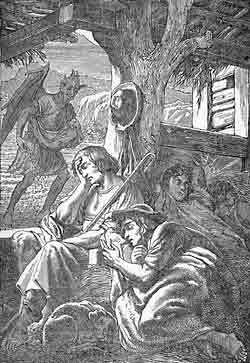
GOSPEL (Matt. XIII. 24-30,) At that time, Jesus spoke this parable to the multitudes: The kingdom of heaven is likened to a man that sowed good seed in his field. But while men were asleep, his enemy came, and oversowed cockle among the wheat, and went his way. And when the blade was sprung up, and had brought forth fruit, then appeared also the cockle. And the servants of the good man of the house coming, said to him: Sir, didst thou not sow good seed in thy field? whence, then, hath it cockle? And he said to them: An enemy bath done this. And the servants said to him: Wilt thou that we go and gather it up? And he said: No, lest perhaps, gathering up the cockle, you root up the wheat also together with it. Suffer both to grow until the harvest; and in the time of the harvest I will say to the reapers: Gather up first the cockle, and bind it into bundles to burn, but the wheat gather ye into my barn.
What is understood by the kingdom of heaven ?
The Church of God, or the collection of all orthodox Christians on earth, destined for heaven.
What is meant by the good seed, and by the cockle?
The good seed, as Christ Himself says, (Matt. XIII. 38.) signifies the children of the kingdom, that is, the true Christians, the living members of the Church, who being converted by the word of God sown into their hearts become children of God, and bring forth the fruit of good works. The cockle means the children of iniquity, of the devil, that is, those who do evil; also every wrong, false doctrine which leads men to evil.
Who sows the good seed, and by the cockle?
The good seed is sown by Jesus, the Son of Man not only directly, but through His apostles, and the priests, their successors; the evil seed is sown by the devil, or by wicked men whom he uses as his tools.
Who are the men who were asleep?
Those superiors in the Church; those bishops and pastors who take no care of their flock, and do not warn them against seduction, when the devil comes and by wicked men sows the cockle of erroneous doctrine and of crime; and those men who are careless and neglect to hear the word of God and the sacrifice of the Mass, who neglect to pray, and do not receive the Sacraments. In the souls of such the devil sows the seeds of bad thoughts, evil imaginations and desires, from which spring, later, the cockle of pride, impurity, anger, envy, avarice, etc.
Why does not God allow the cockle, that is, the wicked people, to be rooted out and destroyed?
Because of His patience and long suffering towards the sinner to whom He gives time for repentance, and because of His love for the just from whom He would not, by weeding out the unjust, take away the occasion of practicing virtue and gathering up merits for themselves; for because of the unjust, the just have numerous opportunities to exercise patience, humility, etc.
When is the time of the harvest?
The day of the last judgment when the reapers, that is, the angels, will go out and separate the wicked from the just, and throw the wicked into the fiery furnace; while the just will be taken into everlasting joy. (Matt. XIII. 29.)
PRAYER O faithful Jesus, Thou great lover of our souls, who hast sown the good seed of Thy Divine Word in our hearts, grant that it may be productive, and bear in us fruit for eternal life; protect us from our evil enemy, that he may not sow his erroneous and false doctrine in our hearts, and corrupt the good; preserve us from the sleep of sin, and sloth that we may remain always vigilant and armed against the temptations of the world, the flesh, and the devil, overcome them manfully, and die a happy death. Amen.
ON INCLINATION TO EVIL
Whence then hath it cockle? (Matt. XIII. 27.)
Whence comes the inclination to evil in man?
It is the sad consequence of original sin, that is, of that sin which our first parents, by their disobedience, committed in paradise, and which we as their descendants have inherited. This inclination to evil remains even in those who have been baptized, although original sin with its guilt and eternal punishment is taken away in baptism, but it is no sin so long as man does not voluntarily yield. (Cat. Rom. Part. II. 2. .43.)
Why, the sin being removed, does the inclination remain?
To humble us that we may know our frailty and misery, and have recourse to God, our best and most powerful Father, as did St. Paul, when he was much annoyed by the devil of the flesh; (II. Cor. XII. 7. 8.) that the glory of God and the power of Christ should be manifested in us, which except for our weakness could not be; that we might have occasion to fight and to conquer. A soldier cannot battle without opposition, nor win victory and the crown without a contest. Nor can we win the heavenly crown, if no occasion is given us, by temptations, for fight and for victory. “That which tries the combatant,” says St. Bernard, “crowns the conqueror.” Finally, the inclination remains, that we may learn to endure, in all meekness, the faults and infirmities of others and to watch ourselves, lest we fall into the same temptations.
February 3, 2025 No Comments
INSTRUCTION ON THE FEAST OF THE PURIFICATION OF THE BLESSED VIRGIN MARY, COMMONLY CALLED CANDLEMAS-DAY. [February 2.]
Rev. Fr. Leonard Goffine’s
The Church’s Year
What is this festival?
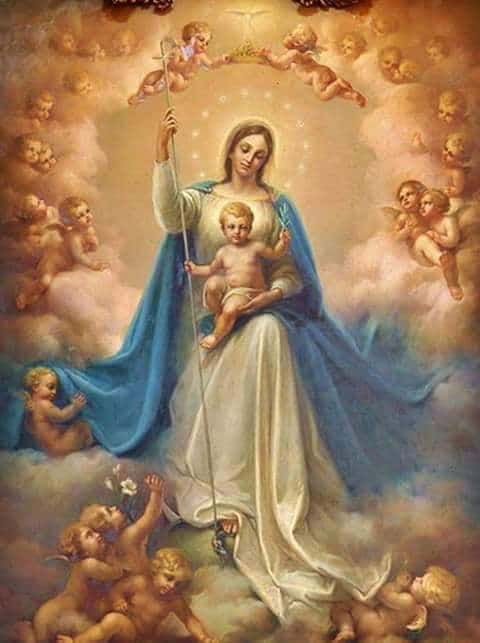
T is the festival on which the Church venerates the humility and obedience of Mary who, though not subject to the law of Moses, which required purification and presentation in the temple, yet subjected herself to it. From this comes the name Purification of the Blessed Virgin Mary, or the Presentation of Jesus in the temple. It is also called Candlemas, because before Mass on this day the candles used in divine service are blessed and carried in procession.
Why are the candles blessed on this day and carried in procession?
In remembrance of the presentation of Jesus to His Heavenly Father on this day, when the aged Simeon called Him: A light to the revelation of the Gentiles, and the glory of the people of Israel, (Luke II. 32.) and to remind us that, like the five wise virgins, we should go to meet Christ with the light of faith and good works.
With what intention are candles blessed?
With the intention of obtaining from God by their pious use and the prayers of those who devoutly carry them, health of body and soul; that our hearts, through the doctrine of Jesus and the grace of the Holy Ghost, may be interiorly enlightened; and that the fire of the love of God may be kindled in our hearts, purify them from all remains of sin, and make us partakers in the joyous light of heaven, which will never be extinguished.
The Introit of the Mass is: We have received Thy mercy, O God, in the midst of Thy temple: according to Thy name, O God, so also is Thy praise, unto the ends of the earth: Thy right hand is full of justice. Great is the Lord, and exceedingly to be praised: in the city of our God, in His holy mountain. (Ps. XLVII.) Glory etc.
COLLECT Almighty, everliving God, we humbly beseech Thy Majesty, that as Thine only-begotten Son was this day presented in the temple in the substance of our flesh; so we also may, with purified hearts, be presented unto Thee. Thro’. etc.
EPISTLE (Malach. III. 1-4.) Thus Saith The Lord God: Behold, I send my Angel, and he shall prepare the way before my face. And presently the Lord, whom you seek, and the Angel of the testament, whom you desire, shall come to his temple. Behold, he cometh, saith the Lord of hosts, and who shall be able to think of the day of his coming, and who shall stand to see him? For he is like a refining fire, and like the fuller’s herb: and he shall sit refining and cleansing the silver, and he shall purify the sons of Levi, and shall refine them as gold and as silver: and they shall offer sacrifices to the Lord in justice. And the sacrifice of Juda and of Jerusalem shall please the Lord, as the days of old, and the ancient years: saith the Lord Almighty.
EXPLANATION The angel or messenger who shall prepare the way for the Lord, is John the Baptist, (Matt. XI. 10.) and the long desired Ruler and Messiah is Christ, who on this day comes into his temple. He is called the Angel of the testament, because He has arranged between God and man a new and far more excellent covenant than God had made with the Jews; inasmuch as He has given to the Christians not merely temporal but eternal good. This Angel of the testament, Christ, came the first time in all the humility of a little child into the temple, but His second coming at the end of the world will be terrible. The prophet likens Him to a fire which purifies the gold, and to that herb with which cloth is whitened in the fuller’s machine; under which figures he alludes to the severity of judgment, with which Christ will judge the just and the unjust. Pure as refined gold, and as the white linen (corporal) on which the Body of Christ is laid in the holy Sacrifice of the Mass, must be the heart of those who receive Christ in the blessed Sacrament, or seek worthily to offer the holy Sacrifice with the priest.
GOSPEL (Luke II. 22-32.) At that time, After the days of Mary’s purification, according to the law of Moses, were accomplished, they carried Jesus to Jerusalem, to present him to the Lord, as it is written in the law of the Lord: Every male opening the womb shall be called holy to the Lord. And to offer a sacrifice, according as it is written in the law of the Lord, a pair of turtle doves, or two young pigeons. And behold, there was a man in Jerusalem named Simeon, and this man was just and devout, waiting for the consolation of Israel, and the Holy Ghost was in him. And he had received an answer from the Holy Ghost, that he should not see death, before he had seen the Christ of the Lord. And he came by the Spirit into the temple. And when his parents brought in the child Jesus, to do for him according to the custom of the law: he also took him into his arms, and blessed God, and said: Now thou dost dismiss thy servant, O Lord, according to thy word, in peace: Because my eyes have seen thy salvation: which thou hast prepared before the face of all peoples: a light to the revelation of the Gentiles, and the glory of thy people Israel.
Why was Jesus brought into the temple of Jerusalem?
That He might be offered to God, who had commanded the Jews to offer their first-born sons to Him in grateful commemoration of the destroying angel having spared their first-born at the departure from Egypt, when all the firstborn of the Egyptians were slain. (Exodus XII. 12.) These children had to be redeemed afterwards by certain gifts. (Exodus XIII. 13.)
How soon after birth was this offering to be made?
On the fortieth day; for according to the law the mother’s impurity lasted for this length of time after the birth of a boy, after which she went to the temple, and in order to be declared purified, made her offering of purification. (Lev. XII.)
Was Mary subject to this law of purification?
No, for she had not, like other mothers, conceived in sin, and, therefore, did not need purification; but she placed herself with her divine Child among sinners and fulfilled the law by which these were bound. “Nothing”, says St. Bernard, “was impure in her conception, nothing impure in her birth; there was nothing to be cleansed, for the Child itself was the origin of all purity, and came into the world to purify it from sin. Truly, O happy Virgin, thou wast not in need of purification, but thou wouldst pass as a woman among women, as thy Son also passed for a child among children.”
Why did Mary comply with the law of purification?
She did this to give us an example of obedience and true humility, for she interiorly thought little of herself and wished externally to be so regarded; to teach us to thank God for the favors He has shown to our ancestors, for the law of the Jews was given to encourage them to gratitude for the preservation of the first-born of their ancestors from the hands of the destroying angel; (Exodus XII. 12.) and in order not to scandalize, by being regardless of this law, those who did not know that she was not required to observe it.
Learn, O Christian, from Mary’s example to be truly humble and obedient, to be grateful to God for the benefits which your ancestors and parents have received, and to be on your guard never to give scandal, by failing to observe the commandments of God and His Church.
Why did not Mary offer a lamb as did the rich, (Lev. XII. 6). but merely, like the poor, a pair of doves?
Because she was poor, and was not ashamed to appear as such before the world. Mary loved humility and the poverty connected with it. Be not ashamed, therefore, if thou art poor, love poverty the more; but if rich, be poor in spirit, and love the poor and distressed.
How did it come to pass that Simeon met the Saviour in the temple?
Because he was a pious and faithful servant of God, it had been promised him that he should not die, until he had seen the Saviour. When Jesus was brought into the temple, Simeon was inspired by God to go there also, and when he found Jesus there, he by divine inspiration knew Him to be the Messiah, and gave testimony of Him.
See how God rewards those who sincerely love and serve Him, giving Himself to them to be known always more and more!
Why was Simeon ready to die when he had held Jesus in his arms?
Because his wish was fulfilled; for since he had not only seen with his own eyes, but had held in his arms the Desired of all nations, for whom the patriarchs had so vainly longed, what more could he wish than to leave this miserable world, and commend his spirit into the hands of his Saviour?
Why did Simeon call Jesus a light for the revelation of the Gentiles?
Because Jesus had come into the world as the true light, (John I. 9) which was to free the Gentiles from the darkness of superstition and idolatry, and from the blindness and slavery of Satan, as well as to conduct the Jews out of the bondage of the Mosaic Law into the liberty of the children of God. (Gal. IV. 31.)
PRAYER Heavenly Father! look down from Thy throne of mercy upon the face of Thy Anointed in whom Thou art well pleased. Behold, He is this day offered to Thee in the temple for the sins of His brethren. Let this offering please Thee, and move Thee to have compassion on us sinners. In consideration of His humility and obedience, forgive us our pride and disobedience, and grant us, that purified by His blood, we may one day, having like Simeon departed this life in peace, behold Thee as the eternal Light which shall never be extinguished in the temple of Thy glory, be presented to Thee by Mary, our beloved Mother, and love and praise Thee forever. Amen.
INSTRUCTION ON CHURCHING
In the Jewish law (Lev. XII.) women for forty days after the birth of a boy, and for eighty after that of a girl, were regarded as unclean and kept out of the temple, and required, at the end of that time, to bring a lamb as a holocaust, and a dove as a propitiatory sacrifice to the temple, and be pronounced pure by the prayer of the priest. This law does not, it is true, apply to Christian women, because the Church has abolished the Jewish ceremonies: but the Church, nevertheless, permits them to remain absent from church for six weeks, or so long as circumstances may require, after the birth of a child, in order to take care of their health. This should be remembered by husbands, who should see that their wives have the necessary quiet and attendance which nature requires for recovery after the birth of a child. The Church desires that at the end of this time the mother, following Mary’s example, should resort to the church to obtain the blessing of the priest, thank God for her delivery, offer the child to God, praying with the priest for the grace to bring up her offspring in sanctity and piety. This comprises the Churching of women, which is a very old and praiseworthy custom and should not be neglected. This practice was not instituted to prevent their being harmed by the devil, by malicious persons, or by ghosts, and it would be not only a foolish fear, but a superstition to be condemned, if one were to suppose that a woman were liable to harm if she should go abroad before she were churched. The delicate health of women and of children is generally owing to their having injured themselves by want of proper care and attention.
PRAYER Almighty and beneficent God! who didst impose upon our mother Eve, in punishment for her sin, that she should give birth to her children in pain: I offer to Thee all the pains which I have thus suffered in atonement for my sins, and thank Thee, that I have safely brought a child into the-” world, whom I now offer to Thee, according to the example of the Mother of Thine only-begotten Son, for Thy holy service, whom I shall zealously endeavor to educate for Thy honor. Give me but this grace through the intercession and merits of this most blessed Mother. Bless me and my child, and grant, that we may here live in accordance with Thy divine will, and receive eternal salvation. Through Christ, our Lord, &c. Amen.
January 28, 2025 No Comments
Twenty-sixth Sunday after Pentecost (Sixth Sunday after Epiphany)
Detroit’s new Traditional Latin Mass Parish
Rev. Fr. Leonard Goffine’s
The Church’s Year
| [For the Introit of this day’s Mass see the Introit of the third Sunday after Epiphany.]
COLLECT Grant, we beseech Thee, Almighty God, that ever fixing our thoughts on such things as are reasonable, we may both in our words and works do what is pleasing in Thy sight. Through our Lord Jesus Christ, etc. EPISTLE (I. Thess. I. 2-10.) Brethren, we give thanks to God for you all, making a remembrance of you in our prayers without ceasing; being mindful of the work of your faith, and labor, and charity, and of the enduring of the hope of our Lord Jesus Christ before God and our Father: knowing, brethren, beloved of God, your election: for our gospel hath not been unto you in word only, but in power also, and in the Holy Ghost, and in much fullness, as you know what manner of men we have been among you for your sakes. And you became followers of us and of the Lord, receiving the word in much tribulation, with joy of the Holy Ghost: so that you were made a pattern to all that believe, in Macedonia and in Achaia. For from you was spread abroad the word of the Lord, not only in Macedonia and in Achaia, but also in every place, your faith, which is towards God, is gone forth; so that we need not to speak anything. For they themselves relate of us what manner of entering in we had unto you; and how ye turned, to God from idols, to serve the living and true God, and to wait for his Son from heaven (whom he raised from the dead), Jesus, who both delivered us from the wrath to come. EXPLANATION The apostle gives thanks to God in prayer for those inhabitants of Thessalonia, who have been converted to Christianity by his words, and declares to them his joy at their Christian life which they prove by their good works and their perseverance, even through all trials, in expectation of eternal reward through Christ. He assures them also of their salvation, (election) because God had caused the preaching of His gospel, which they so willingly received, to produce in them such extraordinary fruit. He praises them not only for having listened to the gospel and abandoned idolatry, but for having regulated their lives in accordance with the faith, and having become a model to distant nations, for the report of their faith had spread far, and everywhere their zealous reception of the gospel was spoken of. Would that the same could be said of all Christians! GOSPEL (Matt. XIII. 31-35.) At that time, Jesus spoke this parable to the multitudes: The kingdom of heaven is like to a grain of mustard-seed, which a man took and sowed in his field: which is the least indeed of all seeds; but when it is grown up, it is greater than all herbs, and becometh a tree, so that the birds of the air come, and dwell in the branches thereof. Another parable he spoke to them: The kingdom of heaven is like to leaven, which a woman took and hid in three measures of meal, until the whole was leavened. All these things Jesus spoke in parables to the multitude, and without parables he did not speak to them, that it might be fulfilled which was spoken by the prophet, saying: I will open my mouth in parables, I will utter things hidden from the foundation of the world. What is here understood by the kingdom of heaven? The Church and the doctrine of Christ. Why is the Church compared to a grain of mustard-seed? Because there is a great similarity between them. The mustard-seed, though so small, grows in Palestine so high and so rapidly, that it becomes a broad tree, in which birds can build their nests. In like manner the Church of Christ was in the beginning very small like the mustard-seed, but it soon spread so wide that numberless people, even great philosophers and princes, came to find peace and protection under its branches. Why is Christ’s doctrine compared to leaven? Because like the leaven, which quickly penetrates the flour, and makes it palatable bread, the doctrine of Christ, spreading with surprising swiftness over the then known parts of the globe, gave the Gentiles a taste for divine things and for heavenly wisdom. Thus Christ’s doctrine penetrates him who receives it, sanctifies all his thoughts, words, and deeds, and makes him pleasing to God. By what means, in particular, was the Church of Christ propagated? By the omnipotence of God and the miracles which He so frequently wrought to prove the truth and divinity of the Christian religion; the courageous faith, and the pure moral life of the early Christians, which led many pagan minds to accept the doctrine of Christ; and the persecution of Christianity, for, as Tertullian says: “The blood of the martyrs was the seed of the Church.” The false doctrine of Mahomet, the erroneous teachings of Luther, Calvin, and earlier and later heretics have, it is true, also spread quickly far and wide; but this is not to be wondered at, for it is easy to lead people to a doctrine that encourages sensuality, and to which they are carried by their evil inclinations, as was the case with the doctrine of the impostor Mahomet, and three hundred years ago with the heresy of Luther; but to spread a doctrine which demands the subduing of the carnal, earthly inclinations, and to bend the will to the yoke of obedience to faith, something more than human eloquence is required. Thus, the Chancellor of England, Thomas More, who gave his blood for the true doctrine of Christ, wrote to Luther, who was boasting of the rapid increase of his sect: “It is easy to descend; seducing the people to a bad life is nothing more marvellous than that a heavy stone should fall of its own accord to the ground;” and Melanchton, a friend of Luther, in answer to his mother’s question, whether she should remain a Catholic or receive Luther’s doctrine, wrote : “In this religion it is easy to live, in the Catholic it is easy to die.” Why did Christ always speak in parables? That His teaching by being simple might be more easily understood, and better remembered. He who is called upon to teach others, should, as did Christ, always speak to them according to their ability to understand, and by no means seek his own honor, but the honor of God, and the benefit of those who hear him. PRAYER O most benign Jesus. How much do we give Thee thanks that Thou hast permitted us to be born in Thy holy Church, and instructed in Thy holy doctrine, which, like the mustard-seed, has grown to be a large tree, spreading over the whole earth. Grant that under the shadow of this tree, in Thy holy Church, we may ever rest securely, cling to her faithfully, and penetrated, as by leaven, with her doctrine may bring Thee pleasing fruits of faith and virtue. Amen. |
November 14, 2024 No Comments
Twenty-fourth Sunday after Pentecost
TEXT OF THE FIFTH SUNDAY AFTER EPIPHANY
| Rev. Fr. Leonard Goffine’s The Church’s YearFIFTH SUNDAY AFTER EPIPHANY[For the Introit of this day see the Introit in the Mass of the third Sunday after Epiphany] On this Sunday mention is made of the practice of Christian virtues, and of God’s sufferance of the wicked upon earth, that by them the just may be exercised in patience. COLLECT Keep, we beseech Thee, O Lord, Thy household by Thy continual mercy; that as it leans only upon the hope of Thy heavenly grace, so it may ever be defended by Thy protection. Through our Lord Jesus Christ, etc. EPISTLE (Col. III. 12-17.) Brethren, put ye on, as the elect of God, holy and beloved, the bowels of mercy, benignity, humility, modesty, patience; bearing with one another, and forgiving one another, if any have a complaint against another; even as the Lord hath forgiven you, so you also. But above all these things, have charity, which is the bond of perfection: and let the peace of Christ rejoice in your hearts, wherein also you are called in one body; and be ye thankful. Let the word of Christ dwell in you abundantly, in all wisdom; teaching and admonishing one another, in psalms, hymns, and spiritual canticles, singing in grace in your hearts to God. All whatsoever you do in word or in work, all things, do ye in the name of the Lord Jesus Christ, giving thanks to God and the Father through Jesus Christ our Lord. Why does St. Paul call charity the bond of perfection?Because charity comprises in itself and links all the virtues in which perfection consists. For whoever truly loves God and his neighbor, is also good, merciful, humble, modest, patiently bears the weakness of his neighbor, willingly forgives offences, in a word, practices all virtues for the sake of charity. When does the peace of God rejoice in our hearts?When we have learned to conquer our evil inclinations, passions, and desires, and have placed order and quiet in our hearts instead. This peace then, like a queen, keeps all the wishes of the soul in harmony, and causes us to enjoy constant peace with our neighbor, and thus serve Christ in concord, as the members of one body serve the head. The best means of preserving this peace are earnest attention to the word of God, mutual imparting of pious exhortations and admonitions, and by singing hymns, psalms, and spiritual canticles. Why should we do all in the name of Jesus?Because only then can our works have real worth in the sight of God, and be pleasing to Him, when they are performed for love of Jesus, in His honor, in accordance with His spirit and will. Therefore the apostle admonishes us to do all things, eat, drink, sleep, work &c. in the name of Jesus, and so honor God, the Heavenly Father, and show our gratitude to Him. Oh, how grieved will they be on their death-bed who have neglected to offer God their daily work by a good intention, then they will see, when too late, how deficient they are in meritorious deeds. On the contrary they will rejoice whose consciences testify, that in all their actions they had in view only the will and the honor of God! Would that this might be taken to heart especially by those who have to earn their bread with difficulty and in distress, that they might always unite their hardships and trials with the sufferings and merits of Jesus, offering them to the Heavenly Father, and thus imitating Christ who had no other motive than the will and the glory of His Heavenly Father. ASPIRATION O God of love, of patience, and of mercy, turn our hearts to the sincere love of our neighbor, and grant, that whatever we do in thoughts, words and actions, we may do in the name of our Lord Jesus Christ, and through Him render thanks to Thee. ON CHURCH SINGING “Admonish one another in psalms, hymns, and spiritual canticles, singing in grade in your hearts to God.” (Col. III. 16.) The custom of singing in the Church-choir* has its foundation as far back as the Old Testament, when by the arrangement of David, Solomon, and Ezechias, the psalms and other sacred canticles were sung by the priests and Levites. This custom the Catholic Church has retained, according to the precepts of the apostles, (I. Cor. XIV. 26; Eph. V. 19.) and the example of Jesus who, after they had eaten the Pasch, intoned a hymn of praise with His apostles, Matt XXVI. 30) that Christians on earth, like the angels and saints in heaven, (Apoc. V. 8. 9., XIV. 3.) who unceasingly sing His praises, might at certain hours of the day, at least, give praise and thanks to God. In the earliest ages of the Church, the Christians sang hymns of praise and thanksgiving during the holy Sacrifice and other devotional services, often continuing them throughout the whole night; in which case the choir-singers probably were bound to keep the singing in proper order and agreement. In the course of time this custom of all the faithful present singing together ceased in many churches, and became confined to the choir, which was accompanied later by instruments in accordance with the words of David who calls to the praise of the Lord with trumpets, with timbrels, with pleasant psaltery and harps. (Ps, CL. 3, 4., LXXX. 3. 4.) In many churches, where the faithful still sing in concert, if done with pure hearts and true devotion, it is as St. Basil says, “a heavenly occupation, a spiritual burnt offering; it enlightens the spirit, raises it towards heaven, leads man to communion with God, makes the soul rejoice, ends idle talk, puts away laughter, reminds us of the judgment, reconciles enemies. Where the singing of songs resounds from the contrite heart there God with the angels is present.” *The choir is usually a gallery in the Church in which the singers are stationed; the place where the clergy sing or recite their office, is also called the choir. GOSPEL (Matt. XIII. 24-30,) At that time, Jesus spoke this parable to the multitudes: The kingdom of heaven is likened to a man that sowed good seed in his field. But while men were asleep, his enemy came, and oversowed cockle among the wheat, and went his way. And when the blade was sprung up, and had brought forth fruit, then appeared also the cockle. And the servants of the good man of the house coming, said to him: Sir, didst thou not sow good seed in thy field? whence, then, hath it cockle? And he said to them: An enemy hath done this. And the servants said to him: Wilt thou that we go and gather it up? And he said: No, lest perhaps, gathering up the cockle, you root up the wheat also together with it. Suffer both to grow until the harvest; and in the time of the harvest I will say to the reapers: Gather up first the cockle, and bind it into bundles to burn, but the wheat gather ye into my barn. What is understood by the kingdom of heaven ? The Church of God, or the collection of all orthodox Christians on earth, destined for heaven. What is meant by the good seed, and by the cockle?The good seed, as Christ Himself says, (Matt. XIII. 38.) signifies the children of the kingdom, that is, the true Christians, the living members of the Church, who being converted by the word of God sown into their hearts become children of God, and bring forth the fruit of good works. The cockle means the children of iniquity, of the devil, that is, those who do evil; also every wrong, false doctrine which leads men to evil. Who sows the good seed, and by the cockle?The good seed is sown by Jesus, the Son of Man not only directly, but through His apostles, and the priests, their successors; the evil seed is sown by the devil, or by wicked men whom he uses as his tools. Who are the men who were asleep?Those superiors in the Church; those bishops and pastors who take no care of their flock, and do not warn them against seduction, when the devil comes and by wicked men sows the cockle of erroneous doctrine and of crime; and those men who are careless and neglect to hear the word of God and the sacrifice of the Mass, who neglect to pray, and do not receive the Sacraments. In the souls of such the devil sows the seeds of bad thoughts, evil imaginations and desires, from which spring, later, the cockle of pride, impurity, anger, envy, avarice, etc. Why does not God allow the cockle, that is, the wicked people, to be rooted out and destroyed? Because of His patience and long suffering towards the sinner to whom He gives time for repentance, and because of His love for the just from whom He would not, by weeding out the unjust, take away the occasion of practicing virtue and gathering up merits for themselves; for because of the unjust, the just have numerous opportunities to exercise patience, humility, etc. When is the time of the harvest?The day of the last judgment when the reapers, that is, the angels, will go out and separate the wicked from the just, and throw the wicked into the fiery furnace; while the just will be taken into everlasting joy. (Matt. XIII. 29.) PRAYER O faithful Jesus, Thou great lover of our souls, who hast sown the good seed of Thy Divine Word in our hearts, grant that it may be productive, and bear in us fruit for eternal life; protect us from our evil enemy, that he may not sow his erroneous and false doctrine in our hearts, and corrupt the good; preserve us from the sleep of sin, and sloth that we may remain always vigilant and armed against the temptations of the world, the flesh, and the devil, overcome them manfully, and die a happy death. Amen. ON INCLINATION TO EVIL Whence then hath it cockle? (Matt. XIII. 27.) Whence comes the inclination to evil in man? It is the sad consequence of original sin, that is, of that sin which our first parents, by their disobedience, committed in paradise, and which we as their descendants have inherited. This inclination to evil remains even in those who have been baptized, although original sin with its guilt and eternal punishment is taken away in baptism, but it is no sin so long as man does not voluntarily yield. (Cat. Rom. Part. II. 2. .43.) Why, the sin being removed, does the inclination remain?To humble us that we may know our frailty and misery, and have recourse to God, our best and most powerful Father, as did St. Paul, when he was much annoyed by the devil of the flesh; (II. Cor. XII. 7. 8.) that the glory of God and the power of Christ should be manifested in us, which except for our weakness could not be; that we might have occasion to fight and to conquer. A soldier cannot battle without opposition, nor win victory and the crown without a contest. Nor can we win the heavenly crown, if no occasion is given us, by temptations, for fight and for victory. “That which tries the combatant,” says St. Bernard, “crowns the conqueror.” Finally, the inclination remains, that we may learn to endure, in all meekness, the faults and infirmities of others and to watch ourselves, lest we fall into the same temptations. |
November 2, 2024 No Comments