Missa Cantata for The Feast of St. Joseph, Spouse of the Blessed Virgin Mary, Monday, March 20, 2017
7:00 p.m.
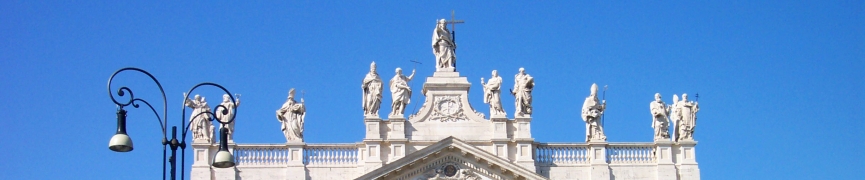
Missa Cantata at the Altar of the Assumption
at the Cathedral Basilica of Sts. Peter & Paul in Philadelphia
Priest Celebrant: Rev. Jason Kulczynski
with the Schola Cantorum Philadelphiensis
March 20, 2017 No Comments
NEW: Bishop Athanasius Schneider video interview.
March 20, 2017 No Comments
Music in Honor of Our Lady of Fatima!
(Submitted by Michael Miller)
Dear friend of the Smooth Stone Foundation,
I wanted to make you aware of an exciting new project we are working on.
We will be recording a special CD of beautiful, traditional choir music to commemorate the 100th anniversary of Our Lady of Fatima and the Miracle of the Sun!
“I Heard a Voice from Heaven…†will be a recording of several pieces from the Catholic tradition of Portugal, where the Blessed Virgin appeared in Fatima. The pieces will be selected and conducted by Dr. Tim McDonnell and sung by professional choir singers.
Beginning in May of 1917 and for several months following, the Blessed Virgin Mary appeared to three shepherd children in the Portuguese countryside, enjoining them to prayer and sacrifice for a world in turmoil. This culminated with the final apparition and the Miracle of the Sun on October 13, 1917. Since that time, the message of Fátima has encouraged countless faithful to pursue holiness in their lives, families, and professions.
Portugal has been a bulwark of Catholic culture for centuries, and the country’s unique contribution to Catholic sacred music is impressive. Our hope is that the numinous and hallowed sounds of choral masterpieces from the Land of Fátima will inspire the prayerful recollection of Our Lady’s message of prayer and hope in a world still beset by confusion, strife, and conflict.
We hope to have the music recorded and produced by May of this year.
This is a unique opportunity to express our gratitude and to honor Our Lady of Fatima for her intercession and motherly concern on our behalf! Please help us make this project a success!
To pledge or donate to this project, please contact:
Joseph Burke, Executive Director
Phone: 239-272-8395
Email: jburke@smoothstone.org
You can also donate to us directly through our website. To learn more about this project, visit us at:
March 17, 2017 No Comments
Gregorio Allegri: Miserere (The Choir of Claire College, Cambridge)
Please copy and paste the following link into your browser:
https://www.youtube.com/results?search_query=Allegri+miserere+claire+college+cambridge
March 10, 2017 No Comments
Upcoming Traditional Latin Masses
Upcoming Events:
The Traditional Latin Mass will be offered on:
1. the Second Sunday of Lent (Missa Cantata)
Sunday March 12, 2017
11:00 a.m.
at the National Shrine of Our Lady of Czestochowa
in St. Anne’s Chapel
with the Schola Cantorum Philadelphiensis;
2. The Feast of St. Joseph, Spouse of the Blessed Virgin Mary
Monday, March 20, 2017
7:00 p.m.
Missa Cantata at the Altar of the Assumption
at the Cathedral Basilica of Sts. Peter & Paul in Philadelphia
Priest Celebrant: Rev. Jason Kulczynski
with the Schola Cantorum Philadelphiensis;
3. The Annunciation of the Blessed Virgin Mary
Saturday, March 25, 2017
12:00 Noon
Solemn High Mass
at St. Mary’s Church in Schwenksville
Priest Celebrant: Rev. Dennis Carbonaro, Deacon: Rev. Gerald Carey, Sub-Deacon: Mr. James Griffin; and,
4. Wednesday of Passion Week
April 5, 2017
6:00 p.m.
Missa Cantata
Holy Martyrs Roman Catholic Church
120 Allison Road, Oreland, Pennsylvania.
March 8, 2017 2 Comments
International Declaration on Sacred Music “Cantate Domino”
Today, March 5, in honor of the 50th anniversary of the Instruction Musicam Sacram (promulgated March 5, 1967), a Declaration on Sacred Music Cantate Domino, signed by over 200 musicians, pastors, and scholars from around the world, has been published in six languages (English, Italian, Spanish, Portuguese, French, and German). This declaration argues for the continued relevance and importance of traditional sacred music and critiques the numerous serious deviations from it that have plagued the Catholic Church for the past half-century.
Readers of NLM are encouraged to read the text (reproduced below in full) and to disseminate it far and wide as a rallying-point for Catholics who love our great heritage, and for all men and women who value high culture and the fine arts as expressions of the spiritual nobility of the human person made in God’s image.

“CANTATE DOMINO CANTICUM NOVUMâ€
A Statement on the Current Situation of Sacred Music
We, the undersigned — musicians, pastors, teachers, scholars, and lovers of sacred music — humbly offer this statement to the Catholic community around the world, expressing our great love for the Church’s treasury of sacred music and our deep concerns about its current plight.
Introduction
Such love and practice of music is witnessed to throughout Christian literature and in the many documents that the Popes have devoted to sacred music, from John XXII’s Docta Sanctorum Patrum (1324) and Benedict XIV’s Annus Qui (1749) down to Saint Pius X’s Motu Proprio Tra le Sollecitudini (1903), Pius XII’s Musicae Sacrae Disciplina (1955), Saint John Paul II’s Chirograph on Sacred Music (2003), and so on. This vast amount of documentation impels us to take with utter seriousness the importance and the role of music in the liturgy. This importance is related to the deep connection between the liturgy and its music, a connection that goes two ways: a good liturgy allows for splendid music, but a low standard of liturgical music also tremendously affects the liturgy. Nor can the ecumenical importance of music be forgotten, when we know that other Christian traditions — such as Anglicans, Lutherans, and the Eastern Orthodox — have high esteem for the importance and dignity of sacred music, as witnessed by their own jealously-guarded “treasuries.â€
We are observing an important milestone, the fiftieth anniversary of the promulgation of the Instruction on Music in the Liturgy, Musicam Sacram, on March 5, 1967, under the pontificate of Blessed Paul VI. Re-reading the document today, we cannot avoid thinking of the via dolorosa of sacred music in the decades following Sacrosanctum Concilium. Indeed, what was happening in some factions of the Church at that time (1967) was not at all in line with Sacrosantum Concilium or with Musicam Sacram. Certain ideas that were never present in the Council’s documents were forced into practice, sometimes with a lack of vigilance from clergy and ecclesiastical hierarchy. In some countries the treasury of sacred music that the Council asked to be preserved was not only not preserved, but even opposed. And this quite against the Council, which clearly stated:
The musical tradition of the universal Church is a treasure of inestimable value, greater even than that of any other art. The main reason for this pre-eminence is that, as sacred song united to the words, it forms a necessary or integral part of the solemn liturgy. Holy Scripture, indeed, has bestowed praise upon sacred song, and the same may be said of the fathers of the Church and of the Roman pontiffs who in recent times, led by St. Pius X, have explained more precisely the ministerial function supplied by sacred music in the service of the Lord. Therefore sacred music is to be considered the more holy in proportion as it is more closely connected with the liturgical action, whether it adds delight to prayer, fosters unity of minds, or confers greater solemnity upon the sacred rites. But the Church approves of all forms of true art having the needed qualities, and admits them into divine worship. (SC 112)
The Current Situation
In light of the mind of the Church so frequently expressed, we cannot avoid being concerned about the current situation of sacred music, which is nothing short of desperate, with abuses in the area of sacred music now almost the norm rather than the exception. We shall summarize here some of the elements that contribute to the present deplorable situation of sacred music and of the liturgy.
1. There has been a loss of understanding of the “musical shape of the liturgy,†that is, that music is an inherent part of the very essence of liturgy as public, formal, solemn worship of God. We are not merely to sing at Mass, but to sing the Mass. Hence, as Musicam Sacram itself reminded us, the priest’s parts should be chanted to the tones given in the Missal, with the people making the responses; the singing of the Ordinary of the Mass in Gregorian chant or music inspired by it should be encouraged; and the Propers of the Mass, too, should be given the pride of place that befits their historical prominence, their liturgical function, and their theological depth. Similar points apply to the singing of the Divine Office. It is an exhibition of the vice of “liturgical sloth†to refuse to sing the liturgy, to use “utility music†rather than sacred music, to refuse to educate oneself or others about the Church’s tradition and wishes, and to put little or no effort and resources into the building up of a sacred music program.
2. This loss of liturgical and theological understanding goes hand-in-hand with an embrace of secularism. The secularism of popular musical styles has contributed to a desacralization of the liturgy, while the secularism of profit-based commercialism has reinforced the imposition of mediocre collections of music upon parishes. It has encouraged an anthropocentrism in the liturgy that undermines its very nature. In vast sectors of the Church nowadays there is an incorrect relationship with culture, which can be seen as a “web of connections.†With the actual situation of our liturgical music (and of the liturgy itself, because the two are intertwined), we have broken this web of connection with our past and tried to connect with a future that has no meaning without its past. Today, the Church is not actively using her cultural riches to evangelize, but is mostly used by a prevalent secular culture, born in opposition to Christianity, which destabilizes the sense of adoration that is at the heart of the Christian faith.
In his homily for the feast of Corpus Christi on June 4, 2015, Pope Francis has spoken of “the Church’s amazement at this reality [of the Most Holy Eucharist]. . . An astonishment which always feeds contemplation, adoration, and memory.†In many of our Churches around the world, where is this sense of contemplation, this adoration, this astonishment for the mystery of the Eucharist? It is lost because we are living a sort of spiritual Alzheimer’s, a disease that is taking our spiritual, theological, artistic, musical and cultural memories away from us. It has been said that we need to bring the culture of every people into the liturgy. This may be right if correctly understood, but not in the sense that the liturgy (and the music) becomes the place where we have to exalt a secular culture. It is the place where the culture, every culture, is brought to another level and purified.
3. There are groups in the Church that push for a “renewal†that does not reflect Church teaching but rather serves their own agenda, worldview, and interests. These groups have members in key leadership positions from which they put into practice their plans, their idea of culture, and the way we have to deal with contemporary issues. In some countries powerful lobbies have contributed to the de facto replacement of liturgical repertoires faithful to the directives of Vatican II with low-quality repertoires. Thus, we end up with repertoires of new liturgical music of very low standards as regards both the text and the music. This is understandable when we reflect that nothing of lasting worth can come from a lack of training and expertise, especially when people neglect the wise precepts of Church tradition:
On these grounds Gregorian Chant has always been regarded as the supreme model for sacred music, so that it is fully legitimate to lay down the following rule: the more closely a composition for church approaches in its movement, inspiration and savor the Gregorian form, the more sacred and liturgical it becomes; and the more out of harmony it is with that supreme model, the less worthy it is of the temple. (St. Pius X, Motu Proprio Tra le Sollecitudini)
Today this “supreme model†is often discarded, if not despised. The entire Magisterium of the Church has reminded us of the importance of adhering to this important model, not as way of limiting creativity but as a foundation on which inspiration can flourish. If we desire that people look for Jesus, we need to prepare the house with the best that the Church can offer. We will not invite people to our house, the Church, to give them a by-product of music and art, when they can find a much better pop music style outside the Church. Liturgy is a limen, a threshold that allows us to step from our daily existence to the worship of the angels: Et Ãdeo cum Angelis et Archángelis, cum Thronis et Dominatiónibus, cumque omni milÃtia cæléstis exércitus, hymnum glóriæ tuæ cánimus, sine fine dicéntes…
4. This disdain for Gregorian chant and traditional repertoires is one sign of a much bigger problem, that of disdain for Tradition. Sacrosanctum Concilium teaches that the musical and artistic heritage of the Church should be respected and cherished, because it is the embodiment of centuries of worship and prayer, and an expression of the highest peak of human creativity and spirituality. There was a time when the Church did not run after the latest fashion, but was the maker and arbiter of culture. The lack of commitment to tradition has put the Church and her liturgy on an uncertain and meandering path. The attempted separation of the teaching of Vatican II from previous Church teachings is a dead end, and the only way forward is the hermeneutic of continuity endorsed by Pope Benedict XVI. Recovering the unity, integrity, and harmony of Catholic teaching is the condition for restoring both the liturgy and its music to a noble condition. As Pope Francis taught us in his first encyclical: “Self-knowledge is only possible when we share in a greater memory†(Lumen Fidei 38).
5. Another cause of the decadence of sacred music is clericalism, the abuse of clerical position and status. Clergy who are often poorly educated in the great tradition of sacred music continue to make decisions about personnel and policies that contravene the authentic spirit of the liturgy and the renewal of sacred music repeatedly called for in our times. Often they contradict Vatican II teachings in the name of a supposed “spirit of the Council.†Moreover, especially in countries of ancient Christian heritage, members of the clergy have access to positions that are not available to laity, when there are lay musicians fully capable of offering an equal or superior professional service to the Church.
6. We also see the problem of inadequate (at times, unjust) remuneration of lay musicians. The importance of sacred music in the Catholic liturgy requires that at least some members of the Church in every place be well-educated, well-equipped, and dedicated to serve the People of God in this capacity. Is it not true that we should give to God our best? No one would be surprised or disturbed knowing that doctors need a salary to survive, no one would accept medical treatment from untrained volunteers; priests have their salaries, because they cannot live if they do not eat, and if they do not eat, they will not be able to prepare themselves in theological sciences or to say the Mass with dignity. If we pay florists and cooks who help at parishes, why does it seem so strange that those performing musical activities for the Church would have a right to fair compensation (see Code of Canon Law, can. 231)?
Positive Proposals
It may seem that what we have said is pessimistic, but we maintain the hope that there is a way out of this winter. The following proposals are offered in spiritu humilitatis, with the intention of restoring the dignity of the liturgy and of its music in the Church.
1. As musicians, pastors, scholars, and Catholics who love Gregorian chant and sacred polyphony, so frequently praised and recommended by the Magisterium, we ask for a re-affirmation of this heritage alongside modern sacred compositions in Latin or vernacular languages that take their inspiration from this great tradition; and we ask for concrete steps to promote it everywhere, in every church across the globe, so that all Catholics can sing the praises of God with one voice, one mind and heart, one common culture that transcends all their differences. We also ask for a re-affirmation of the unique importance of the pipe organ for the sacred liturgy, because of its singular capacity to elevate hearts to the Lord and its perfect suitability for supporting the singing of choirs and congregations.
2. It is necessary that the education to good taste in music and liturgy start with children. Often educators without musical training believe that children cannot appreciate the beauty of true art. This is far from the truth. Using a pedagogy that will help them approach the beauty of the liturgy, children will be formed in a way that will fortify their strength, because they will be offered nourishing spiritual bread and not the apparently tasty but unhealthy food of industrial origin (as when “Masses for children†feature pop-inspired music). We notice through personal experience that when children are exposed to these repertoires they come to appreciate them and develop a deeper connection with the Church.
3. If children are to appreciate the beauty of music and art, if they are to understand the importance of the liturgy as fons et culmen [source and apex] of the life of the Church, we must have a strong laity who will follow the Magisterium. We need to give space to well-trained laity in areas that have to do with art and with music.  To be able to serve as a competent liturgical musician or educator requires years of study. This “professional†status must be recognized, respected, and promoted in practical ways. In connection with this point, we sincerely hope that the Church will continue to work against obvious and subtle forms of clericalism, so that laity can make their full contribution in areas where ordination is not a requirement.
4. Higher standards for musical repertoire and skill should be insisted on for cathedrals and basilicas. Bishops in every diocese should hire at least a professional music director and/or an organist who would follow clear directions on how to foster excellent liturgical music in that cathedral or basilica and who would offer a shining example of combining works of the great tradition with appropriate new compositions. We think that a sound principle for this is contained in Sacrosanctum Concilium 23: “There must be no innovations unless the good of the Church genuinely and certainly requires them; and care must be taken that any new forms adopted should in some way grow organically from forms already existing.â€
5. We suggest that in every basilica and cathedral there be the encouragement of a weekly Mass celebrated in Latin (in either Form of the Roman Rite) so as to maintain the link we have with our liturgical, cultural, artistic, and theological heritage. The fact that many young people today are rediscovering the beauty of Latin in the liturgy is surely a sign of the times, and prompts us to bury the battles of the past and seek a more “catholic†approach that draws upon all the centuries of Catholic worship. With the easy availability of books, booklets, and online resources, it will not be difficult to facilitate the active participation of those who wish to attend liturgies in Latin. Moreover, each parish should be encouraged to have one fully-sung Mass each Sunday.
6. Liturgical and musical training of clergy should be a priority for the Bishops. Clergy have a responsibility to learn and practice their liturgical melodies, since, according to Musicam Sacram and other documents, they should be able to chant the prayers of the liturgy, not merely say the words. In seminaries and at the university, they should come to be familiar with and appreciate the great tradition of sacred music in the Church, in harmony with the Magisterium, and following the sound principle of Matthew 13:52: “Every scribe who has been instructed in the kingdom of heaven is like the head of a household who brings from his storeroom both the new and the old.â€
7. In the past, Catholic publishers played a great role in spreading good examples of sacred music, old and new. Today, the same publishers, even if they belong to dioceses or religious institutions, often spread music that is not right for the liturgy, following only commercial considerations. Many faithful Catholics think that what mainstream publishers offer is in line with the doctrine of the Catholic Church regarding liturgy and music, when it is frequently not so. Catholic publishers should have as their first aim that of educating the faithful in sane Catholic doctrine and good liturgical practices, not that of making money.
8. The formation of liturgists is also fundamental. Just as musicians need to understand the essentials of liturgical history and theology, so too must liturgists be educated in Gregorian chant, polyphony, and the entire musical tradition of the Church, so that they may discern between what is good and what is bad.
Conclusion
In his encyclical Lumen Fidei, Pope Francis reminded us of the way faith binds together past and future:
As a response to a word which preceded it, Abraham’s faith would always be an act of remembrance. Yet this remembrance is not fixed on past events but, as the memory of a promise, it becomes capable of opening up the future, shedding light on the path to be taken. We see how faith, as remembrance of the future, memoria futuri, is thus closely bound up with hope. (LF 9)
This remembrance, this memory, this treasure that is our Catholic tradition is not something of the past alone. It is still a vital force in the present, and will always be a gift of beauty to future generations.  “Sing praises to the Lord, for he has done gloriously; let this be known in all the earth. Shout, and sing for joy, O inhabitant of Zion, for great in your midst is the Holy One of Israel†(Is 12:5–6).
Signed (partial list)
Mº Aurelio Porfiri
Honorary Master and Organist for the Church of Santa Maria dell’Orto, Rome
Publisher of Choralife and Chorabooks, Editor of Altare Dei
Peter A. Kwasniewski, Ph.D.
Professor & Choirmaster
Wyoming Catholic College, WY, USA
Most Rev. Athanasius Schneider
Auxiliary Bishop of Astana
President of the Liturgical Commission of the Conference of the Catholic Bishops of Kazakhstan
The Most Reverend Rene Henry Gracida, D.D.
Bishop Emeritus of Corpus Christi
Abbot Philip AndersonÂ
Our Lady of Clear Creek Abbey
Hulbert, Oklahoma, USA
Rev. Prof. Nicola Bux
Priest, Archdiocese of Bari
Professor of Eastern Liturgy and Sacramental Theology
Sir James MacMillan C.B.E.
Composer and conductor
Peter Phillips
Founder and Director of the Tallis Scholars
Publisher of the Musical Times
Bodley Fellow, Merton College, Oxford
Chevalier de l’Ordre des Arts et des Lettres
Colin Mawby, K.S.G. Â Â
Liturgical Composer and Master of Music at Westminster Cathedral 1961–1977
Kevin Allen
Composer
Chicago, IL, USA
Frank J. La Rocca, Ph.D.
Composer
Emeritus Professor of Music, Oakland, California, USA
M° Giorgio CarniniÂ
Organista, compositore e direttore d’orchestra
Presidente Associazione Camerata Italica
Direttore artistico del festival e progetto “Un organo per Romaâ€
Buenos Aires; Roma
Prof. Giancarlo Rostirolla
Musicologo, Ricercatore, Accademico
Presidente dell’Istituto di Bibliografia Musicale
Direttore Artistico della Fondazione Giovanni Pierluigi da Palestrina
William Peter Mahrt, Ph.D.
Associate Professor of Music, Stanford University, Stanford, California
President, Church Music Association of America
Professor, Department of Theology
University of Notre Dame
Dr. Joseph Shaw
Senior Research Fellow, St Benet’s Hall, Oxford University
President of the Latin Mass Society of England & Wales
Martin Mosebach
German novelist & essayist
Frankfurt am Main, Germany
Roberto Spataro
Docente ordinario Università Pontificia Salesiana
Segretario della Pontificia Academia Latinitatis
Dottor Ettore Gotti Tedeschi
Economista e banchiere
Prof. Dr. Massimo de Leonardis
Ordinario di Storia delle relazioni internazionali
Direttore del Dipartimento di Scienze Politiche
Università Cattolica del Sacro Cuore
Milano – Italia
Rev. George William Rutler, M. St. (Oxon.), S.T.D., LL.D.
Pastor, Church of Saint Michael
New York City, New York
Rev. Brian W. Harrison, OS, MA, STD
Associate Professor of Theology (retired), Pontifical Catholic University of Puerto Rico
Chaplain, St. Mary of Victories Chapel,
St. Louis, Missouri, USA
Rev. Thomas M. Kocik
Parish Priest, Fall River, Mass., USA
Past Editor, Antiphon: A Journal for Liturgical Renewal
Rev. Richard G. Cipolla
Pastor, St. Mary’s Church
Norwalk, CT
Rev. James V. Schall, S.J.
Professor Emeritus
Georgetown University
Washington, DC, USA
Prof. Pier Paolo Donati
Direttore di “Informazione Organisticaâ€
Già docente di Storia della Musica all’Università di Firenze
Rev. John Zuhlsdorf
Madison, WI, USA
Vytautas Miskinis
Composer, Conductor, Professor
Artistic Director of Boy’s and Male Choir AZUOLIUKAS
Professor of Lithuanian Academy of Music and Theatre
President of Lithuanian Choral Union
Wilko Brouwers
Utrecht Center for the Arts
Gregorian Circle Utrecht
Scott Turkington
Director of Sacred Music
Holy Family Church & Holy Family Academy
Minneapolis, Minnesota, USA
Jeffrey Morse
Schola Gregoriana of Cambridge
Rev. J. W. Hunwicke
Priest of the Ordinariate of Our Lady of Walsingham
sometime Head of Theology, Lancing College
formerly Senior Research Fellow, Pusey House, Oxford
Right Reverend Archimandrite John A. Mangels
St. Augustine Antiochian Orthodox Christian Church, Denver CO, USA
Founder of the Ambrosian Choristers
Founder & President
Christopher Mueller Foundation for Polyphony & Chant
Massimo Lapponi O.S.B.
Monaco sacerdote professo dell’Abbazia Benedettina di Farfa
già docente di Etica e Filosofia della Religione presso il Pont. Ateneo di Sant’Anselmo
Patrick Banken
President of Una Voce France
Vice President of the International Federation Una Voce
March 6, 2017 No Comments
First Friday and First Saturday TLM’s for March, 2017
There has been a change in location from St. Albert The Great Rectory Chapel to nearby St. Hilary of Poitiers Church. If there any questions, please feel free to call Mark Matthews at 215-947-6555 and leave a message. The times remain the same. You can use Google Maps to find the location of St. Hillary Church.
St. Hilary of Poitiers Parish
820 Susquehanna Road
Rydal, PA 19046
Hope to see you at St. Hilary of Poitiers Roman Catholic Church, which is 2.7 miles from St. Albert The Great Parish.
March 2, 2017 No Comments
The next Traditional Latin Mass at the Shrine of Our Lady of Czestochowa, Doylestown
Submitted by Michael Miller
This Mass will be offered
on Sunday March 12, 2017
11:00 a. m.
(St. Anne’s Chapel)
ALSO:
The Traditional Latin Mass will be offered by
Rev. Jason Kulczynski, Pastor
at
Holy Martyrs Catholic Church
120 Allison Road, Oreland, Pa 19075
on Wednesday, April 5, 2017
Wednesday of Passion Week
Any man interested in joining the Schola Cantorum
Philadelphiensis, please contact James Griffin atÂ
February 27, 2017 No Comments
True Poverty of Spirit in the Splendor of Worship: Why We Pay Deference to the Celebrant
By Dr. of the New Liturgical Movement

Last January, I published a defense of the cappa magna (“The Cappa Magna in the Light of Nature, Rationality, and Mysteryâ€), in the course of which I claimed that this garment is “fully consistent with the logic of creation, the Incarnation, and the grammar of worship as the most special of all special occasions,†and that
As Catholics, we rejoice in the natural beauty of colors and forms; we rejoice in the rational capacity to highlight personal dignity, elevated office, and earnest ritual; we rejoice in the supernatural symbolism that draws our minds beyond this earthly realm to the heavenly kingdom and its majestic Sovereign. It is a perfect example of the harmony of nature and grace — the hidden depths of visible nature and the sensible signs of invisible grace.
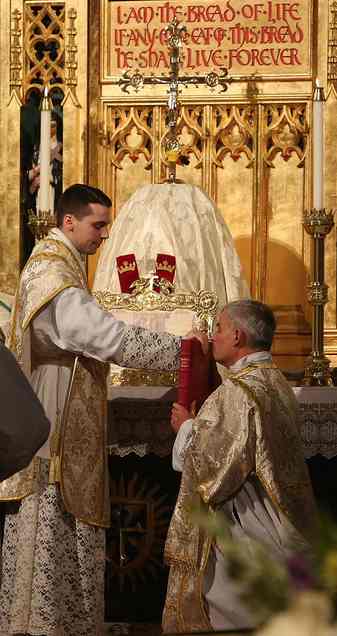
With the widespread loss of faith in the Real Presence of Christ in the Holy Eucharist, we lose our faith in His real presence in the priests; religious exercises come to be about us, about the community. Naturally, in this false perspective, it is absurd to wear beautiful vestments, much less a cappa magna — who are we to dress up like this? But it is not about us; it is all about Jesus, directed to His honor and reflective of His glory. How would we treat Our Lord if He were the one offering the High Mass? Yet He is the one offering it; the Eternal High Priest is present in and working through His earthly high priest, whom we confess to be alter Christus.
No one has been granted the privilege of seeing this truth more fully than St. Gertrude the Great, who beheld in many of her visions the Lord Jesus Himself celebrating the liturgy of the Mass and of the Divine Office, with hosts of angels as his acolytes.
As He [Christ] sat on His royal throne, St. Gertrude cast herself at His feet and embraced them. Then He chanted the Kyrie eleison, in a clear and loud voice …
The Son of God then rose from His royal throne and turning towards God the Father, intoned the Gloria in excelsis in a clear and sonorous voice. At the word Gloria, He extolled the immense and incomprehensible omnipotence of God the Father. At the words in excelsis, He praised His profound wisdom. At Deo, He honored the inestimable and indescribable sweetness of the Holy Spirit. The whole celestial court then continued in a most harmonious voice, Et in terra pax bonae voluntatis. …
At the conclusion of the Gloria in excelsis, the Lord Jesus, who is our true High Priest and Pontiff, turned to Gertrude, saying Dominus vobiscum, dilecta — “The Lord be with you, beloved,†and she replied Et spiritus meus tecum, praedilecte — “And may my spirit be with Thee, O most Beloved.†After this she inclined towards the Lord, to return Him thanks for His live in uniting her spirit to His Divinity, whose delights are with the children of men. The Lord then read the Collect …
Gertrude saw our Lord rise from His royal throne and present His blessed Heart to His Father, elevating it with His own Hands and immolating it in an ineffable manner for the whole Church, At this moment the bell rang for the Elevation of the Host in the Church [where St. Gertrude was on earth], so that it appeared as if our Lord did in heaven what the priest did on earth. …
And our Lord communicated Himself to her with a love and tenderness which no human tongue could describe, so that she received the perfect fruit of His most precious Body and Blood. After this He sang a canticle of love for her and declared to her that had this union of Himself with her been the sole fruit of His labors, sorrows, and Passion, He would have been fully satisfied.[2]

I remember with great inner warmth how it felt to be at the Mass celebrated by His Eminence Raymond Leo Cardinal Burke at Strahov Abbey on the Feast of St. Teresa of Jesus in October 2016. Between the sanctuary full of ministers going about their many and varied tasks of service and the choir loft whence flowed the milk of chant and the honey of polyphony, I was suspended in an enormous net of prayer, the Church in heaven and the Church on earth, into which I, though unworthy, was invited to participate, along with the hundreds of souls packed into the narrow wooden benches of the nave.[3] Prayer was not a mental construct but a pulsing, palpable thing going on above me, before me, and yet within me, something much greater and more real than myself in that it came from God and carried me to God, infusing a sense of wonder and humility. “Who am I, that the mother of my Lord should come to me?†— this mother that the liturgy is for our spiritual life.
The two hours of the Pontifical Mass passed as quickly as if time had stepped aside in deference to its master, waiting to be summoned again when he should wish it. The liturgy ended with a monumental improvisation on the pipe organ, so that my last impressions were an anarchic blend of banners carried in procession, music seizing hold of all space, and the bustle of men, women, and children streaming forth to the courtyard. I had been present at the tearing of the veil in the temple, the veil of His flesh, and for a moment the heavens were opened. I had worshiped with the angels, knelt with sinners, felt the balm of beauty, tasted the sacrament of love. Never have I been more proud to be a Catholic — or more aware of my smallness and dependency, my unworthiness as a member of the Mystical Body.
From those heights, let us return once more to pontifical regalia and look at the question from the opposite angle. While it is sometimes possible that a saintly priest or bishop would choose to rid himself of anything valuable in order to give the money to the poor, in our own times it is much more common to encounter what might be called “ostentatious bad taste†or “hypocritical poverty,†when a priest or bishop who claims to be renouncing pomp and circumstance for the sake of the Gospel is really drawing attention to himself as a paragon of social justice, whose ugly garments or clumsy chalices in fact still cost a great deal of money — money that could have been spent on something truly beautiful, which spiritually enriches all who behold it, including the poor. We could put it this way: a priest or bishop who does not see himself as essentially a symbol of another and therefore as able to accept and promote liturgical beauty for the sake of that other will, perforce, see himself as —himself, in front of the people, on display. At this point, two roads are open to him: to be ostentatiously wealthy for the sake of worldly glory, or to be ostentatiously poor and virtuous. In either case, it’s all about him, and the result is thoroughly disedifying. In contrast, when a man of God really acts and speaks as a man of God, one who totally belongs to Christ the Eternal High Priest, it is extremely edifying to see him robed in splendor, uplifted in honor. When Our Lord said: “Whatsoever you do to the least, you do unto Me†(cf. Mt 25:40), He was certainly not excluding the truth that whatsoever you do to the greatest, you do to Him as well.
We can see in the simplicity of St. Benedict’s faith the reason why so many in the Church today object to “pomp and splendor†— namely, their lack of the same faith. “Let the abbot, since he is believed to hold the place of Christ, be called Lord and Abbot…†If one does not believe firmly and unshakably with one’s mind and heart that the ministerial priest is alter Christus, a priest forever according to the order of Melchizedek; if one does not believe that the bishop is Christ as ruling, teaching, and sanctifying; if one does not believe that the hierarchs of the Church are the authoritative voice and healing hands of the Word made flesh, the King of Kings and Lord of Lords who suffered and is now exalted gloriously in heaven above the cherubim and seraphim, then it is perfectly reasonable to be repelled by signs of pomp and splendor.
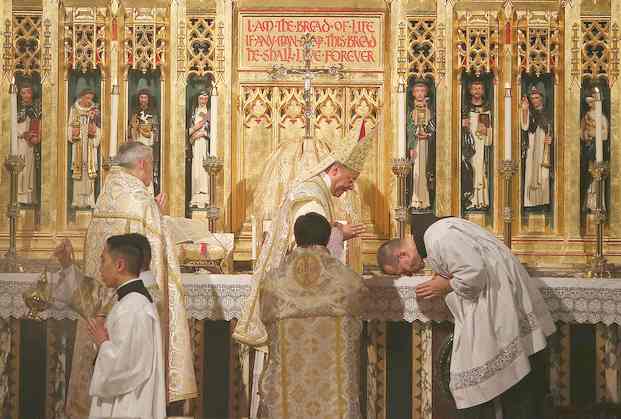
Charles Coulombe makes this insightful observation about the difference in “style†between Benedict XVI and Francis:
The generation of westerners of which he [Francis] is a part was marked — in Church, State, and indeed, in every field — by what can only be called a sort of “personalization†of authority. That is to say, that the traditional division in perception between an office and the current holder of that office — which allowed people of wildly differing, sometimes even opposed, views to collaborate out of shared respect for the office under whose direction they functioned — has been blurred or even obliterated. Such folk, when in authority, tend to downgrade or do away with traditional symbols of their office while emphasizing their own personalities in pursuit of some nebulous “authenticity.†So it is that morning dress and uniforms disappear from presidential inaugurations and legislative openings, and royals love to appear in casual wear. The difficulty with such an approach is that it tends to weaken respect for the office in the eyes of its subjects, who in turn begin to believe that their loyalty to it is dependent purely on their personal feelings for the occupant of the moment. Seeing the problems this had created, Benedict XVI began to restore the symbolic side of the Papacy, for all that formalism and display ran extremely counter to his nature. But it is not an issue that one of Francis’s generation could be expected to understand — quite the contrary.[4]
What is certain is that he did try to use the hermeneutic of reform himself. Despite the lack of tiara noted earlier, piece by piece he restored bits of the papal wardrobe that his immediate predecessors had discarded: the fur-lined mozzetta, the camauro, the fanon, and — most annoying to some — the traditional red shoes, symbolizing the fact that as Pope he walked in the footsteps of the martyrs.
When we look back over the criticisms made of episcopal vestments by certain fathers of the Second Vatican Council and by our minimalists of today, we must ask ourselves: Why would a bishop who protests about wearing gauntlets or buskins not likewise protest about the mitre and crook? Why is a bishop or a priest still wearing clerical attire of any sort? Did not the chasuble begin as a typical Roman garment, of which jeans and a T-shirt would be our equivalent? Why is a cleric still using prescribed rituals and ceremonies at all?
Joseph Ratzinger saw that the post-modern critique of structures and institutions extends to everything — there is no logical reason to stop at the cappa magna or the gold chalice or the medieval chant, as opposed to carrying the deconstruction of religion all the way to its entire visible material system of power.[6] For this reason, therefore, the post-modern critique has to be rejected at its root. In its place we must put the Pseudo-Dionysian principle of excess, even super-excess. While we may not prefer the results of the Baroque aesthetic to those of the Byzantine, the Romanesque, or the Gothic, we can recognize in it the Christ-loving, creation-loving exultation of the Catholic soul, which serves as an antidote to the poisonous reductionism of our time and an exemplar of the disciplined abandon to holy things, rejoicing in every pound of spikenard it can spill out to anoint the feet of the Lord.
NOTES
[1] Holy Rule, ch. 63 (McCann trans.). Perhaps the most astonishing example of Benedict’s analogical thinking is found in ch. 7, under the fifth degree of humility. The chapter begins: “The fifth degree of humility is that he [the monk] humbly confess and conceal not from his abbot any evil thoughts that enter his heart, and any secret sins that he has committed.” Straightforward. But then Benedict backs up this advice with three authorities: “To this does Scripture exhort us, saying: Make known thy way unto the Lord and hope in him. And again: Confess to the Lord, for he is good, and his mercy endureth for ever. And further: I have made known my sin to thee, and my faults I have not concealed. I said: I will be my own accuser and confess my faults to the Lord, and with that thou didst remit the guilt of my sin.” The patriarch has virtually equated “confessing to the Lord” with “confessing to the abbot.” This can make sense only because the abbot is a true and authoritative ‘icon’ of the Lord, an alter Christus, along the lines of Jesus’ statement: “He who hears you, hears me.”
[2] William J. Doheny, C.S.C., The Revelations of  Saint Gertrude, Part III, ch. LXI.
[3] It was thought that hardly anyone would come to this Mass. When it began, the church was so full that no seats were left and latercomers had to stand or sit wherever they could. It is doubtful that this abbey has seen so many worshipers for a very long time. It is almost always this way with Pontifical Masses: the People of God are famished and they come to the feast whenever and wherever it is set forth.
[4] Vicars of Christ: A History of the Popes (Arcadia: Tumblar House, 2014), 389–90.
[5] By “poverty of doctrine†I refer to the superficiality, messiness, ambiguities, contradictions, and unclarity of this pope’s teaching, in contrast to the rich truthfulness of those of his predecessors who took seriously the Lord’s command to “let what you say be simply ‘yes’ or ‘no’†(Mt 5:37); cf. 2 Cor 1:17–19, Jas 5:12.
[6] For more thoughts about the deconstruction of symbolism, see the superb recent article on Alfred Lorenzer’s 1981 study The Council of the Bookkeepers.
February 16, 2017 No Comments
ADORE THE LORD IN THE BEAUTY OF HOLINESS WITH A SUNG MASS IN THE TRADITIONAL LATIN RITE
ADORE THE LORD IN THE BEAUTY OF HOLINESS WITH A SUNG MASS IN THE TRADITIONAL LATIN RITE
AT THE SHRINE OF OUR LADY OF CZESTOCHOWA
SUNDAY, MARCH 12 AT 11AM
The Bucks County Traditional Latin Mass Group is pleased to announce that the scheduled liturgy for March 12 will be our first missa cantata, or sung Mass. Schola Cantorum Philadelphiensis will sing the Propers for the Second Sunday of Lent according to the full melodies of the ancient Gregorian chant. Please plan to attend and bring a friend so that more may experience the beauty of the Extraordinary Form.
654 FERRY ROAD, DOYLESTOWN, PA 18901 WWW.CZESTOCHOWA.US (215) 345-0600
For more information, contact our coordinator at toddason@verizon.net
February 15, 2017 No Comments