by William A. Torchia, Esq.
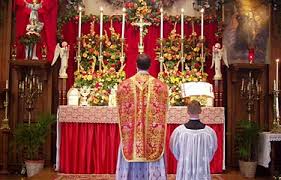
The Traditional Latin Mass will be offered on:
Friday, December 1st and Saturday, December 2nd at:
Church of the Immaculate Conception of the Blessed Virgin Mary
(215) 884-4022
Please join us at this beautiful historic church. Mass will be offered in the Main Sanctuary.  Please note the time change for Saturday.
First Friday, December 1st:
Priest: Rev. Harold B. McKale (Parish Vicar, Our Lady of Mount Carmel Roman Catholic Church);
Location:Â Church of the Immaculate Conception
Time: 7:00Â p.m., preceded by Confessions at 6:30Â p.m.
This Traditional Latin Mass will be the Mass of The Sacred Heart of Jesus, offered in Reparation to The Sacred Heart of Jesus. (White Vestments)
First Saturday, December 2nd:
Priest: Rev. Harold B. McKale (Parish Vicar, Our Lady of Mount Carmel Roman Catholic Church)
Location:Â Â Church of the Immaculate Conception
Time: 9:00 a.m., preceded by Confessions at 8:30 a.m.
This Traditional Latin Mass will be the the Mass of the Immaculate Heart of Mary, with a Commemoration of St. Bibiana, offered in Reparation to The Immaculate Heart of Mary. (White Vestments)
Â
by William A. Torchia, Esq.
We are posting this article insofar as it appears that it could be analogous to the words of Our Lord in this Sunday’s Gospel: ‘When you see the abomination of desolation…standing in the holy place.”

The group “Spezzare il pane†(“Breaking the Breadâ€) in the archdiocese of Turin, Italy, has officially started with the celebration of “ecumenical masses†where Holy Communion is distributed to Catholics and non-Catholics.
The group is headed by Catholic priest Father Fredo Oliviero, an apologist for illegal immigration, who has the support of his archbishop, Monsignor Cesare Nosiglia. The practice of the group to distribute Holy Communion to non-Catholics, is openly promoted in the newspaper of the Turin Archdiocese “La Voce e il Tempoâ€.
Among the members of the group are “Catholicsâ€, Anglicans, Baptists, Waldensians and Lutherans. They gather once a month in one of their churches, where they celebrate a “Eucharist†according to the respective denomination, distributing “Communion†to everybody.
It is now customary that once a month, the group meets in a Catholic, Lutheran, Waldensian, or Baptist church to share the “Eucharistâ€, partaking in worship or Mass – officiated according to the liturgy of the host church. According Fr. Fredo, the ecumenical ceremony replaces “in the foreground the identity of Christians with respect to belonging to a specific Church.â€Â He likewise said that the practice is spreading in other cities in Italy as well.
The Catholic Church teaches that non-Catholics may not receive Communion because they do not share our belief in the doctrine of Eucharistic transubstantiation. According to transubstantiation, the bread and wine are actually transformed into the actual body, blood, soul, and divinity of Christ, with only the appearances of bread and wine remaining.
These developments, indeed, seem to be a corroboration of the various reputable prophecies in recent times that predict the rise of a false church in the end times, just prior to the return of Jesus Christ. This false church, according to prophecy,  will promote a false “ecumenical mass†that will deny the real presence of Jesus.  These prophecies are likewise supported by the testimony of the late Gabriel Amorth, former chief exorcist of Rome, who said that Padre Pio told him that the third secret of Fatima refers to a false church that will rise in the end times.
Not Required to Have a “Single Thought†on the Eucharist
In an article written by Breaking Bread Founder Fr. Fredo Olivero last May in Turin Archdiocese’s official newspaper and website, he said that attendees to the “Ecumenical Mass†are not required to have a “single thought†on the Eucharist: “It is not required, in order to live together this event, to adhere to a ‘single thought’ on the Eucharist, but rather to respect everyone for the thought of each.â€
He also likewise cast doubt on the Doctrine of Transubstantiation of the Catholic Church, saying: “Neither Jesus nor Paul explained the ‘how’ of this presence [in the Eucharist], why then should we do it?â€
Eucharistic “interpretations†not part of the Gospel?
Aside from support from his bishop, Fr. Fredo likewise claims that Pope Francis supports this concept of an “Ecumenical Massâ€. In the same article in the Turin Archdiocesan newspaper, Fr. Fredo recalls the visit of Pope Francis on June 22, 2015 to Turin Italy. Pope Francis then became the first pope in history to visit a Waldensian evangelical church, and in that trip, asked Waldensian Christians for forgiveness for their past “persecution†from the Catholic Church.
Fr. Fredo recalls that on the occasion of that papal visit, Pope Francis did not refute or deny the point of view raised by the moderator, Eugenio Bernardini, who pointed out that the various “interpretations†on the Eucharist were not part of the Gospel. Fr. Fredo quotes Bernardini, who then said in the presence of the Pope and Waldensian ministers and Christians:
Among the things we have in common are the words that Jesus gave on the occasion of the last supper, “I am the bread… and the wine.â€Â The interpretations of those words are different between the churches and within each of them. But what unites the Christians gathered around the table of Jesus are the bread and wine that He offers us and His words, not our interpretations that are not part of the Gospel.
He said that unlike previous pontiffs who had “solved the question [on the Eucharistic presence] preciselyâ€, Pope Francis admitted that could not solve the Eucharistic question precisely himself, because he was moving the Church from an authoritarian decision-making model, to a more “synodal†model.
Pope Francis Says to Lutheran Woman to “Go Forward†and Receive Communion
Fr. Fredo likewise recalled the answer given by Pope Francis to a question posed to him by a Lutheran lady during his visit to a Lutheran church in Rome on November 15, 2015. During the question-and-answer session after a joint prayer service with Lutherans, Anke de Bernardinis told Pope Francis that she was married to a Catholic and that she and her husband share many “joys and sorrows†in life, but not Communion at church. “What can we do on this point to finally attain Communion?â€Â she asked.
The Pope responded by saying to the Lutheran woman to “talk to the Lord and then go forwardâ€, suggesting that she could receive Communion in the Catholic Church:
To your question, I can only respond with a question: What can I do with my husband, so that the Lord’s Supper accompanies me on my path? It is a problem that everyone has to answer, but a pastor-friend once told me: “We believe that the Lord is present there, he is present. You all believe that the Lord is present. And so what’s the difference?â€â€”“Eh, there are explanations, interpretations.†Life is bigger than explanations and interpretations.
Always refer back to baptism. “One faith, one baptism, one Lord.†This is what Paul tells us, and from there take the consequences.
I would never dare to give permission for this, because it’s not my jurisdiction. “One baptism, one Lord, one faith.†Talk to the Lord and then go forward. I don’t dare to say anything more.
by Paul Simeon, Veritas
by William A. Torchia, Esq.
Offical Announcement From:
Traditional Latin Mass in Philadelphia
Solemn Mass with Latin Propers and Ordinary (Novus Ordo), on the first Sunday of the month, at 11:00 a.m.,at the Cathedral Basilica of Sts. Peter and Paul, Philadelphia, Pennsylvania, from September through June, with the Cathedral Choir.
Â
by William A. Torchia, Esq.
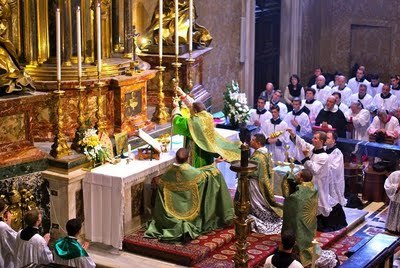
Fr. Leonard Goffine
The Church’s Year
[For the Introit of this day see the Introit in the Mass of the fifth Sunday after Epiphany]
On this Sunday mention is made of the practice of Christian virtues, and of God’s sufferance of the wicked upon earth, that by them the just may be exercised in patience.
COLLECT Keep, we beseech Thee, O Lord, Thy household by Thy continual mercy; that as it leans only upon the hope of Thy heavenly grace, so it may ever be defended by Thy protection. Through our Lord Jesus Christ, etc.
EPISTLE (Col. III. 12-17.) Brethren, put ye on, as the elect of God, holy and beloved, the bowels of mercy, benignity, humility, modesty, patience; bearing with one another, and forgiving one another, if any have a complaint against another; even as the Lord hath forgiven you, so you also. But above all these things, have charity, which is the bond of perfection: and let the peace of Christ rejoice in your hearts, wherein also you are called in one body; and be ye thankful. Let the word of Christ dwell in you abundantly, in all wisdom; teaching and admonishing one another, in psalms, hymns, and spiritual canticles, singing in grace in your hearts to God. All whatsoever you do in word or in work, all things, do ye in the name of the Lord Jesus Christ, giving thanks to God and the Father through Jesus Christ our Lord.
Why does St. Paul call charity the bond of perfection?
Because charity comprises in itself and links all the virtues in which perfection consists. For whoever truly loves God and his neighbor, is also good, merciful, humble, modest, patiently bears the weakness of his neighbor, willingly forgives offences, in a word, practices all virtues for the sake of charity.
When does the peace of God rejoice in our hearts?
When we have learned to conquer our evil inclinations, passions, and desires, and have placed order and quiet in our hearts instead. This peace then, like a queen, keeps all the wishes of the soul in harmony, and causes us to enjoy constant peace with our neighbor, and thus serve Christ in concord, as the members of one body serve the head. The best means of preserving this peace are earnest attention to the word of God, mutual imparting of pious exhortations and admonitions, and by singing hymns, psalms, and spiritual canticles.
Why should we do all in the name of Jesus?
Because only then can our works have real worth in the sight of God, and be pleasing to Him, when they are performed for love of Jesus, in His honor, in accordance with His spirit and will. Therefore the apostle admonishes us to do all things, eat, drink, sleep, work &c. in the name of Jesus, and so honor God, the Heavenly Father, and show our gratitude to Him. Oh, how grieved will they be on their death-bed who have neglected to offer God their daily work by a good intention, then they will see, when too late, how deficient they are in meritorious deeds. On the contrary they will rejoice whose consciences testify, that in all their actions they had in view only the will and the honor of God! Would that this might be taken to heart especially by those who have to earn their bread with difficulty and in distress, that they might always unite their hardships and trials with the sufferings and merits of Jesus, offering them to the Heavenly Father, and thus imitating Christ who had no other motive than the will and the glory of His Heavenly Father.
ASPIRATION O God of love, of patience, and of mercy, turn our hearts to the sincere love of our neighbor, and grant, that whatever we do in thoughts, words and actions, we may do in the name of our Lord Jesus Christ, and through Him render thanks to Thee.
ON CHURCH SINGING
“Admonish one another in psalms, hymns, and spiritual canticles, singing in grade in your hearts to God.” (Col. III. 16.)
The custom of singing in the Church-choir* has its foundation as far back as the Old Testament, when by the arrangement of David, Solomon, and Ezechias, the psalms and other sacred canticles were sung by the priests and Levites. This custom the Catholic Church has retained, according to the precepts of the apostles, (I. Cor. XIV. 26; Eph. V. 19.) and the example of Jesus who, after they had eaten the Pasch, intoned a hymn of praise with His apostles, Matt XXVI. 30) that Christians on earth, like the angels and saints in heaven, (Apoc. V. 8. 9., XIV. 3.) who unceasingly sing His praises, might at certain hours of the day, at least, give praise and thanks to God. In the earliest ages of the Church, the Christians sang hymns of praise and thanksgiving during the holy Sacrifice and other devotional services, often continuing them throughout the whole night; in which case the choir-singers probably were bound to keep the singing in proper order and agreement. In the course of time this custom of all the faithful present singing together ceased in many churches, and became confined to the choir, which was accompanied later by instruments in accordance with the words of David who calls to the praise of the Lord with trumpets, with timbrels, with pleasant psaltery and harps. (Ps, CL. 3, 4., LXXX. 3. 4.) In many churches, where the faithful still sing in concert, if done with pure hearts and true devotion, it is as St. Basil says, “a heavenly occupation, a spiritual burnt offering; it enlightens the spirit, raises it towards heaven, leads man to communion with God, makes the soul rejoice, ends idle talk, puts away laughter, reminds us of the judgment, reconciles enemies. Where the singing of songs resounds’ from the contrite heart there God with the angels is present.”
*The choir is usually a gallery in the Church in which the singers are stationed; the place where the clergy sing or recite their office, is also called the choir.
GOSPEL (Matt. XIII. 24-30,) At that time, Jesus spoke this parable to the multitudes: The kingdom of heaven is likened to a man that sowed good seed in his field. But while men were asleep, his enemy came, and oversowed cockle among the wheat, and went his way. And when the blade was sprung up, and had brought forth fruit, then appeared also the cockle. And the servants of the good man of the house coming, said to him: Sir, didst thou not sow good seed in thy field? whence, then, hath it cockle? And he said to them: An enemy bath done this. And the servants said to him: Wilt thou that we go and gather it up? And he said: No, lest perhaps, gathering up the cockle, you root up the wheat also together with it. Suffer both to grow until the harvest; and in the time of the harvest I will say to the reapers: Gather up first the cockle, and bind it into bundles to burn, but the wheat gather ye into my barn.
What is understood by the kingdom of heaven ?
The Church of God, or the collection of all orthodox Christians on earth, destined for heaven.
What is meant by the good seed, and by the cockle?
The good seed, as Christ Himself says, (Matt. XIII. 38.) signifies the children of the kingdom,
that is, the true Christians, the living members of the Church, who being converted by the word of God sown into their hearts become children of God, and bring forth the fruit of good works. The cockle means the children of iniquity, of the devil, that is, those who do evil; also every wrong, false doctrine which leads men to evil.
Who sows the good seed, and by the cockle?
The good seed is sown by Jesus, the Son of Man not only directly, but through His apostles, and the priests, their successors; the evil seed is sown by the devil, or by wicked men whom he uses as his tools.
Who are the men who were asleep?
Those superiors in the Church; those bishops and pastors who take no care of their flock, and do not warn them against seduction, when the devil comes and by wicked men sows the cockle of erroneous doctrine and of crime; and those men who are careless and neglect to hear the word of God and the sacrifice of the Mass, who neglect to pray, and do not receive the Sacraments. In the souls of such the devil sows the seeds of bad thoughts, evil imaginations and desires, from which spring, later, the cockle of pride, impurity, anger, envy, avarice, etc.
Why does not God allow the cockle, that is, the wicked people, to be rooted out and destroyed?
Because of His patience and long suffering towards the sinner to whom He gives time for repentance, and because of His love for the just from whom He would not, by weeding out the unjust, take away the occasion of practicing virtue and gathering up merits for themselves; for because of the unjust, the just have numerous opportunities to exercise patience, humility, etc.
When is the time of the harvest?
The day of the last judgment when the reapers, that is, the angels, will go out and separate the wicked from the just, and throw the wicked into the fiery furnace; while the just will be taken into everlasting joy. (Matt. XIII. 29.)
PRAYER O faithful Jesus, Thou great lover of our souls, who hast sown the good seed of Thy Divine Word in our hearts, grant that it may be productive, and bear in us fruit for eternal life; protect us from our evil enemy, that he may not sow his erroneous and false doctrine in our hearts, and corrupt the good; preserve us from the sleep of sin, and sloth that we may remain always vigilant and armed against the temptations of the world, the flesh, and the devil, overcome them manfully, and die a happy death. Amen.
ON INCLINATION TO EVIL
Whence then hath it cockle? (Matt. XIII. 27.)
Whence comes the inclination to evil in man?
It is the sad consequence of original sin, that is, of that sin which our first parents, by their disobedience, committed in paradise, and which we as their descendants have inherited. This inclination to evil remains even in those who have been baptized, although original sin with its guilt and eternal punishment is taken away in baptism, but it is no sin so long as man does not voluntarily yield. (Cat. Rom. Part. II. 2. .43.)
Why, the sin being removed, does the inclination remain?
To humble us that we may know our frailty and misery, and have recourse to God, our best and most powerful Father, as did St. Paul, when he was much annoyed by the devil of the flesh; (II. Cor. XII. 7. 8.) that the glory of God and the power of Christ should be manifested in us, which except for our weakness could not be; that we might have occasion to fight and to conquer. A soldier cannot battle without opposition, nor win victory and the crown without a contest. Nor can we win the heavenly crown, if no occasion is given us, by temptations, for fight and for victory. “That which tries the combatant,” says St. Bernard, “crowns the conqueror.” Finally, the inclination remains, that we may learn to endure, in all meekness, the faults and infirmities of others and to watch ourselves, lest we fall into the same temptations.
by William A. Torchia, Esq.
By Dr. Peter Kwasniewski
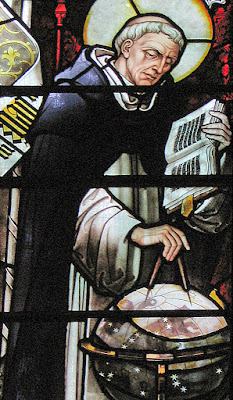
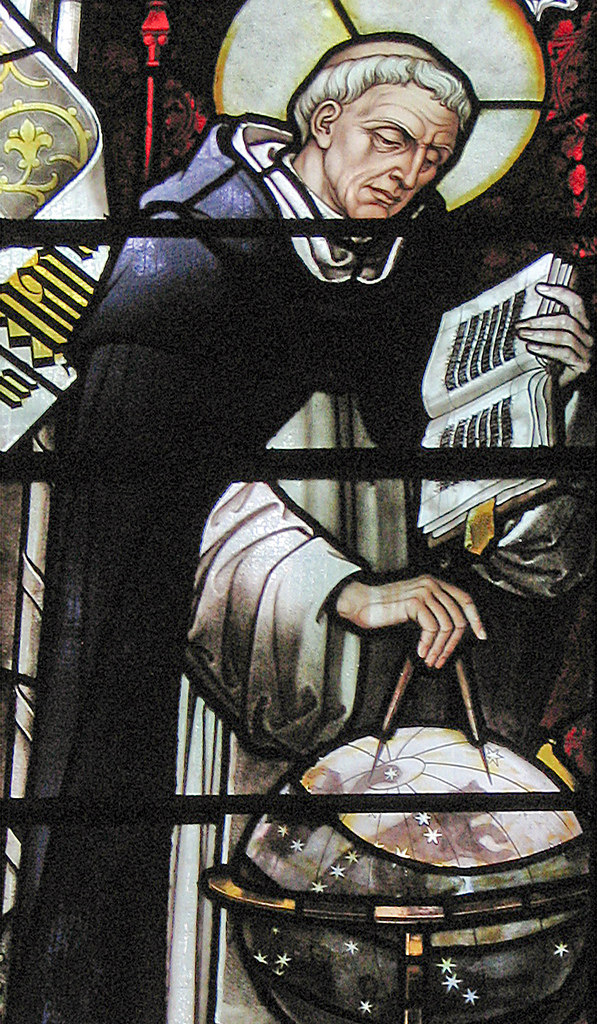
Every year, as we come to the feast of St. Albert the Great on November 15, I am struck again by the enormous difference in theology between the traditional Collect for his feast (as found in MR 1962) and the rewritten Collect published in the Missal of Paul VI. One can see this particular pair as emblematic of a shift from one understanding of Christianity to another.
The old collect, translated literally, reads thus:
O God, who didst make blessed Albert, Thy bishop and Doctor, great by his bringing human wisdom into captivity to divine faith: grant us, we beseech Thee, so to adhere to the footsteps of his magisterium, that we may enjoy perfect light in heaven.[1]
The new collect, as given in the current edition of the modern Roman Rite, reads:
O God, who made the Bishop Saint Albert great by his joining of human wisdom to divine faith, grant, we pray, that we may so adhere to the truths he taught, that through progress in learning, we may come to a deeper knowledge and love of you.[2]
In the former prayer, God makes Albert great because he brought human wisdom into captivity to divine faith (in humana sapientia divinae fidei subjicienda). The prayer echoes St. Paul writing to the Corinthians about the destruction of worldly wisdom: “For the weapons of our warfare are not carnal, but mighty to God unto the pulling down of fortifications, destroying counsels, and every height that exalteth itself against the knowledge of God, and bringing into captivity every understanding unto the obedience of Christ†(2 Cor 10:4–5). It is also reminiscent of the verse from the Psalms: “Thou didst ascend the high mount, leading captives in thy train, and receiving gifts among men, even among the rebellious, that the Lord God may dwell there†(Psa 67:19 [68:18]).
The perspective is not that human wisdom is bad, but that it is likely to be rebellious if not subordinated to divine faith, and that it will “come into its own†when the pride with which it is pursued is crushed and the knowledge is made, to so speak, obedient unto death, as was Christ in His humanity. There has to be a certain mortification and re-alignment of human wisdom if it is to be in harmony with the ineffable mysteries of God and a tool of sanctification. This is why the collect concludes on a note of ascension, with the enjoyment of perfect light in heaven: that is where the very font of truth and all wisdom is perfectly found, and it must be the measure of all we do in this earthly pilgrimage. We ask to be guided by Albert’s teaching because “our conversation is in heaven†(Phil 3:20). We cannot seek earthly knowledge for its own sake: “If you be risen with Christ, seek the things that are above†(Col 3:1). In this collect, the notes of asceticism and mysticism are strongly sounded.
In the latter prayer, however, all of these elements have been deliberately muted. Here, God is said to have made Albert great because he joined human wisdom to divine faith (componenda). The two are placed parallel to each other, as if two links in a chain, or two peas in a pod, or two doughty comrades in arms. No hierarchy, no dependency, no subordination is expressed; no mistrust of wayward human thought, no necessity of bringing the worldly into subjection to the heavenly, no implicit asceticism. Here, reason is not governed by faith and destined to a goal beyond itself, but the two are like Church and State according to modern liberalism.
Not surprisingly, what we are said to gain through adhering to the truths he taught is not the ascetical-mystical ascent to heavenly light which casts all earthly knowledge into the right (finite) perspective, but “a deeper knowledge and love of youâ€â€”the kind of inspiring sentiment one will find on the higher-priced Hallmark cards. Shifting the focus away from Albertus Magnus as a great philosopher and theologian of the conquest of knowledge for celestial beatitude, the prayer turns platitudinous by invoking “love†in the pairing “knowledge and love.†No one would doubt that a canonized saint lived a life of heroic charity; but that is generic and beside the point when commemorating this particular saint. What he exemplifies in the Mystical Body is exactly what the old prayer conveyed and the new one nearly contradicts.
To underline the this-worldliness of the paradigm at play, we note that the means suggested to us for arriving at this deeper knowledge and love is none other than — you guessed it! — “progress in learning†(scientiarum progressus). Homage is thus paid to the modern ideal par excellence, that of Progress, which we might interpret as evolution, the leitmotif of all modern thought. Might this be the progress by which we modern Christians have learned to set aside the sixth commandment, which we now understand to be more than ordinary people can reasonably bear? Or the progress by which we have become so superior to our bloodthirsty ancestors that we must give an utterly novel interpretation to the fifth commandment?
The contrast between the two collects is extremely telling. It tells of a deliberate shift from a hierarchical worldview rooted in faith and aspiring to the beatific vision, to a humanistic worldview of scientific progress through diverse “sources†of knowledge that is meant, in an unspecified way, to deepen our knowledge and love of God.
As Lauren Pristas and others have shown, this shift in attitude towards or evaluation of worldly realities is programmatically present in the heavily-redacted Collects of the Missal of Paul VI when compared with their predecessors in the Missal of the usus antiquior. The number of examples is vast; in order to limit myself, I have chosen to look at a one-month (!) period of the liturgical year, namely, September 18 to October 19. The biblical, patristic, and medieval Christian assessment of terrena or earthly things as we find it in the old collect of St. Albert appears again and again.
For the traditional feast of St. Joseph of Cupertino on September 18 — suppressed in the Novus Ordo calendar — the Church prays, with a lovely reference to the saint’s famous levitations:
O God, who hast ordained that Thine only-begotten Son when lifted up from the earth should draw all things to Himself: mercifully grant through the merits and example of Thy seraphic Confessor Joseph, that we may be lifted up above all earthly desires and be found worthy to come unto Him: Who liveth and reigneth…
Or, for St. Francis of Assisi on October 4:
O God, who, through the merits of blessed Francis, didst give increase to Thy Church by enriching her with new offspring: grant us that following his example we may despise earthly goods and ever be glad to partake of Thy heavenly gifts.[3]
(Here, for comparison’s sake, is how the new Collect for Francis reads: “O God, by whose gift Saint Francis was conformed to Christ in poverty and humility, grant that, by walking in Francis’ footsteps, we may follow your Son, and, through joyful charity, come to be united with you.â€)
Or, for the commemoration on October 9 of the martyrs SS. Denis, Rusticus, and Eleutherius — likewise suppressed on the new calendar:
O God, who this day didst strengthen blessed Denis Thy martyr and Bishop with fortitude in suffering, and didst associate Rusticus and Eleutherius with him in preaching Thy glory to the heathen: grant, we beseech Thee, that following their example we may for love of Thee despise worldly success and may not fear worldly misfortune [pro amore tuo prospera mundi despicere, et nulla ejus adversa formidare].
On October 10, the feast of St. Francis Borgia, also suppressed in the Novus Ordo, the traditional liturgy prays:
O Lord Jesus Christ, who art the model of true humility and its reward: we beseech Thee, that as blessed Francis took Thee as model in contemning worldly honors and Thou hast glorified him, so Thou wouldst associate us with him both in the contempt and in the glory: Who livest and reignest…
On October 16, the feast of St. Hedwig — a saint who miraculously stayed on the modern calendar — we find this potent Collect in the usus antiquior:
O God, who didst teach blessed Hedwig to renounce the pomps of this world, that, with her whole heart, she might follow the humble way of Thy cross: grant that, through her merits and example, we may learn to trample under foot the perishable delights of this world, and by cleaving to Thy cross, surmount all obstacles: Who livest and reignest…
(The new missal’s collect for St. Hedwig is thin gruel: “Grant, we pray, almighty God, that the revered intercession of Saint Hedwig may bring us heavenly aid, just as her wonderful life is an example of humility for all.â€)
The special postcommunion for St. Margaret Mary Alacoque’s feast in the usus antiquior (October 17) includes the petition: “make us renounce the proud vanities of the world.†Nothing like this is found in the new Missal. (In fact, the word “vanity†or “vanities†never appears in the current altar missal.)
The old collect for St. Luke (October 18) focuses on mortification:
Let holy Luke, Thine Evangelist, we beseech Thee, O Lord, intercede for us, who for the glory of Thy name ever bore in his body the mortification of the Cross.
The new collect, although more customized to St. Luke,[3] drops all reference to asceticism, in keeping with the prevailing bias Pristas and others have documented.
Lastly, on October 19, in celebrating the triumph of St. Peter of Alcantara (also removed from the new calendar), the Church in her traditional liturgy prays:
O God, who didst vouchsafe to ennoble blessed Peter, Thy Confessor, by gifts of marvellous penance and highest contemplation: grant, we beseech Thee, that by his merits pleading for us, we may so mortify the flesh as the more easily to take hold of the things of heaven.
All of the above, mind you, are Collects from a one-month period, namely, September 18 to October 19. Do we detect a pattern? Yes, without a doubt. The dogmatic and disciplinary freight of the lex orandi is unmistakable. The liturgy is asking the Lord for a specific attitude of contemptus mundi, which St. Albert all the more impressively illustrates precisely because he is a scholar, author, scientist, naturalist, and man of affairs who has nevertheless held firm to the primacy of the kingdom of heaven. Century after century, collect after collect, the liturgy lucidly expressed and tirelessly inculcated this lofty vision of man’s vocation, the finality of the celestial fatherland, and the relativity of earthly affairs — until the 1960s, when Progress built a home for itself in a Church that had once anathematized the statement: “The Roman Pontiff can, and ought to, reconcile himself, and come to terms with progress, liberalism, and modern civilization.â€[4]
“How’s that dangerous liaison with Progress been working out for you?,†asks Historical Consciousness.
St. Albert the Great — great because you subordinated the human to the divine, the temporal to the eternal, the natural to the supernatural, the secular to the sacred, the earthly to the heavenly — pray for us, that we may be made worthy of the promises of Christ.
NOTES
[1] Deus, qui beatum Albertum Pontificem tuum atque Doctorem, in humana sapientia divinae fidei subjicienda magnum effecisti: da nobis, quaesumus, ita ejus magisterii inhaerere vestigiis, ut luce perfecta fruamur in coelis.
[2] Deus, qui beátum Albértum epÃscopum in humána sapiéntia cum divÃna fide componénda magnum effecÃsti, da nobis, quǽsumus, ita eius magistérii inhærére doctrÃnis, ut per scientiárum progréssus ad profundiórem tui cognitiónem et amórem perveniámus.
[3] Lord God, who chose Saint Luke to reveal by his preaching and writings the mystery of your love for the poor, grant that those who already glory in your name may persevere as one heart and one soul and that all nations may merit to see your salvation.
[4] Pope Pius IX, Syllabus of Errors, n. 80, promulgated with the encyclical Quanta Cura on December 8, 1864.
Photos courtesy of Fr. Lawrence Lew, O.P.
by William A. Torchia, Esq.
From The Amish Catholic Site

We should always remember to pray for the Holy Souls in Purgatory, especially in this, their month. (Source)
Today is Remembrance Sunday here in the U.K. We had a splendid Solemn High Requiem Mass at the Oxford Oratory, complete with black vestments. The setting was a Requiem by Haydn, which seem to draw us on the journey of a holy soul. From an Introit that sounds like the mournful ghosts of the dead, we proceed to a communion that is full of airy light and calm joy – with a great deal of drama in between.Â
I realized that I had not posted anything for All Souls’ Day. Since today is yet another day set aside, at least by British Catholics, for praying on behalf of the dead, I decided I’d post something by that spiritual master, Father Frederick William Faber of the London Oratory. In his own life, Fr. Faber known for his great devotion to the Holy Souls. One of his more famous texts deals with prayer for those in Purgatory. I have selected the following text from that work, Fr. Faber’s Purgatory. You can also find it on this website. I offer it here for your consideration, and in the hope that the good priest’s words might kindle in us a fonder and more steadfast devotion to the Faithful Departed.
Both views [of Purgatory within Catholicism] agree again in holding that what we in the world call very trivial faults are most severely visited in purgatory. St. Peter Damian gives us many instances of this, and others are collected and quoted by Bellarmine. Slight feelings of self-complacency, trifling inattentions in the recital of the Divine Office, and the like, occur frequently among them. Sister Francesca mentions the case of a girl of fourteen in purgatory, because she was not quite conformed to the will of God in dying so young: and one soul said to her: Ah men little think in the world how dearly they are going to pay here for faults they hardly note there. She even saw souls that were immensely punished only for having been scrupulous in this life; either, I suppose, because there is mostly self-will in scruples, or because they did not lay them down when obedience commanded. Wrong notions about small faults may thus lead us to neglect the dead, or leave off our prayers too soon, as well as lose a lesson for ourselves.
Then, again, both views agree as to the helplessness of the Holy Souls. They lie like the paralytic at the pool. It would seem as if even the coming of the angel were not an effectual blessing to them, unless there be some one of us to help them Some have even thought they cannot pray. Anyhow, they have no means of making themselves heard by us on whose charity they depend. Some writers have said that Our Blessed Lord will not help them without our co-operation; and that Our Blessed Lady cannot help them, except in indirect ways, because she is no longer able to make satisfaction; though I never like to hear anything our dearest mother cannot do; and I regard such statements with suspicion. Whatever may come of these opinions, they at least illustrate the strong way in which theologians apprehend the helplessness of the Holy Souls. Then another feature in their helplessness is the forgetfulness of the living, or the cruel flattery of relations who will always have it that those near or dear to them die the deaths of Saints. They would surely have a scruple, if they knew of how many Masses and prayers they rob the souls, by the selfish exaggeration of their goodness. I call it selfish, for it is nothing more than a miserable device to console themselves in their sorrow. The very state of the Holy Souls is one of the most unbounded helplessness. They cannot do penance; they cannot merit; they cannot satisfy; they cannot gain indulgences; they have no Sacraments; they are not under the jurisdiction of God’s Vicar, overflowing with the plentitude of means of grace and manifold benedictions. They are a portion of the Church without either priesthood or altar at their own command.

Pray for the Holy Souls in Purgatory. (Source)
Those are the points common to both views of purgatory; and how manifold are the lessons we learn from them, on our own behalf as well as on behalf of the Holy Souls. For ourselves, what light does all this throw on slovenliness, lukewarmness, and love of ease? What does it make us think of performing our devotions out of a mere spirit of formality, or a trick of habit? What diligence in our examens, confessions, Communions, and prayers! It seems as if the grace of all graces for which we should ever be importuning our dear Lord, would be to hate sin with something of the hatred wherewith He hated it in the garden of Gethsemane. Oh, is not the purity of God something awful, unspeakable, adorable? He, who is Himself a simple act, has gone on acting, multiplying acts since creation, yet he has incurred no stain! He is ever mingling with a most unutterable condescension with what is beneath Him-yet no stain! He loves His creatures with a love immeasurably more intense than the wildest passion of earth- yet no stain! He is omnipotent, yet it is beyond the limits of His power to receive a stain. He is so pure that the very vision of Him causes eternal purity and blessedness. Mary’s purity is but a fair thin shadow of it, and yet we, even we, are to dwell in His arms for ever, we are to dwell amid the everlasting burnings of that uncreated purity! Yet, let us look at our lives; let us trace our hearts faithfully through but one day, and see of what mixed intentions, human respects, self-love, and pusillanimous temper our actions, nay, even our devotions, are made up of; and does not purgatory, heated seven-fold and endured to the day of doom, seem but a gentle novitiate for the Vision of the All-holy?

St. Michael the Archangel has traditionally been closely associated with the Holy Souls of Purgatory in the Church’s devotional life. (Source)
But some persons turn in anger from the thought of purgatory, as if it were not to be endured, that after trying all our lives long to serve God, we should accomplish the tremendous feat of a good death, only to pass from the agonies of the death-bed into fire, long, keen, searching, triumphant, incomparable fire. Alas! my dear friends, your anger will not help you nor alter facts. But have you thought sufficiently about God? Have you tried to realise His holiness and purity in assiduous meditation? Is there a real divorce between you and the world which you know is God’s enemy? Do you take God’s side? Are you devoted to His interests? Do you long for His glory? Have you put sin alongside of our dear Saviours’ Passion, and measured the one by the other? Surely, if you had, purgatory would but seem to you the last, unexpected, and inexpressibly tender invention of an obstinate love, which was mercifully determined to save you in spite of yourself. It would be a perpetual wonder to you, a joyous wonder, fresh every morning, a wonder that would be meat and drink to your soul, that you, being what you know yourself to be, what God knows you to be, should be saved eternally. Remember what the suffering soul said so simply, yet with such force, to Sister Francesca: ‘ Ah! those on that side of the grave little reckon how dearly they will pay on this side for the lives they live! To be angry because you are told you will go to purgatory! Silly, silly people Most likely it is a great false flattery, and that you will never be good enough to go there at all. Why, positively, you do not recognise your own good fortune, when you are told of it. And none but the humble go there. I remember Maria Crocifissa was told that although many of the Saints while on earth loved God more than some do even in heaven, yet that the greatest Saint on earth was not so humble as are the souls in purgatory. I do not think I ever read anything in the lives of the Saints which struck me so much as that. You see it is not well to be angry; for those only are lucky enough to get into purgatory who sincerely believe themselves to be worthy of hell.

Masses and indulgences can be tremendously helpful to the souls suffering in Purgatory. (Source)
But we not only learn lessons for our own good, but for the good of the Holy Souls. We see that our charitable attention towards them must be far more vigorous and persevering than they have been; for men go to purgatory for very little matters, and remain there an unexpectedly long time. But their most touching appeal to us lies in their helplessness; and our dear Lord, with His usual loving arrangement, has made the extent of our power to help them more than commensurate with their ability to help themselves. Some theologians have said that prayer for the Holy Souls is not infallibly answered. I confess their arguments on this head do not convince me; but, conceding the point, how wonderful still is the power which we can exercise in favour of the departed! St. Thomas has at least taught us that prayer for the dead is more readily accepted with God than prayer for the living. We can offer and apply for them all the satisfactions of Our Blessed Lord. We can do vicarious penance for them. We can give to them all the satisfactions of our ordinary actions, and of our sufferings. We can make over to them, by way of suffrage, the indulgences we gain, provided the Church has made them applicable to the dead. We can limit and direct to them, or any one of them, the intention of the Adorable Sacrifice. The Church, which has no jurisdiction over them, can yet make indulgences applicable or inapplicable to them by way of suffrage; and by means of liturgy, commemoration, incense, holy water, and the like, can reach efficaciously to them, and most of all by her device of privileged altars. The Communion of Saints furnishes the veins and channels by which all these things reach them in Christ. Heaven itself condescends to act upon them through earth. Their Queen helps them by setting us to work for them, and the Angels and the Saints bestow their gifts through us, whom they persuade to be their almoners; nay, we are often their almoners without knowing that we are so. Our Blessed Lord vouchsafes to look to us, as if He would say: Here are my weapons, work for me! just as a father will let his child do a portion of his work, in spite of the risk he runs in having it spoiled. To possess such powers, and not to use them, would be the height of irreverence towards God, as well as of want of charity to men. There is nothing so irreverent, because nothing so unfilial, as to shrink from God’s gifts simply because of their exhuberance. Men have a feeling of safety in not meddling with the supernatural; but the truth is, we cannot stand aloof on one side and be safe. Naturalism is the unsafe thing. If we do not enter the system, and humbly take our place in it, it will draw us in, only to tear us to pieces when it has done so. The dread of the supernatural is the unsafest of feelings. The jealousy of it is a prophecy of eternal loss.
It is not saying too much to call devotion to the Holy Souls a kind of centre in which all Catholic devotions meet, and which satisfies more than any other single devotion our duties in that way; because it is a devotion all of love, and of disinterested love. If we cast an eye over the chief Catholic devotion, we shall see the truth of this. Take the devotion of St. Ignatius to the glory of God. This, if we may dare to use such an expression of Him, was the special and favourite devotion of Jesus. Now, purgatory is simply a field white for the harvest of God’s glory. Not a prayer can be said for the Holy Souls, but God is at once glorified, both by the faith and the charity of the mere prayer.

The Virgin of Carmel Saving Souls in Purgatory, Circle of Diego Quispe Tito, c. 17th century. Brooklyn Museum. (Source)
by William A. Torchia, Esq.
Posted by Brian Williams, on Liturgy Guy Site
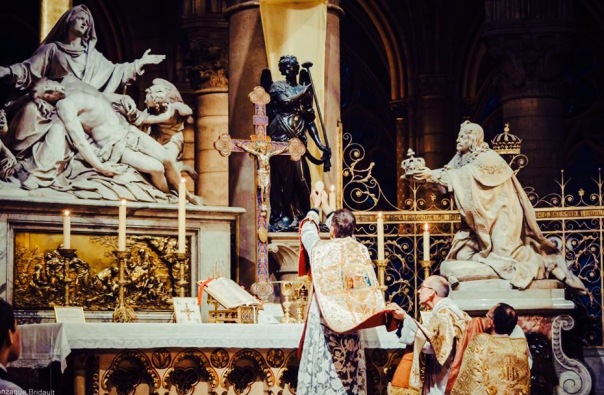
Many are stunned today at the speed in which western civilization is collapsing. Coinciding with this is the post-conciliar crisis within the Church, the fourth great crisis of Christendom as it has been described by that great defender of orthodoxy, Bishop Athanasius Schneider of Kazakhstan. What may not be as clear too many is the connection between the destruction of the Mass and of the collapse of the Christian west.
One man who understood this connection was Dr. John Senior, professor of English, Literature, and Classics and co-founder of the very successful Integrated Humanities Program at the University of Kansas. Dr. Senior taught for decades at the university level. He was also a convert to the Catholic faith, devoted to the traditional Mass and an attendee of Immaculata Chapel (SSPX) in St. Mary’s, Kansas.
Senior has been credited with inspiring a generation of young men and women who, having studied under him at Kansas, converted to Catholicism. As Michael Matt of the Remnant has noted, “under his tutelage, (his students) had learned to love the old Faith as he did and thus desired to serve the Church as loyally as had their revered teacher.â€
Early in his book The Restoration of Christian Culture, John Senior speaks to the inseparable nature of civilization and the Holy Sacrifice of the Mass:
Whatever we do in the political or social order, the indispensable foundation is prayer, the heart of which is the Holy Sacrifice of the Mass, the perfect prayer of Christ Himself, Priest and Victim, recreating in an unbloody manner the bloody, selfsame Sacrifice of Calvary. What is Christian culture? It is essentially the Mass. That is not my or anyone’s opinion or theory or wish but the central fact of 2,000 years of history. Christendom, what secularists call Western Civilization, is the Mass and the paraphernalia which protect and facilitate it. All architecture, art, political and social forms, economics, the way people live and feel and think, music, literature ―all these things when they are right are ways of fostering and protecting the Holy Sacrifice of the Mass.
Understanding this, is it any wonder why a growing number of Catholics today (sometimes derisively dismissed as ‘radical traditionalists’) speak of the need for liturgical restoration? Is it any surprise that we are seeing a cultural collapse in the west considering the anthropocentric and profane Masses offered for much of the last fifty years?
Reading the above quote by Senior recently I was immediately reminded of another occasion when esteemed laity highlighted the inseparable connection between the Mass and civilization.
On the eve of the implementation of Pope Paul’s new Mass in the U.K. back in 1971, a group of learned English signatories wrote the Holy Father a letter, an appeal. Many of the distinguished signers were not even Catholic. They included such artists and thinkers as Agatha Christie, Graham Greene, Robert Graves, Ralph Richardson, Kenneth Clark, Malcolm Muggeridge, and Yehudi Menuhin to name just a few. In total nearly sixty people signed.
Their letter today, and the subsequent response of Rome, are referred to as the Agatha Christie indult, named after its most prominent signer. Put simply, the letter argued for the preservation of the Roman Rite as the jewel of western civilization. They began:
If some senseless decree were to order the total or partial destruction of basilicas or cathedrals, then obviously it would be the educated -whatever their personal beliefs- who would rise up in horror to oppose such a possibility.
Now the fact is that basilicas and cathedrals were built so as to celebrate a rite which, until a few months ago, constituted a living tradition. We are referring to the Roman Catholic Mass. Yet, according to the latest information in Rome, there is a plan to obliterate that Mass by the end of the current year.
Next, the signatories argued (as John Senior did) that the traditional Mass is foundational to, and inseparable from, western civilization:
We are not at this moment considering the religious or spiritual experience of millions of individuals. The rite in question, in its magnificent Latin text, has also inspired a host of priceless achievements in the arts -not only mystical works, but works by poets, philosophers, musicians, architects, painters and sculptors in all countries and epochs. Thus, it belongs to universal culture as well as to churchmen and formal Christians.
The implication is clear. If the “rite in question†has inspired the culture and lifted the human spirit in such a manner “in all countries and epochsâ€, then what happens when it is distorted and diminished. If western civilization exists for the Mass, then what happens when the Mass is changed? Consistently profaned? Modernized?
The letter concludes with both an appeal, and a filial warning, to the Holy Father:
The signatories of this appeal, which is entirely ecumenical and nonpolitical, have been drawn from every branch of modern culture in Europe and elsewhere. They wish to call to the attention of the Holy See, the appalling responsibility it would incur in the history of the human spirit were it to refuse to allow the Traditional Mass to survive…
Cardinal Heenan delivered the letter to Pope Paul VI, resulting in the granting of the Latin Mass indult for England and Wales in November 1971.
What is sad today, nearly fifty years after the “reform†of the Roman Rite, is that many within the Church still do not see what John Senior and the signatories of the Agatha Christie letter so clearly recognized. History has proven them to be truly prophetic. We can view these last fifty years as our Babylonian exile. Our captivity, merited through pride and disobedience.
Surveying the ecclesial and cultural landscape near the end of his life, Senior held nothing back in his assessment:
The crisis is over; we have lost. This is no longer just a prediction, it is a simple observation: Rome has been desecrated. We are in the age of darkness. Triumphalist reactions are in vain. The modern world and the Church deserve the punishment that God is raining down on us.
Despite this current punishment we cannot despair. In the end, we know Who is victorious. We do not, however, participate in this victory if we fail to reassert the fundamental connection between the Mass and western civilization.
The Mass must first be the foundation of the family before it can be the foundation of the culture. All of life must flow from Our Eucharistic Lord, present in our churches, on the altars, in the hands of our priests. The Social Kingship of Christ must once again be proclaimed as well.
We must also reject the nonsensical notion of the Mass as an ecumenical experiment. As a laboratory for innovation. As an expression of the secular instead of an encounter with the eternal. This must all be rejected. It is offensive and it is not Catholic.
Western civilization, or more accurately Christendom, exists for the Mass. We have seen the fruits of secularism, of rejecting this fundamental truth. We have seen both the culture and the Church teeter (and in some places fall) due to the loss of understanding of this foundational truth. Even where the culture fails to grasp this notion, it is still true never the less.
In the end this is why so many fight for the liturgy, despite the scorn of some and the indifference of many. This truth compels us. Father John Zuhlsdorf (Fr. Z) likes to say, “Save the Liturgy, save the World.†Indeed.
Photo credit: Gonzague Bridault
by William A. Torchia, Esq.
On Sunday, November 12th, His Excellency Bishop Bernard Fellay, Superior General of the Society of St. Pius X, will perform the reconciliation of the St. Willibrord church in Utrecht, the Netherlands. A Pontifical Mass will be celebrated afterwards. A reconciliation is the ritual restoration of the dedication of an unholy church. The public is invited and a reception will follow.
Program:
10:30 a.m. Reconciliation and Pontifical Mass
1:30 p.m. Reception
6.00 p.m. Adoration with Rosary
Address of the church: Minrebroederstraat 21, Utrecht, the Netherlands
Reception Address: Restaurant Zindering (City Theater), Lucasbolwerk 24
Utrecht, the Netherlands (max 10 minutes on foot from the church)
According to the SSPX: “Why a reconciliation ceremony? Because the previous association, in order to cover the operating costs, organized cultural events in the church; some were acceptable, concerts, for example, but others were entirely inappropriate given the dignity of the edifice. The sanctuary must also be blessed, because the church was desacralized when it was put up for sale and then bought by the Society.”
by William A. Torchia, Esq.
From The New Liturgical Movement
As part of the tenth anniversary celebrations of Summorum Pontificum (which ought to continue throughout the year!), I am happy to share with NLM readers a wonderful reflection on the motu proprio by Dom Mark Kirby, O.S.B., Prior of Silverstream Priory. Dom Mark posted this at Vultus Christi but gave NLM permission to publish it as well.
Ten Fruits of Summorum Pontificum
Dom Mark Kirby, O.S.B.
I consider
Summorum Pontificum to be the single greatest gift of Pope Benedict XVI to the Church. It is a gift that some received with immense joy and immediately began to put it to profit. Others, entrenched in old ideological prejudices, looked upon the gift with suspicion and mistrust. Still others, even ten years later, remain unaware of the gift. For me,
Summorum Pontificum threw open a door into the vastness and light of a liturgical tradition deeper, and higher, and wider than anything the reformed liturgical books, in use for nearly half a century, were able to offer. I say this as one who, for more than three decades, was committed to the reformed rites and wholeheartedly engaged in the reform of the reform at the academic and pastoral levels. Already, well before July 7th, 2007, I had come to see that even the noblest efforts deployed in the cause of the reform of the reform bore only scant fruit. Just when, battle–worn and weary, I thought that I would have to spend the rest of my life in a kind of post–conciliar liturgical lock–down, a door opened before me. The door was
Summorum Pontificum. I crossed the threshold and went forward, never looking back. I discovered for myself the truth of Pope Benedict’s compelling words to the bishops of the Church:
What earlier generations held as sacred remains sacred and great for us too, and it cannot be all of a sudden entirely forbidden or even considered harmful. It behooves all of us to preserve the riches which have developed in the Church’s faith and prayer, and to give them their proper place. (Letter to the Bishops, 7 July 2007)
As I pass in review the ten past years, I can identify at least ten fruits of Summorum Pontificum. Others, in their assessment of the past ten years, may point to different fruits. From the perspective of my own garden, however — admittedly a hortus conclusus, given its monastic context — I see the following fruits:
1. A clearer manifestation of the sacred liturgy as the work of Christ the Eternal High Priest and Mediator. I have long argued that the Second Vatican Council’s Constitution on the Sacred Liturgy, Sacrosanctum Concilium, has to be read in continuity with and, in some way, through the lens of the Venerable Pope Pius XII’s encyclical Mediator Dei (20 November 1947). The recovery of the Usus Antiquior has effectively recentred the liturgical experience of many clergy and layfolk on the priestly mediation of Jesus Christ between God and men.
2. The opening, for many souls, of a secure bridge between celebration and contemplation. I am not alone in recognising the penetrating quality of what Saint John Paul II called “adoring silence†before, during, and after celebrations in the Usus Antiquior, especially when the richness of its ritual resources — chant, hieratic order, and sacred gesture — are fully deployed.
We must confess that we all have need of this silence, filled with the presence of him who is adored: in theology, so as to exploit fully its own sapiential and spiritual soul; in prayer, so that we may never forget that seeing God means coming down the mountain with a face so radiant that we are obliged to cover it with a veil (cf. Ex 34:33), and that our gatherings may make room for God’s presence and avoid self–celebration; in preaching, so as not to delude ourselves that it is enough to heap word upon word to attract people to the experience of God. (Orientale Lumen, art. 16)
3. A serene and lucid transmission of the doctrine of the faith. The sturdy givenness of the traditional rites (lex orandi) is at once the platform and the articulation of the Church’s life–giving and unchanging doctrine (lex credendi). The Usus Antiquior, not having the panoply of options that characterises the reformed rites, allows the liturgy to be celebrated without having to be subjectively reconstructed, over and over again, by the assemblage of interlocking parts.
4. A renewed appreciation for the link between worship and culture. The past fifty years have often been marked by an alienation from the Church’s cultural heritage, notably in the areas of music and architecture. The Usus Antiquior is increasingly, and especially in communities informed by the classical liturgical movement, a place where, as Joseph Cardinal Ratzinger said in 1985, “beauty — and hence truth — is at home†(The Ratzinger Report, p. 129).
5. The affirmation of the primacy of latria in the life of the Church, following the principle of Saint Benedict that “nothing is to be preferred to the work of God†(Rule, Ch. XLIII). It is immediately evident that the Usus Antiquior, like all the ancient rites of the Church in East and West, is theotropically driven. This stands in marked contrast both to the prevalent ars celebrandi of the Usus Recentior and to most Protestant forms of worship. These, by placing the accent on didactic and moralising content, are anthropotropically driven, and this at a moment in history when men and women of the millennial generation restlessly seek to “get out of themselves.†For such souls, weary of a world that seeks to cater to their ever–changing needs and appetites, and this not without exacting an inflated price, the unchanging rites of the Usus Antiquior are a tranquil and restful harbour illumined already by the gleaming shores of eternity. Pope Benedict XVI addresses the question incisively:
In the years following the Second Vatican Council, I became aware again of the priority of God and the divine liturgy. The misunderstanding of the liturgical reform that has spread widely in the Catholic Church has led to more and more emphasis on the aspect of education and its activity and creativity. The doings of men almost completely obscured the presence of God. In such a situation it became increasingly clear that the Church’s existence lives in the proper celebration of the liturgy and that the Church is in danger when the primacy of God no longer appears in the liturgy and so in life. The deepest cause of the crisis that has upset the Church lies in the obscurity of God’s priority in the liturgy. (Pope Benedict XVI, Preface of the Russian edition of his Theology of the Liturgy, 2015)
6. Encouragement given to the recovery and renewal of Benedictine monastic life in the heart of the Church. My own monastery, Silverstream Priory, was founded in the grace of the pontificate of Pope Benedict XVI, only one year after the promulgation of Summorum Pontificum. When, early in 2017, Silverstream Priory was canonically erected, its distinctive reference to Summorum Pontificum was recognised and ratified. In the opening paragraphs of the Apostolic Letter itself, Pope Benedict pointed to the distinctively Benedictine import of what he was setting forth:
Eminent among the Popes who showed such proper concern was Saint Gregory the Great, who sought to hand on to the new peoples of Europe both the Catholic faith and the treasures of worship and culture amassed by the Romans in preceding centuries. He ordered that the form of the sacred liturgy, both of the Sacrifice of the Mass and the Divine Office, as celebrated in Rome, should be defined and preserved. He greatly encouraged those monks and nuns who, following the Rule of Saint Benedict, everywhere proclaimed the Gospel and illustrated by their lives the salutary provision of the Rule that “nothing is to be preferred to the work of God.†In this way the sacred liturgy, celebrated according to the Roman usage, enriched the faith and piety, as well as the culture, of numerous peoples. It is well known that in every century of the Christian era the Church’s Latin liturgy in its various forms has inspired countless saints in their spiritual life, confirmed many peoples in the virtue of religion and enriched their devotion. (Summorum Pontificum)
The past ten years have seen a flowering of Benedictine monasteries dedicated exclusively to the celebration of the sacred liturgy in the traditional form. Impressive numbers of God–seeking young men continue to make their way to these monasteries.
7. Joy and beauty brought to Catholic family life. My direct personal experience of this particular fruit of Summorum Pontificum is limited to those young families who frequent Silverstream Priory or who are associated with our community, either because one or both parents are Benedictine Oblates, or by participation in Catholic Scouting, or because the discovery of the Usus Antiquior has infused the piety of the parents and the education of their children with the spirit of the liturgy. It is not unusual to see even the youngest children of these families utterly engaged in the action of Holy Mass and happily familiar with the feasts and seasons of the liturgical year.
8. A renewal of true priestly piety. Silverstream Priory has a heart for priests labouring in the vineyard of the Lord and, consequently, offers hospitality to a steady stream of clergy. The majority of these would be priests under forty–five years of age. Those who do not already offer Holy Mass whenever possible in the Usus Antiquior are eager to be instructed in the traditional rite. The witness of these priests is impressive; access to the Usus Antiquior has awakened them to the mystery of Holy Mass as a true sacrifice and awakened them to their own participation in the mediatorship of Christ, “high priest, holy, innocent, undefiled, separated from sinners, and made higher than the heavens†(Hebrews 7:26). A renewed attention to the complexus of sacred signs that constitutes the liturgy and, in particular, to the rubrics of the Roman Missal has, in more than one instance, transformed a priest’s understanding of who he is standing at the altar. To me, it is evident that Summorum Pontificum has fostered the implementation of what the Fathers of the Second Vatican Council sought to promote:
Priests, both secular and religious, who are already working in the Lord’s vineyard are to be helped by every suitable means to understand ever more fully what it is that they are doing when they perform sacred rites; they are to be aided to live the liturgical life and to share it with the faithful entrusted to their care. (Sacrosanctum Concilium, art. 18)
9. The birth of new expressions of consecrated life that find their source and summit in the traditional liturgy, Holy Mass and Divine Office. It is beyond the scope of these reflections to compile a catalogue of the Institutes and fledgling communities that attribute their existence in the Church, directly or indirectly, to the horizons opened by Summorum Pontificum. Some of these identify with the tradition of canons regular; others engage in missionary works of evangelisation and mercy after the manner of Societies of Apostolic Life. All of these have in common a life–giving reference to the traditional liturgy made available by the dispositions of Summorum Pontificum.
10. An infusion of hope and, for young people, an experience of a beauty that renders holiness of life enchanting and attractive. Pope Benedict XVI recognised, in his letter to the bishops accompanying Summorum Pontificum that not a few young people find in the traditional liturgy a holy enchantment that draws them deeply into the priestly action of Christ and the life of the Church. Pope Benedict wrote:
Immediately after the Second Vatican Council it was presumed that requests for the use of the 1962 Missal would be limited to the older generation which had grown up with it, but in the meantime it has clearly been demonstrated that young persons too have discovered this liturgical form, felt its attraction and found in it a form of encounter with the Mystery of the Most Holy Eucharist particularly suited to them.
The experience of the Usus Antiquior as an habitual form of worship and expression of sacramental life has surprised young Catholics with an encounter not unlike the one that long ago changed the life of Saint Augustine: the discovery of a “Beauty ever ancient, ever new.†I myself am surprised, even now, to hear again on the lips of the rising generation the very words that, with a holy fear and a secret joy, I memorised over sixty years ago: Introibo ad altare Dei, ad Deum qui lætificat juventutem meam, “I will go in to the altar of God: to God who giveth joy to my youth†(Ps 42:4).
by William A. Torchia, Esq.

The Traditional Latin Mass will be offered on
Friday, November 3rd and Saturday, November 4th at:
Church of the Immaculate Conception of the Blessed Virgin Mary
(215) 884-4022
 Mass will be offered in the lower church, in beautiful St. Mary’s Chapel. Confessions will also be on the lower level, in Conahan Hall.
First Friday, November 3rd:
Priest: Rev. Gerald P. Carey (Pastor, Our Lady of the Assumption Roman Catholic Church)
Location: Church of the Immaculate Conception, St. Mary’s Chapel
Time: 7:00Â p.m., preceded by Confessions at 6:30Â p.m.
This Traditional Latin Mass will be the Requiem Mass, offered in Reparation to The Sacred Heart of Jesus. (Black Vestments)
First Saturday, November 4th:
Priest: Rev. Harold B. Mc Kale (Parish Vicar, Our Lady of Mount CarmelRoman Catholic Church)
Location:  Church of the Immaculate Conception, St. Mary’s Chapel
Time: 9:30 a.m., preceded by Confessions at 9:00 a.m.
This Traditional Latin Mass will be the Requiem Mass, offered in Reparation to The Immaculate Heart of Mary. (Black Vestments)
Â