The earliest reference to this specific feast is a sequence which was well-known and widely used in the Middle Ages, written by one Godeschalk, a monk of Limburg abbey in western Germany, who died in 1098. It is written in the earlier and freer style of sequences like the Victimae Paschali, with less rhyme and structure than later ones such as St Thomas’ Lauda Sion or the Stabat Mater. It makes frequent use of the Patristic interpretation of the first words of Psalm 18, “The heavens proclaim the glory of Godâ€, according to which the “heavens†are understood to be the Apostles, as St Gregory says in the Breviary. (Common lesson of the 2nd nocturn of the Apostles.)
 |
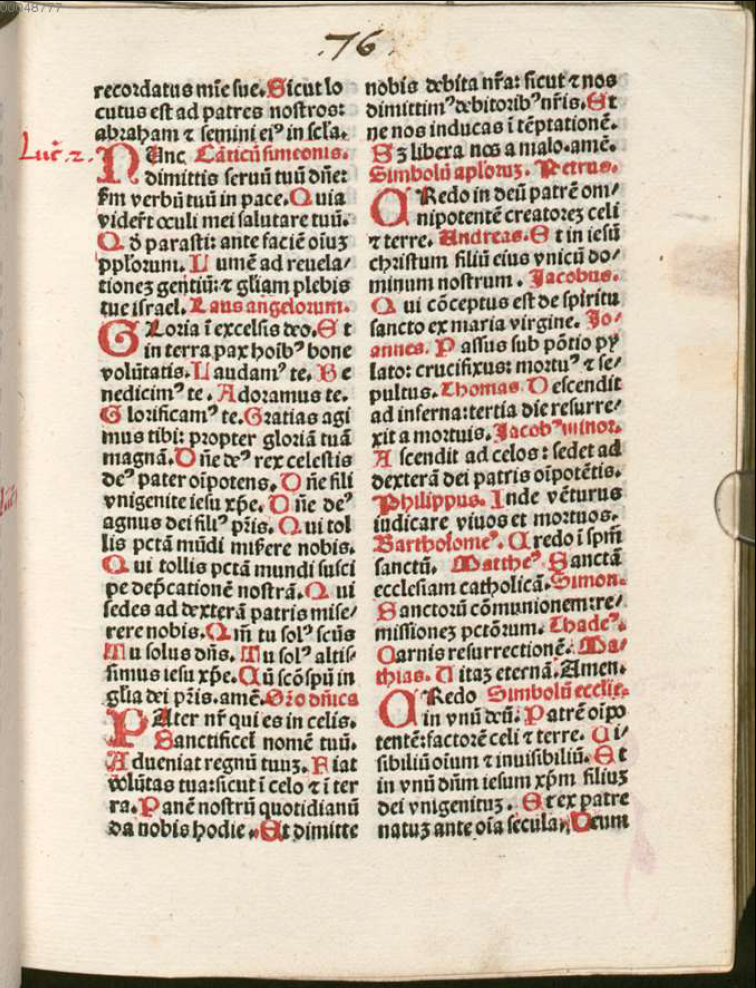
| The Sequence “Caeli enarrant gloriam†in the Mass of the Division of the Apostles, starting towards the top of the second column here. (Click to enlarge.) From the Missal according to the Use of Augsburg, Germany, ca. 1510. |
Thus the prayer which concludes it, (as is typical of the genre,) reads, “These are the heavens, in whom Thou dwellest, the Angel of great counsel, whom Thou didst call no longer servants, but friends, to whom Thou makest known all things which Thou hast heard from the Father. / Keep undivided, and in the bond of peace, the flock that was gathered by their division, that we may be one in Thee, as thou are one in the Father. / Have mercy on us, Thou that dwellest in the heavens.â€
The Gospel of the feast is that of the Ascension, (Mark 16, 14-20) but with the first verse left off, “Jesus appeared to the eleven as they were at table: and he upbraided them with their incredulity and hardness of heart, because they did not believe them who had seen him after he was risen again.†This omission is entirely appropriate for the common use of the feast among missionary congregations, since it celebrates the mission of the Apostles and their fulfillment of the commandment which Christ gives them in the verse which now opens the Gospel, “Go ye into the whole world, and preach the gospel to every creature.â€
There is a tradition known from the 4th century that the baptismal creed now called the Apostles’ Creed was composed as a rule of the Faith by the Twelve before this dispersal, with each one of them contributing an article. This is often represented in art, as here in the border of this page of the famous Hours of Catherine of Cleves, ca. 1440. (In the center is depicted the legend of the Ten Thousand Martyrs, represented symbolically by ten figures.)

It is also seen here in a Carthusian Breviary ca. 1490, (starting near the top of the right column), in which the name of an Apostle is printed in red before each article of the Creed.
Like many of the traditions held dear by the medievals, it was called into question by some of the scholars of the Renaissance, particularly at the time of the Council of Florence in 1438. As the Council wrestled with the question of reunion between the Eastern and Western churches, the issue of the Creeds, and especially the Latin addition of “Filioque†to that of Nicea, was of course one of the most important topics of discussion. The Latins, who recognized three Creeds used in the liturgy, the Apostles, the Nicene, and the Athanasian, were unpleasantly surprised to learn that the Greek delegates had never heard of the first of these.
Fr Nicholas Ayo, C.S.C., in a book on St Thomas’ Sermons on the Apostles’ Creed, beautifully summarizes why we may still refer to it by this name. “With the Apostles’ Creed we have the teaching of the Apostles as passed on by authentic apostolic succession. … The Creed summarizes the Scriptures, which in turn summarize the teaching of the early Church by the Apostles, who in turn were taught of Jesus, who was taught of God.†(Sermon-Conferences of St. Thomas Aquinas on the Apostles’ Creed, p. 175)

0 comments
Kick things off by filling out the form below.
Leave a Comment